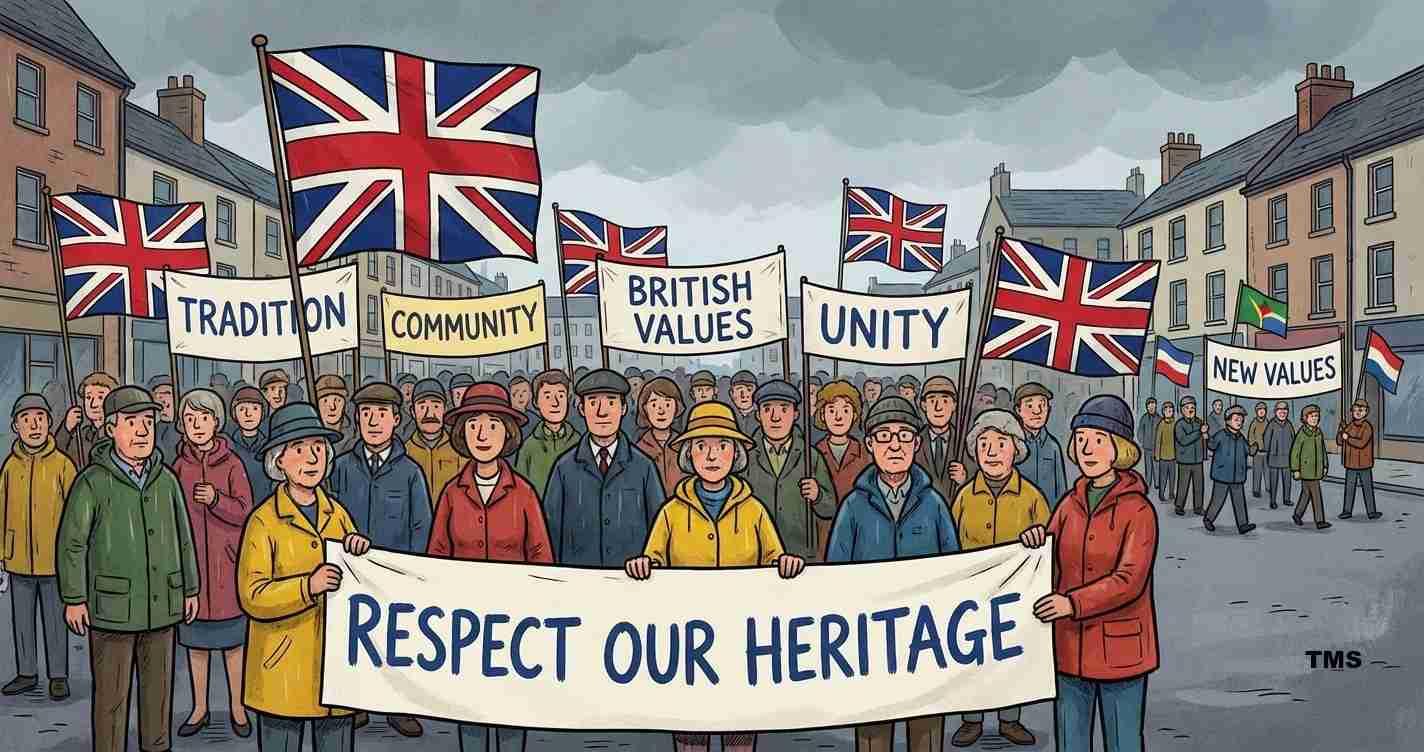
Union Jacks and backlash: British towns push back on asylum housing and “woke” ideas as flag campaigns spread
Since April 2025, Britain has seen widespread anti-immigration protests across towns and cities, driven by far‑right groups opposing asylum housing and perceived ‘woke’ changes. Demonstrations featuring Union Jacks led to arrests, police injuries and paused local housing plans.
- Widespread unrest: Protests since spring 2025 targeted planned asylum placements in hotels, flats and other sites.
- Police impact: More than 180 arrests and at least 41 officers injured were reported, stretching local forces.
- Organised campaigns: Operation Raise the Colours encouraged flying Union Jacks as a coordinated response to asylum housing plans.
- Local fallout: Councils and developers paused or withdrew some placements after petitions and protests.
Protests and flag campaigns
Since April, rallies labelled the 2025 British anti-immigration protests have appeared across England, often displaying the Union Jack and other patriotic emblems. The flag displays were amplified by an online push called Operation Raise the Colours, run by activist Andrew Currien on platforms including Telegram and Facebook and encouraging residents to “reclaim” neighbourhoods. Participants framed the actions as protecting national heritage and resisting top-down placements of asylum seekers. (source: Wikipedia: 2025 British anti-immigration protests)
Incidents, arrests and local outcomes
Notable local episodes include Waterlooville, where more than 1,000 protesters on 30 July 2025 opposed a site for asylum housing; a petition of over 10,000 signatures followed and the plan was later withdrawn. Hoylake saw multi-day protests ending in arrests, including at least one detention linked to support for a proscribed extremist group. In Stanwell, police paused plans after reports of damage to a proposed site. A UKIP march in Newcastle on 27 September drew hundreds of supporters and thousands of counter-protesters; three arrests were made. (source: Wikipedia: 2025 British anti-immigration protests)
Who is behind the marches
Investigations link parts of the movement to established far-right organisations. Groups named in reporting and inquiries include Britain First, UKIP-affiliated networks, the Homeland Party and Patriotic Alternative. Authorities and researchers note that some organisers used online misinformation to escalate fears and mobilise turnout, leveraging social media and private messaging apps to coordinate actions and spread Operation Raise the Colours. (source: Wikipedia: 2025 British anti-immigration protests)
Anti‑woke rhetoric and public opinion
The protests intersect with a broader anti‑woke discourse linking immigration concerns to debates over national identity, LGBTQ+ rights, religion and multicultural policy. Academic analysis suggests anti‑woke language can cross party lines and be adopted by populists and some mainstream politicians, while public‑opinion research shows growing but divided “woke” attitudes in Britain, limiting the uniform political impact of the rhetoric. (sources: Frontiers in Political Science; NatCen summary)
Opposition, policing and online disinformation
Not all responses supported the marches. Groups such as Stand Up To Racism organised large counter-demonstrations that in some towns outnumbered far-right rallies. Police forces were stretched protecting both demonstrators and residents; a review cited online disinformation and rapid provocative messaging as escalation factors. Reported injuries to 41 officers and over 180 arrests underline the strain on law enforcement and community relations. Local councils and developers sometimes paused plans, leaving asylum seekers in temporary limbo and complicating national accommodation strategies. (source: Wikipedia: 2025 British anti-immigration protests)
Verification and limits of reporting
Researchers warn against overstating the reach of flag campaigns or implying a single unified movement. While Operation Raise the Colours and far‑right organisers influenced events in places, the protests are a complex mix of local grievance, organised activism and broader cultural debate that varies by town. There is no evidence foreign flags are replacing the Union Jack in any formal way. (source: Wikipedia: 2025 British anti-immigration protests)
Implications for Utah
Economic: Local opposition that forces councils to pause housing plans can strain supply and raise costs — a parallel Utah could face in housing and tourism-dependent economies.
Political: Conservative voters and local leaders in Utah may see a model for mobilisation around national symbols and local control, but must weigh risks of association with far‑right groups and disorder.
Social: Local disputes about asylum or housing can escalate into broader cultural fights; planning for safety and dialogue is critical.
Cultural: Symbols matter: as the Union Jack rallied some UK protesters, the American flag and state symbols can similarly be mobilised in Utah — with both cohesion and co‑option risks.
Practical: Utah councils and leaders should prioritise early engagement, transparent site selection, monitoring online misinformation and partnerships with law enforcement to reduce the risk of violent clashes.
Sources and further reading
- Wikipedia: 2025 British anti-immigration protests
- Frontiers in Political Science: Anti-woke and political dynamics in the UK
- NatCen: British Social Attitudes survey summary on “woke” trends
- National Centre for Diversity: Analysis of anti-woke fatigue
“The protests are a mix of local grievance, organised far‑right activism and broader cultural debate — varying by town and context.”