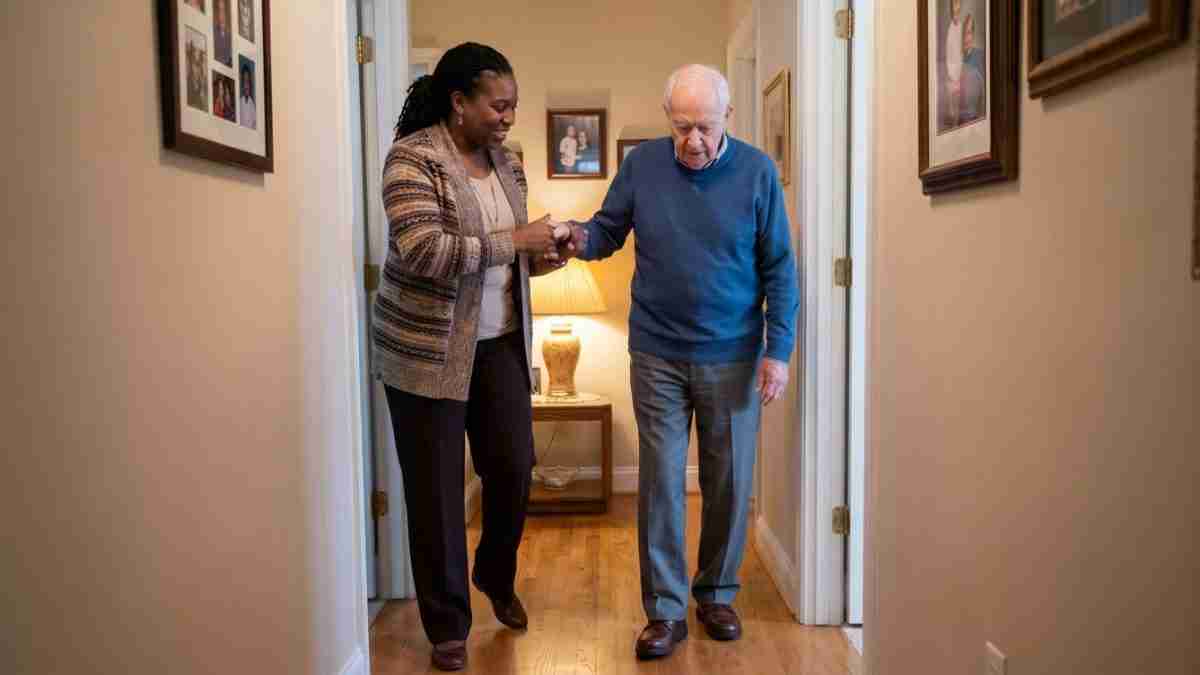
UNITED STATES, Sept. 25 (Senior Newspaper) — Falls are common among older adults, but federal health agencies say several everyday steps can help lower the risk of falling and reduce hazards at home.
The Centers for Disease Control and Prevention says about 4.5 million emergency-department visits for older-adult falls occurred in 2024. A separate CDC facts page gives a different estimate of about 3 million emergency-department visits each year. The agency’s published pages do not explain the difference, so the figures should not be used to establish a year-to-year increase.
Still, the guidance from the CDC and the National Institute on Aging points to practical steps involving movement, medications, vision and the home environment.
What changes can make a home safer?
The CDC recommends removing objects that could cause a trip, improving lighting, adding grab bars in bathrooms and installing handrails on both sides of staircases. The National Institute on Aging also advises keeping commonly used items within easy reach and securing or removing loose rugs and clutter.
The American Academy of Orthopaedic Surgeons recommends avoiding chairs, boxes or other unstable surfaces as step stools. Its guidance also includes checking floors, stairs, bathrooms and other areas where a person could lose balance. The academy says research supports simple home-safety changes, but the guidance page does not identify the specific studies or quantify how much each change reduces falls.
A home-safety review by a health professional or another qualified program can help identify hazards that may not be obvious. The New York State Office for the Aging lists home assessments and modifications among fall-prevention approaches.
Why do exercise and balance matter?
The CDC recommends strength and balance activities, including tai chi. The National Institute on Aging advises older adults to stay physically active and perform exercises that support strength and balance.
Programs such as Tai Chi, Matter of Balance and Stepping On are listed by the New York State Office for the Aging as evidence-based options. The agency also lists gait, balance and functional training as prevention approaches.
The recommendations do not mean that every person should begin the same exercise routine. The CDC advises health care providers to screen patients for fall risk, assess factors that can be changed and connect patients with clinical or community interventions.
Could medicines or eyesight play a role?
The CDC and NIA advise reviewing medicines with a health professional because some medicines or side effects may increase fall risk. The New York State Office for the Aging says medication reduction or withdrawal may be considered when appropriate; medication changes should be handled with a prescribing clinician.
The CDC recommends annual eye checks. The NIA advises checking vision and hearing. Both agencies identify medical conditions, medication effects and problems with vision or balance as issues worth discussing with a health professional.
The New York State Office for the Aging lists vitamin D supplementation for people who are vitamin-D deficient. That recommendation does not establish that everyone should take vitamin D.
Other NIA guidance includes limiting alcohol, standing up slowly, wearing supportive nonskid footwear and using properly fitted assistive devices when needed.
What should happen after a fall?
The NIA advises older adults to tell a doctor after a fall, even if they do not feel pain. The agency says a fall can signal a medical problem or point to a correctable issue involving medication or eyesight.
Fall-prevention guidance cited in Colorado also recommends having a way to call for help, making sure emergency responders can enter the home and coordinating a response plan with family, friends or neighbors. The available report does not identify the summit organizers or provide evidence for the plan’s effectiveness.
A fall does not always lead to a serious injury, and the available CDC figures alone do not show how many visits involved fractures, hospitalization or other outcomes. But the agencies’ advice emphasizes that prevention can begin with ordinary decisions: clear walking paths, brighter lights, safer stairs and bathrooms, regular activity, medication reviews and routine vision care.
What is not yet clear about the national numbers?
The available CDC pages provide estimates but not a comparable time series showing that emergency visits are climbing. They also do not, in the cited material, explain why one page reports about 3 million annual visits while another reports about 4.5 million visits in 2024. The figures may use different years, definitions or data sources, but the supplied CDC pages do not specify the reason.
The available material also does not quantify the reduction in risk associated with a particular home change, exercise program or medication review. That makes the prevention guidance useful for identifying steps to discuss with health professionals, but it does not support a precise estimate of how much any one action will reduce an individual’s risk.