Adamuz high-speed train collision in Córdoba leaves scores dead, dozens injured as probe begins
A high-speed collision near Adamuz in Córdoba province on January 18, 2026, left at least 39 people dead and 245 injured after an Iryo train derailed and struck an oncoming Renfe service; authorities have launched a full investigation.
Key takeaways
- What happened: An Iryo-operated high-speed train derailed and struck a Renfe service near Adamuz, Córdoba, during the evening of January 18, 2026.
- Casualties: Reports vary, but compiled figures cite between at least 24 and 39 dead and roughly 245 injured, with dozens hospitalized and some critically ill.
- Investigation: Spanish authorities opened parallel criminal and technical inquiries; Transport Minister Óscar Puente described the derailment as “really strange.”
- Service impact & response: High-speed services between Madrid and Andalusia were suspended while emergency teams, ADIF and relief centers assisted families and passengers.
Main coverage
Incident details
When and where: The collision occurred shortly after the Iryo train departed Córdoba–Julio Anguita station and while it was traversing a straight section of track near Adamuz, Córdoba province. Officials say the Iryo train derailed while negotiating a railroad switch and crossed onto the opposite track, where it struck a Renfe service bound for Huelva. Reports place the impact in the evening, with local outlets giving times between about 6:40 p.m. and 7:45 p.m. local time.
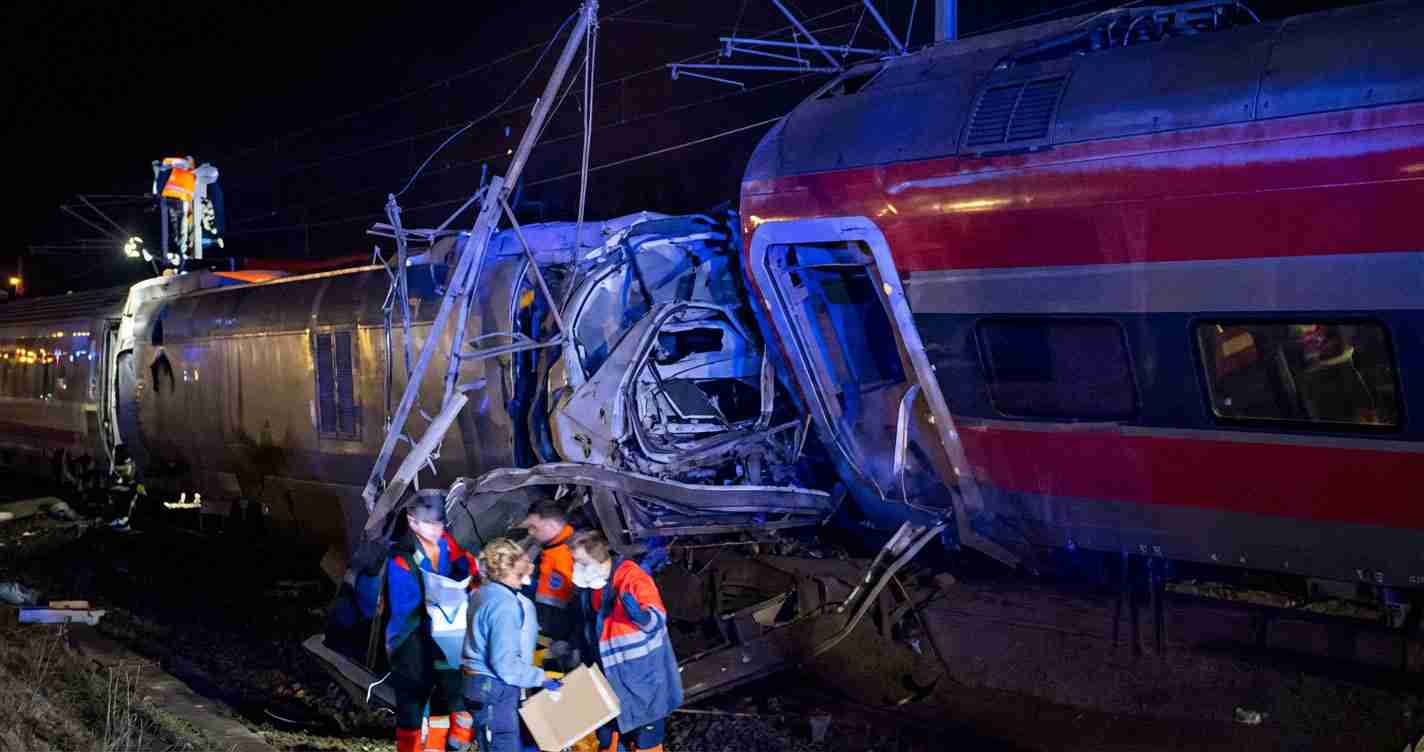
Train loads and damage: About 317 passengers were aboard the two trains combined. The Renfe service sustained the worst damage: its first two carriages plunged down an estimated 4-meter (13-foot) embankment, carrying dozens of passengers and causing extensive structural damage. One report estimated the Renfe train’s speed at roughly 200 km/h (125 mph) at the moment of impact.
For background reporting see Wikipedia and contemporaneous coverage from The Independent.
Casualties and injuries
Initial tallies varied as rescue teams continued searching: some early reports cited at least 24 fatalities, with later international and local reporting raising the figure to at least 39 dead and about 245 injured. Many injured suffered minor wounds; dozens required hospitalization and several were in serious or critical condition. Among the dead was one of the train drivers — a 27‑year‑old operating the Madrid‑to‑Huelva service.
“Numbers remain provisional as rescue operations continue and hospitals treat the wounded.”
Investigation: many questions, few answers
Official posture: Spain’s Ministry of Transport and investigating teams warned that the cause is not yet determined. Transport Minister Óscar Puente called the derailment “really strange” because it occurred on a straight stretch of track that had been recently renovated and described as being in perfect condition before the crash. The track section was upgraded in May 2025 as part of a larger €700 million program, and the derailed Iryo train was relatively new.
Investigators have asked that evidence be preserved and cautioned that definitive conclusions will take time. Authorities expect criminal and technical inquiries to run in parallel; Spain’s Ministry of Transport suggested a formal inquiry could last about a month. Potential lines of inquiry include mechanical failure, signal or switch malfunction, human error, and track-related issues despite recent renovation. Investigators have not ruled out any possibilities to date.
Further reporting and rolling updates available from NPR / St. Louis Public Radio and The Independent.
Response and rescue operations
Spanish emergency services, including the Military Emergencies Unit, were deployed to the scene with vehicles and personnel. The Spanish Red Cross set up a help center in Adamuz to assist relatives and coordinate support. ADIF opened assistance areas at major stations — including Atocha, Seville, Córdoba, Málaga and Huelva — to help families and passengers seeking information. Spain’s Civil Guard temporarily suspended high-speed traffic between Madrid and Andalusia while debris was cleared and inspections conducted.
Political reaction: Prime Minister Pedro Sánchez cleared his schedule to address the nation and coordinate the response. Local and national officials pledged transparency in the investigation and support for victims’ families.
Why this matters beyond Spain
High-speed rail systems share technologies, safety standards and suppliers across countries. Major accidents such as the Adamuz crash raise questions about maintenance, oversight and safety system design that are relevant to rail networks worldwide. This incident coincides with ongoing investments in rail upgrades and underscores the need for robust accident investigation standards, strong regulatory oversight and timely public reporting.
Implications for Utah, United States
Economic impact: Utah is unlikely to experience direct disruption from the Adamuz accident, but global shifts in supplier risk assessments and insurance costs could indirectly affect procurement prices and project bids for U.S. rail programs over time.
Political consequences: The crash could reinforce calls in Utah for independent safety audits, clearer accountability for transit contractors, and stricter performance metrics tied to public funding.
Social effects: Public confidence in rail travel can be affected by high‑profile overseas accidents. Utah transit agencies may need to increase transparency around inspections, staffing and safety investments to reassure riders and local constituents.
Practical applications for Utah residents and officials
- Review and audit: State transportation committees should consider independent audits of inspection logs, maintenance contracts and vendor performance for FrontRunner and TRAX.
- Emergency preparedness: Transit agencies should revisit mass‑casualty drills, family reunification protocols and clearly marked support centers to ensure rapid notification and coordinated response.
- Communication strategy: Clear, factual, and timely public communication reduces panic and maintains trust; ADIF’s assistance points provide a model for family support and information hubs.
- Investment scrutiny: Elected officials can demand safety outcome metrics and dedicated maintenance funding when approving major rail projects.
Sources and further reading
Full sources cited in this report:
- Wikipedia: 2026 Adamuz train derailments
- NPR / St. Louis Public Radio: “At least 39 dead in Spain train collision as rescuers search for more bodies”
- The Independent: “Spain train crash high-speed Adamuz Córdoba latest news”
Ongoing developments
Investigations continue: Officials warn casualty figures and technical findings may change as teams examine black boxes, signaling and switch data, maintenance records and personnel logs. The Adamuz collision and the broader Córdoba investigation will be closely watched by rail operators, regulators and elected officials globally.