7-Ton Meteor Splits Over Valley City, Ohio; Sonic Booms Heard Across the Ohio Valley
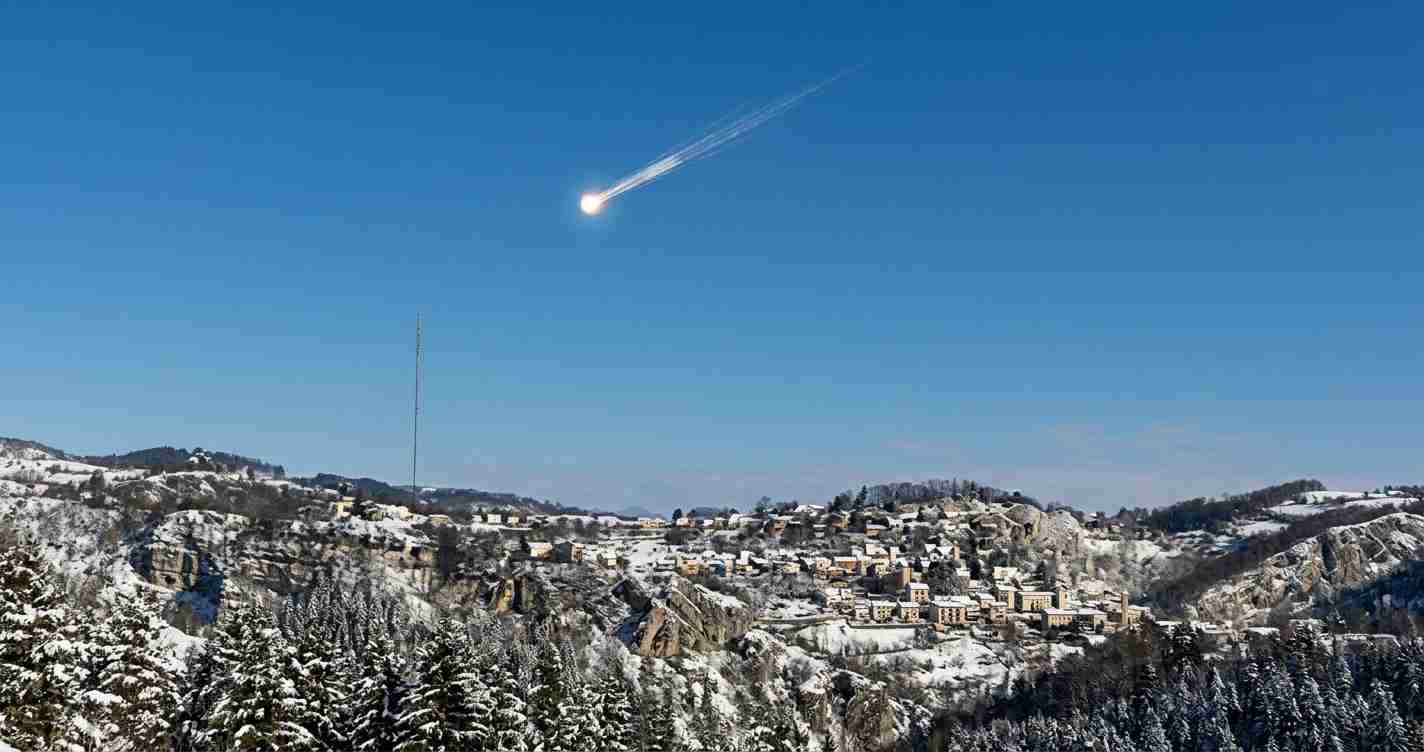
On March 17, 2026, a roughly 6-foot, 7-ton asteroid ripped across Northeast Ohio at about 40,000 mph, fragmenting over Valley City, Medina County, producing sonic booms and likely depositing meteorites south of the breakup point.
- Rare daytime fireball: A bright, daylight meteor about 6 feet across produced audible booms across multiple states.
- Confirmed breakup and possible meteorites: NASA’s trajectory shows fragmentation ~30 miles above Valley City, with fragments likely falling south of that point.
- Measured energy: The event released energy ~equivalent to 250 tons of TNT, creating a pressure wave felt on the ground.
- Wide eyewitness reporting: Observers and cameras across the Ohio Valley and beyond captured the fireball; official sources include Signal Cleveland and the Los Angeles Times.
What happened: trajectory, breakup and booms
Trajectory details: NASA’s Meteoroid Environments Office and regional observers traced the object from its first sighting over Lake Erie near Lorain as it moved southeast at about 40,000 mph. The meteor crossed roughly 34 miles of the upper atmosphere and began to fragment about 30 miles above Valley City in Medina County.
Breakup and energy: The fragmentation released energy estimated at roughly 250 tons of TNT. That energy produced a pressure wave that reached the ground as sharp sonic booms and rattling noises reported across the Ohio Valley and surrounding states.
Video and eyewitness accounts
The daylight fireball was captured on camera in Pittsburgh by an employee of the National Weather Service office there; video shows a brilliant object leaving a bright trail. The NWS Cleveland office reported staff felt vibrations, and many callers reported loud booms.
NASA and the American Meteor Society received eyewitness reports from people who saw a white-hot daytime fireball in numerous states, including Delaware, Indiana, Illinois, Kentucky, Maryland, Michigan, New York, Ohio, Pennsylvania and the District of Columbia. Agencies note that seeing a daytime fireball is rare and typically requires a very bright meteor.
“We felt the house vibrate and heard multiple booms,” said one caller to local officials; multiple observers reported series-like booms consistent with fragmentation.
Why people heard booms
Meteors travel much faster than sound and compress air along their path, creating pressure waves. When a large meteor fragments at a low enough altitude, those pressure waves can reach the ground as sonic booms. In this event the low breakup altitude and energetic fragmentation produced multiple shock waves, which observers perceived as a series of loud booms rather than a single jet-like noise.
Possible meteorites and search efforts
NASA and local officials said fragments likely survived the breakup and fell south of the fragmentation point. Trajectory maps and reports indicate potential meteorite fall zones in parts of Medina County. As of late-day updates, no pieces had been publicly recovered and no ground damage was reported.
Lorain County Emergency Management reported no immediate ground impacts. NASA encouraged anyone who believes they have found a meteorite to contact local authorities or scientific institutions for verification.
Size and composition
Experts say the object appears to have been a small, rocky asteroid roughly six feet across, with an estimated mass near 7 tons. While meteoroids vary—from dense metallic types to loose, porous rock—this one had sufficient mass to produce visible fragmentation and audible effects. Scientists will analyze any recovered fragments to determine composition and origin.
How rare is this?
Daytime fireballs visible across multiple states are uncommon because many meteors burn up too high for sound to reach observers. Officials called this event unusual and memorable. Increased camera coverage and phone recordings in recent years have made such events more likely to be documented.
Expert commentary
Regional scientists, including staff at the Great Lakes Science Center and members of the American Meteor Society, noted the event provides a valuable opportunity for recovery and study. NASA’s Meteoroid Environments Office supplied trajectory data to guide search teams. Recoveries will help refine models of how meteors fragment and where fragments land.
Safety and what residents should do
Officials urged caution around any suspected meteorite. Meteorites can be scientifically valuable and fragile—do not strike or chip a suspected specimen. Instead:
- Mark the find location and take photographs from multiple angles.
- Contact local authorities, a university geology or planetary science department, or a recognized meteoritical body for guidance.
- Respect property ownership and local laws when searching for fragments.
Emergency managers reiterated there were no reports of injuries or structural damage in Ohio following the event.
Implications for Utah
Direct economic effects in Utah from a small meteor fall in Ohio are minimal. However, recovered meteorites can spark collector interest and research opportunities. Utah institutions—universities, museums and private collectors—may express interest in samples for study.
Preparedness and policy notes: State and county emergency managers in Utah can use the episode to review alert protocols for unusual atmospheric events, communication between local and federal agencies (such as NASA and the National Weather Service), and guidance for county sheriffs and volunteer search teams.
Community and cultural effects: The event may increase public interest in astronomy, museum exhibits and school programs. Local leaders might use the occurrence to connect civic education with scientific outreach.
Reporting and follow-up
NASA published trajectory data and encouraged coordinated searches. Local officials asked residents to report any suspected finds. News organizations and scientific groups continue to collect eyewitness reports to refine the fall path and assist recovery teams. For full source reporting see Signal Cleveland and the Los Angeles Times, which summarize NASA and local agency findings and eyewitness accounts.