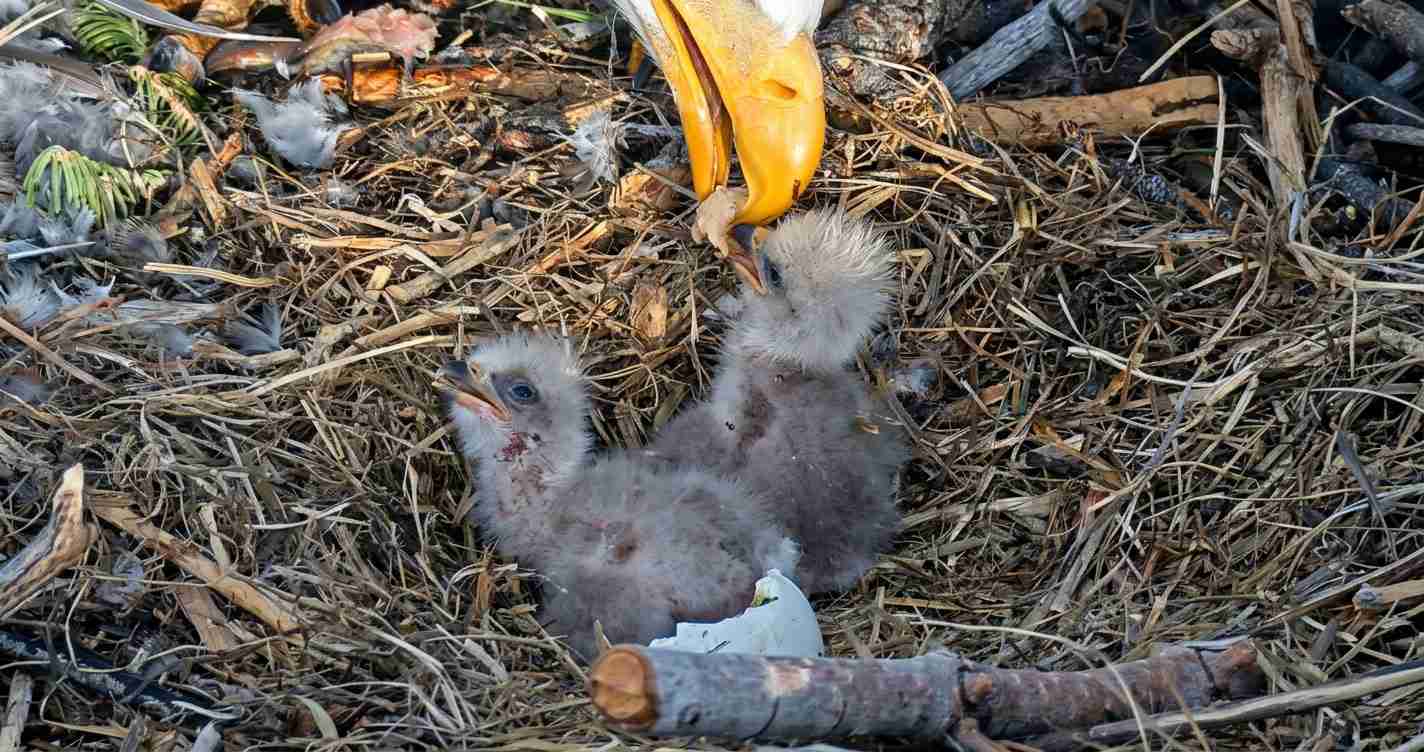
Jackie and Shadow’s Second Clutch: Big Bear Bald Eagle Pair Hatch Two Eaglets on Nest Cam
Big Bear Lake’s resident bald eagle pair Jackie and Shadow hatched two eaglets over April 4–5, 2026, captured live on the Friends of Big Bear Valley nest cam, marking a joyful rebound after an earlier clutch was lost to ravens.
Key takeaways
- Both eggs from the second clutch hatched: the first completed hatching about 9:30 p.m. Saturday after pipping the day before; the second hatched just before 9 a.m. Sunday.
- Second clutch laid late February: eggs laid Feb. 24 and Feb. 27 hatched April 4–5, 2026, after an earlier clutch was raided by ravens.
- Streamed 24/7: the nest is monitored by Friends of Big Bear Valley, providing live video and audio for public viewing and research.
- Rapid growth expected: observers anticipate chicks may reach roughly three feet in height in about 10–14 weeks with adequate feeding and weather conditions.
Hatching details captured on the Bald eagle nest cam
Livestream video and audio offered an intimate view of the hatch sequence. Viewers watching the Friends of Big Bear Valley nest cam heard and saw the first egg pip on Friday, followed by shell movement and faint chirps as the chick breached the internal membrane and took its first breaths.
FOBBV members and viewers reported the first eaglet fully emerged late Saturday night — roughly 24–48 hours after pipping, which aligns with normal hatching timelines — and the second egg, which showed a pip Saturday, fully hatched just before 9 a.m. Sunday. After both chicks hatched, a parent brooded them to provide warmth as they experienced sunlight for the first time.
“The chick has popped its head out of the shell to say a happy hatch day to mom and dad!” — Friends of Big Bear Valley livestream post
Observers noted: early feeding and constant parental vigilance will be critical during the nestling phase. If food and conditions remain favorable, the eaglets are expected to grow quickly — about three feet tall in roughly 10–14 weeks. (Reporting and timeline details shared publicly by outlets including CBS Los Angeles and ABC7.)
Nest history and recent challenges
Jackie (believed born around 2012) and Shadow (around 2014) are the lone pair that remain year-round in the San Bernardino National Forest near Big Bear Lake. The pair rose to public attention after taking up residence near a camera installed by Friends of Big Bear Valley in 2017; the nonprofit has maintained a 24/7 livestream since 2018 that cultivated a broad local and national audience.
This season began with heartbreak when the pair’s first clutch was raided by ravens while the adults were absent; two eggs were destroyed. Weeks later, Jackie laid the two eggs on Feb. 24 and Feb. 27 that produced the April hatchings. The loss drew concern from viewers and conservationists and highlighted nest vulnerability to opportunistic predators. (Context reported by Los Angeles Times and CBS Los Angeles.)
Historically, Jackie and Shadow have successfully raised chicks in multiple seasons, including young hatched in 2019, 2022 and 2025 (the 2025 pair were named Sunny and Gizmo). Their recurring success illustrates both the pair’s resilience and the value of ongoing remote monitoring.
Public interest and the role of the nest cam
The Bald eagle nest cam has turned Jackie and Shadow into local celebrities. The livestream attracts viewers across platforms (Facebook, Instagram and others), where fans mark milestones such as pips, first breaths and the final moments when chicks free themselves from shells. FOBBV volunteers provide real-time interpretation to help viewers understand what they observe on-screen.
Beyond entertainment, the livestream serves clear conservation functions: it provides public education about eagle life cycles, enables remote monitoring that reduces on-site disturbance, and builds community support — via donations and volunteerism — that sustains local conservation efforts. (Coverage and organizational context available from BigBear.com and Friends of Big Bear Valley.)
Investigative note: what the nest raids reveal
The raven raid that destroyed the first clutch underscores natural risks: ravens are known egg predators, and the incident shows how even experienced, well-established pairs can suffer losses during brief absences. The event raises practical questions about deterrence, nest-site security and coordination among land managers, researchers and nonprofits to protect vulnerable nests while minimizing human interference.
Friends of Big Bear Valley’s choice to prioritize remote monitoring over increased direct intervention reflects widely accepted practices in nesting studies: remote observation reduces human impact and still enables rapid reporting. Nonetheless, the loss prompted strong public reaction and highlights the ongoing tension between observation and active protection in wildlife conservation.
Implications for Utah
- Economic and tourism interest: Utah communities that promote outdoor recreation could emulate Big Bear’s livestream model to showcase wildlife, attract donors and boost nature-based visitation in areas such as the Uinta or Wasatch regions. See the Friends of Big Bear Valley example and regional write-ups on BigBear.com.
- Conservation partnerships: nonprofit-led monitoring can be tailored for Utah raptor populations — local groups, land managers and volunteers could coordinate remote cameras, data sharing and threat response while respecting private property and regulatory boundaries.
- Community stewardship and education: a community-owned nest-cam project offers a low-cost educational platform for schools, Scouts and civic groups to learn about life cycles and outdoor ethics while supporting conservation.
- Wildlife management lessons: the raven raid illustrates nest vulnerability during absences; Utah managers can study similar incidents to refine monitoring protocols, train volunteers to spot red flags, and develop response plans that prioritize natural behavior.
Reporting and sources
This report draws on Friends of Big Bear Valley updates and livestream posts, local news coverage and regional reporting on the pair’s history and recent season. Key sources consulted include:
- Friends of Big Bear Valley
- CBS Los Angeles coverage
- ABC7 coverage
- BigBear.com blog
- Los Angeles Times background
- Jackie and Shadow (background)
Reporting by Times Media Service. Coverage includes live-stream observations from the Bald eagle nest cam operated by Friends of Big Bear Valley, public social posts and local news accounts.