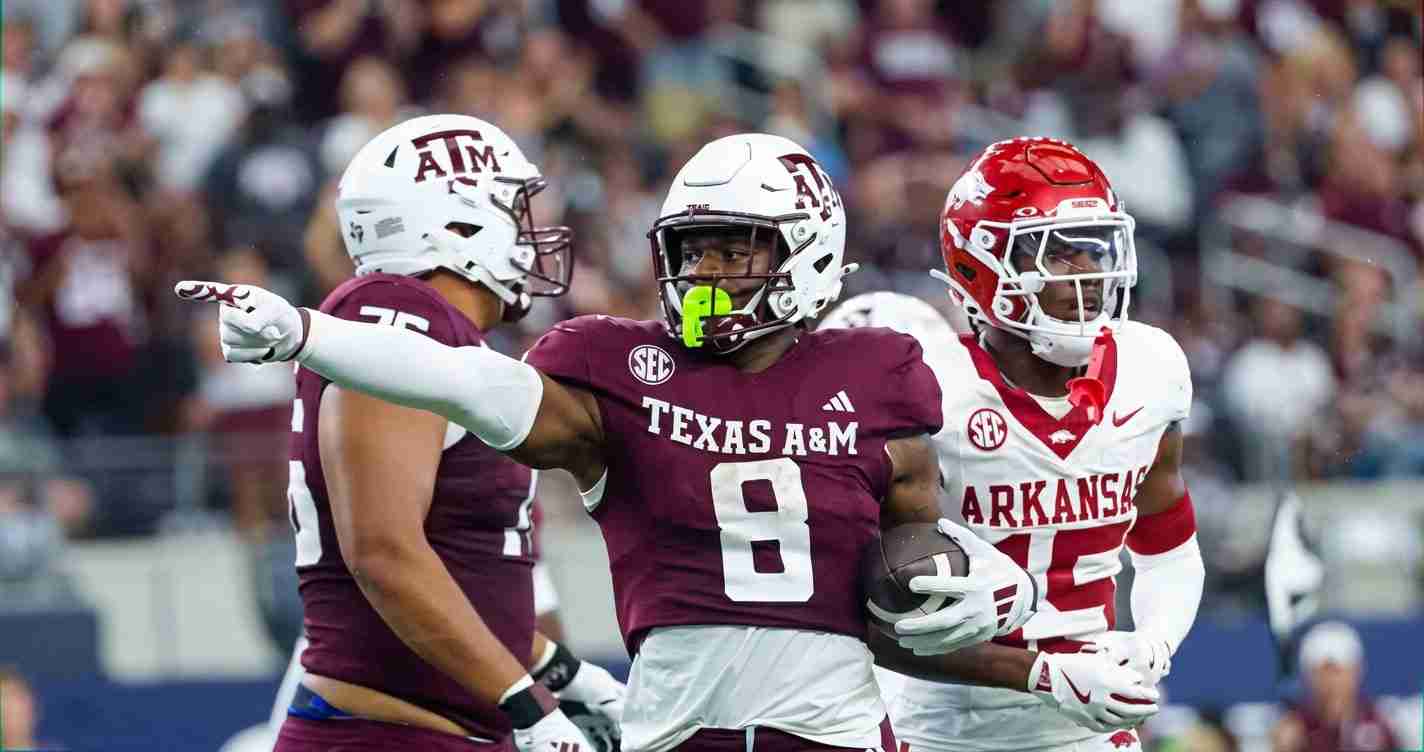
Le’Veon Moss abruptly retires four days after signing with Miami Dolphins amid injury concerns, NIL debate
Le’Veon Moss, a 23‑year‑old Texas A&M running back and Second‑Team All‑SEC selection, abruptly retired from the NFL on May 12, 2026 — four days after signing with the Miami Dolphins as an undrafted free agent, forgoing guaranteed money.
- Moss signed May 8, 2026, then was placed on the reserve/retired list on May 12, 2026, after forgoing a UDFA guarantee.
- Injury history drove concern: a torn ACL/MCL in 2024 and ankle trouble in 2025 undermined his draft standing.
- Reported UDFA guarantees: roughly $258,000 in guarantees that he may be required to repay after retiring immediately. (Barry Jackson, Miami Herald)
- NIL context: structural changes to college earnings complicate the risk/reward calculation for players with medical risk.
Moss’s short pro window and college resume
Background: Le’Veon Moss played three seasons at Texas A&M, appearing in 32 games with 20 starts. Over his Aggie career he carried the ball 321 times for 1,767 yards (about 5.5 yards per carry) and scored 22 rushing touchdowns.
He added 24 receptions for 236 yards and earned Second‑Team All‑SEC honors in 2024 — a mark of performance against elite competition. Scouts praised his burst, balance and vision on tape, but his medical record limited pro interest.
Injury history and the running back risk
Reporters and evaluators repeatedly flagged Moss’s season‑ending knee surgery in 2024 — a torn ACL and MCL — followed by an ankle issue in 2025 as major durability red flags for a running back entering the NFL. Running back is a physically punishing position that demands cutting, quickness and contact balance; long‑term knee and ankle reconstruction raise legitimate questions about retained explosiveness.
“A talented athlete whose upside is limited in the eyes of pro teams by long‑term medical risk.”
Why Miami seemed like the right landing spot
On paper, Miami offered opportunity. The Dolphins entered the 2026 offseason with questions beyond feature back De’Vone Achane, creating a window for undrafted players to compete for snaps. That plausible path to early playing time helped explain why Moss chose Miami after the draft.
But, the Dolphins’ transaction note only lists Moss on the reserve/retired list and provides no medical or personal explanation; Moss has not issued a public statement.
Contract guarantees and the financial wrinkle
Barry Jackson of the Miami Herald coverage (Barry Jackson) reported Moss’s UDFA contract included roughly $258,000 in guaranteed money. Reporting aggregated by local beat writers indicates Moss is expected to repay most or all of that guarantee because he retired almost immediately after signing.
Teams routinely include protections when a player retires right after signing, but specific repayment terms or negotiations in this case have not been disclosed publicly.
NIL’s role: structural change, not a proven motive
A major theme in coverage is how Name, Image and Likeness (NIL) has altered incentives. High‑profile college players can now monetize while still in school through endorsements, appearances and other deals. That reality changes the calculus for late‑round or UDFA players weighing the NFL’s health risks.
There is no public evidence of Moss’s NIL earnings. Any assertion that NIL alone made the NFL unnecessary for him is plausible in today’s landscape but remains speculative without confirmation.
What is fact and what is opinion
Fact:
- Moss signed with the Dolphins on May 8, 2026, and was placed on the reserve/retired list on May 12, 2026. (Miami Dolphins transaction report)
- He suffered a torn ACL and MCL in 2024 and had ankle trouble in 2025 while at Texas A&M. (Texas A&M team reports and game logs)
- Reporting indicates his UDFA guarantee was about $258,000 and that repayment is likely. (Barry Jackson, Miami Herald)
Opinion/speculation:
- That NIL earnings alone let Moss walk away is a logical possibility but is not proven in public reporting.
- Colorful conjecture about Moss’s motives — absent a statement from him — remains speculation.
Sources and reporting notes
- Miami Dolphins transactions
- Miami Herald coverage (Barry Jackson)
- Texas A&M athletics and team reports
- Heavy.com reporting and film breakdown notes
- Fan/beat coverage and analysis (dolphinsseeker)
- Background on NIL and college athlete earnings (New York Times)
- Video film analysis and prospect breakdowns (YouTube)
Implications for Utah
Economic impact: Utah’s college football economy — from high school pipelines to university programs — can be reshaped by NIL. Moss’s case highlights how prospects might monetize earlier, shifting recruiting dynamics and local sponsorship dollars toward athletes who build a marketable profile.
Political and policy consequences
For many Utah readers with conservative views, Moss’s choice may be read as an example of personal responsibility and market empowerment: NIL allows athletes to capture value they create without relying solely on a pro contract.
Social effects
Families in Utah balancing long‑term health concerns and athletic ambition may view Moss’s decision as reinforcing a cautious approach. A young player stepping away after significant knee surgery underscores parental worries about catastrophic injury.
Cultural relevance
Utah’s football culture prizes toughness, but also family and long‑term stability. Moss’s move — prioritizing health and financial calculus over pursuing the NFL — will resonate with readers weighing pride in achievement against life after football.
Practical applications
Coaches, trainers and athletes should use this episode to emphasize honest medical evaluation and career planning. Key counseling topics include:
- How injury history affects pro opportunities;
- The role NIL can play in financial planning;
- The real costs and benefits of pursuing the NFL when medical risks are high.
Reporting note
This article is based on the Dolphins’ roster move, reporting from Barry Jackson and the Miami Herald, Texas A&M team reports, regional beat coverage and broader reporting on NIL. Moss has not released a public statement explaining his retirement.