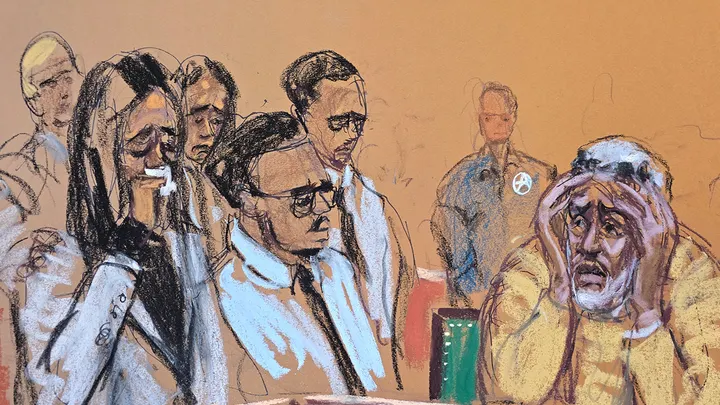
Diddy sentenced to more than 4 years in federal prison after conviction in prostitution case; fined $500,000
Sean “Diddy” Combs was sentenced to 50 months in federal prison on Oct. 3, 2025, after his July conviction on two counts of transportation to engage in prostitution — he also faces five years’ supervised release and a $500,000 fine.
- Sentence: 50 months in federal prison, five years of supervised release and a $500,000 fine (ABC7 live updates, CBS News live updates).
- Conviction: Guilty on two counts of transportation to engage in prostitution (court video excerpt: YouTube court video excerpt).
- Acquittals: Not convicted on sex trafficking or racketeering counts; prosecutors had sought much higher penalties.
Conviction details
In July 2025, a federal jury found Combs guilty on two counts tied to transporting people to engage in prostitution. Prosecutors described events they called “freak-offs,” alleging those gatherings involved drugs, sex and at times violence, and that people were flown and paid to participate.
Reporting and court filings detailed instances in which attendees were flown to events and compensated for sexual acts. The government’s narrative centered on the organization of those parties by Combs and associates as a facilitator of prostitution rather than as an isolated personal encounter (ABC7 reporting).
Verdict nuance: acquittals and scope
Jurors delivered a split verdict: they convicted on transportation-for-prostitution counts but acquitted Combs of sex trafficking and racketeering. Those acquittals prevented exposure to the far harsher penalties prosecutors had sought.
The split verdict narrowed the legal focus of sentencing to those transportation counts, shaping both the defense’s plea for leniency and the government’s framing of the offense.
Sentencing proceedings
At the Oct. 3 hearing the judge imposed 50 months in federal prison, followed by five years of supervised release and a $500,000 fine. The decision capped a high-profile trial that drew national attention and extensive media coverage (ABC7 live updates; CBS News live updates).
Prosecutors had urged an approximately 11-year term, arguing the events were organized operations that exploited people. The judge’s sentence — significantly lower than the 11 years sought — still represents a meaningful custodial term for a major entertainment figure.
Pretrial detention and defense arguments
Combs spent more than a year in detention before trial. Defense attorneys urged immediate release at sentencing, pointing to that detention, his reported sobriety, family ties, philanthropic work and an 11-minute video shown in court depicting his family life and charitable efforts as evidence of rehabilitation.
The defense framed encounters as consensual and emphasized personal reform. Prosecutors countered by highlighting the organized nature of the events and the role of transportation and payments in facilitating prostitution.
Combs’ remarks and courtroom moments
Combs called his past behavior “disgusting” and “shameful,” saying he was “sick” over what happened and apologizing to those he hurt and to his children.
Those remarks were part of a broader defense strategy to demonstrate remorse and rehabilitation ahead of sentencing.
Defense and prosecution strategies
- Defense: Emphasized consensual nature of encounters, time in custody leading to sobriety, family ties, charitable work and expressed remorse.
- Prosecution: Argued events were organized and exploitative, urging a sentence to reflect seriousness and to deter similar conduct.
Impact on career and legacy
The sentence removes Combs from public life for years and jeopardizes business interests across record labels, apparel, media and partnerships. For decades he built a sprawling entertainment empire; this conviction is a stark reversal and raises questions about the future of ventures tied to his name.
Media analysts note the case damages his brand and underscores how powerful figures can be held accountable on narrower federal statutes even when broader charges are not sustained.
Implications for Utah
Though Utah’s music scene isn’t directly dependent on Combs’ operations, the case has several local implications:
- Economic impact: Local promoters and venues should review contracts and vetting procedures; include morality and indemnity clauses when working with national stars.
- Political consequences: The sentence may be cited by officials emphasizing law and order and could influence debates about funding for law enforcement and victim services.
- Social effects: The allegations highlight risks of celebrity culture masking exploitation; faith-based and community groups may press for stronger addiction and victim-support programs.
- Practical steps: Educators can use the trial as a case study on ethics and consent; local governments should ensure contractual protections and background checks for subsidized events.
Sources and reporting
This article draws on live reporting and court coverage from ABC7 live updates, ABC7 reporting, and CBS News live updates. Relevant court video excerpts are available (YouTube court video excerpt).
For additional details and live updates, see the linked original reporting from the sources above.