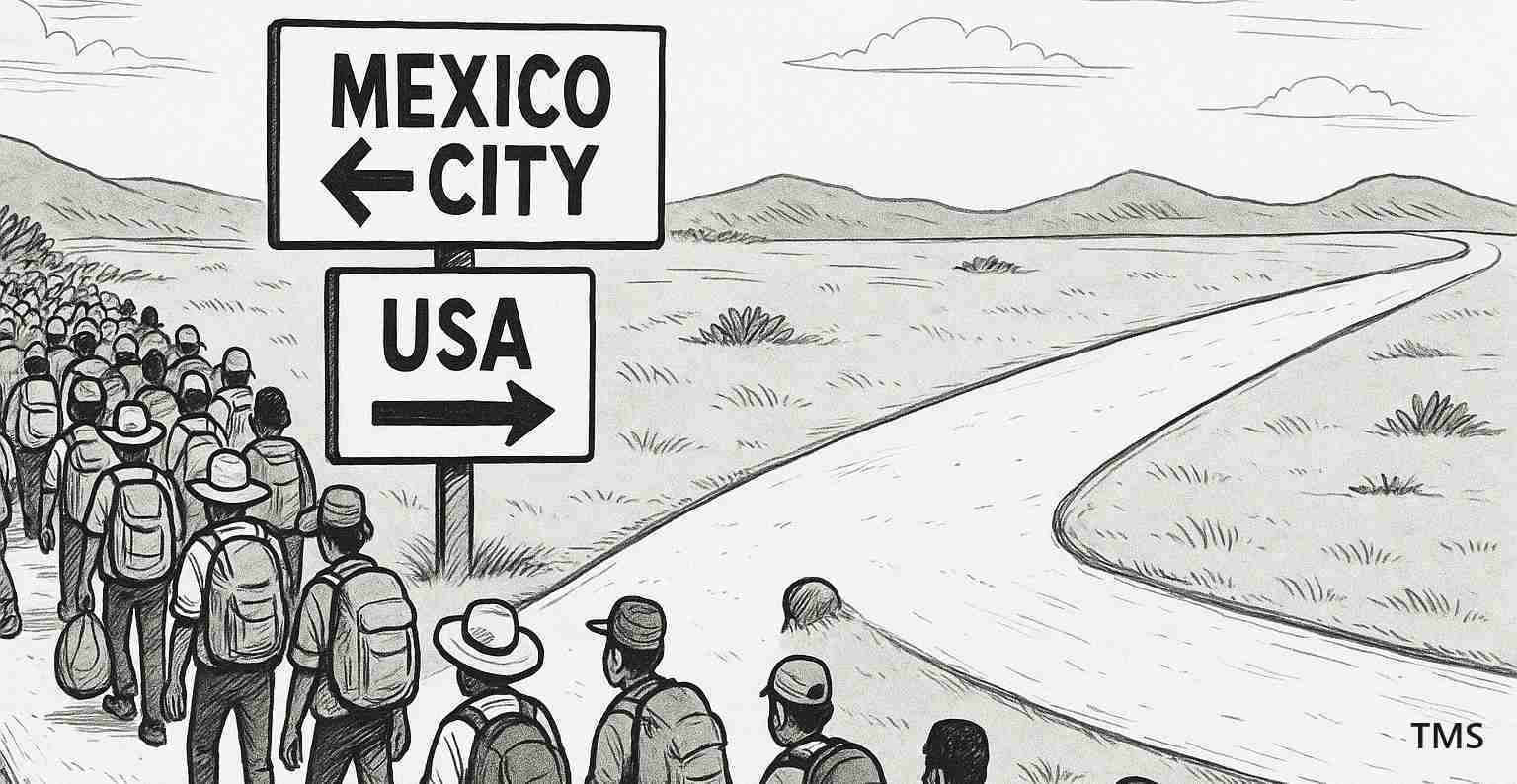
Cuban-led caravan of about 1,200 leaves Tapachula for Mexico City as Trump-era U.S. policies push migrants to stay in Mexico
About 1,200 Cuban-led migrants left Tapachula, Chiapas, in early October 2025, heading to Mexico City to regularize status and seek work — a shift driven by stricter U.S. policies and limited services.
Key takeaways
- Size & composition: ~1,200 migrants, mostly Cuban with some Nicaraguans and Venezuelans, departed Tapachula in early October 2025 (CiberCuba; Anadolu Agency; Mexico News Daily).
- Primary goal: To regularize immigration status in Mexico and find work — not to reach the United States.
- Drivers: Stricter U.S. rules (e.g., removal of the CBP One app) and narrow legal pathways have reduced northward prospects (Anadolu Agency; Power Line Blog).
- Humanitarian concern: Tapachula remains a bottleneck with long waits, limited work access and allegations of corruption in asylum processing.
Caravan departs Tapachula
In early October 2025, a large group of migrants left Tapachula, a southern Mexican city long used as a processing point for people arriving from Cuba, Central and South America. Organizers and local reports put the caravan at about 1,200 people, including families, single adults and elderly migrants who had spent months waiting for paperwork in Tapachula (CiberCuba; Anadolu Agency).
Organizers’ stated purpose
Organizers emphasize the march is not intended to reach the U.S. border but to pressure Mexican authorities to accelerate asylum and refugee procedures and to access larger labor markets in cities such as Mexico City and Monterrey (Mexico News Daily).
Why migrants are aiming to stay in Mexico
Migrants cited multiple reasons for deciding to remain in Mexico instead of attempting the perilous journey north. Key drivers include the deterrent climate at the U.S. border under Trump-era immigration rules, such as elimination of the CBP One app and tighter legal routes — changes that have made U.S. processing or legal entry harder to obtain (Anadolu Agency; Power Line Blog).
Practical realities also matter: many cannot return to Cuba, and Mexico appears to offer the most feasible chance to rebuild a life. Reports note Mexico’s reception of non-Mexican deportees from the U.S. as a signal that staying in Mexico may be safer than attempting to cross the U.S. border (Anadolu Agency).
Tapachula migrant crisis and the Mexico asylum process
Tapachula has emerged as a “containment city” where thousands of migrants are effectively trapped without legal status, work authorization or stable housing. Local accounts describe crowded shelters, high rents, limited income opportunities and long asylum and refugee processing delays (CiberCuba).
“We waited months for paperwork; there is no clear timeline,” said migrants and local organizers, highlighting the human toll of bureaucratic delay.
Those delays have fueled allegations of corruption: migrants report officials and some private lawyers demanding bribes to advance cases, while human rights groups warn the asylum system has become slow and opaque, offering limited legal recourse (CiberCuba; Mexico News Daily).
WhatsApp, social media and a spontaneous march
Organizers and participants say the caravan coalesced rapidly via WhatsApp groups and social media, illustrating how prolonged uncertainty can turn into collective action. The march’s spontaneous nature underscores migrants’ mounting frustration after months in Tapachula (CiberCuba).
Mexican federal security forces accompanied the caravan northward, offering surveillance and some protection according to reports (CiberCuba).
Complaints: corruption, abuse and the human cost
Migrants and rights groups report repeated problems within Mexico’s asylum system: arbitrary denials, demands for bribes, slow rulings and the resulting legal limbo. Many migrants face low pay, high rents and discrimination, prompting human rights organizations to raise alarms about serious humanitarian concerns (CiberCuba; Mexico News Daily).
Broader regional significance and policy drivers
Analysts view the caravan as emblematic of a wider shift: with U.S. deterrent policies in place, Mexico is increasingly seen not just as transit but as a potential destination for those fleeing hardship and persecution. This raises urgent questions about Mexico’s capacity to process asylum-seekers and the need for reforms to reduce corruption and accelerate decisions (Anadolu Agency; Mexico News Daily).
Humanitarian groups and shelter networks in Mexico City are preparing for an influx of migrants seeking regular status and services, which will strain municipal resources and civil society groups already stretched thin (Anadolu Agency).
Implications for Utah
Economic impact
Labor markets: Utah’s construction, manufacturing and service sectors have relied on immigrant labor. A shift that keeps more migrants in Mexico may ease border arrival pressure but could still leave Utah employers facing labor shortages if U.S. legal pathways remain restricted. Employers may press for clearer federal guest-worker channels.
Costs and federal funding: Changes in national migration patterns can alter federal spending priorities. If Mexico becomes a long-term host for more migrants, humanitarian spending and aid allocations could be reallocated, indirectly affecting grants and social-service funding that benefit state nonprofits and programs.
Political consequences
Messaging and elections: For Utah’s conservative voters and leaders, the caravan may be presented as evidence that tougher U.S. policies reduce arrivals — while opponents argue the policies leave migrants vulnerable in Mexico. The issue could surface in federal and state campaigns on border security and humanitarian obligations.
Federal-state relations: Utah officials may press for a clear federal strategy that balances migrants’ rights and border security, and for expedited legal channels to meet employer needs without encouraging irregular migration.
Social effects
Nonprofit and faith-based roles: Utah’s faith and charity networks often assist migrants and refugees. While immediate local demand may not spike, community groups could be asked to support federal policy advocacy, legal aid coordination, or direct assistance to any newcomers.
Public sentiment and local services: Utah communities tend to value law and order and orderly immigration; that may translate into support for policies favoring legal migration while urging humane treatment of migrants abroad and at entry points.
Cultural relevance
Utah’s conservative population values self-reliance, community service and rule of law. The Tapachula crisis and the Cuban-led caravan may push local leaders and congregations to balance support for enforcement with practical, lawful ways to assist vulnerable people.
Practical applications for residents
- Employers: Track federal policy that affects worker availability and legal authorization; advocate for guest-worker programs if shortages emerge.
- Charities & churches: Coordinate with national partners and legal-aid organizations to prepare for any arrivals while respecting federal law.
- Officials: Use this moment to press federal leaders for transparent policy updates and improved coordination with Mexico to address root causes and orderly legal channels.