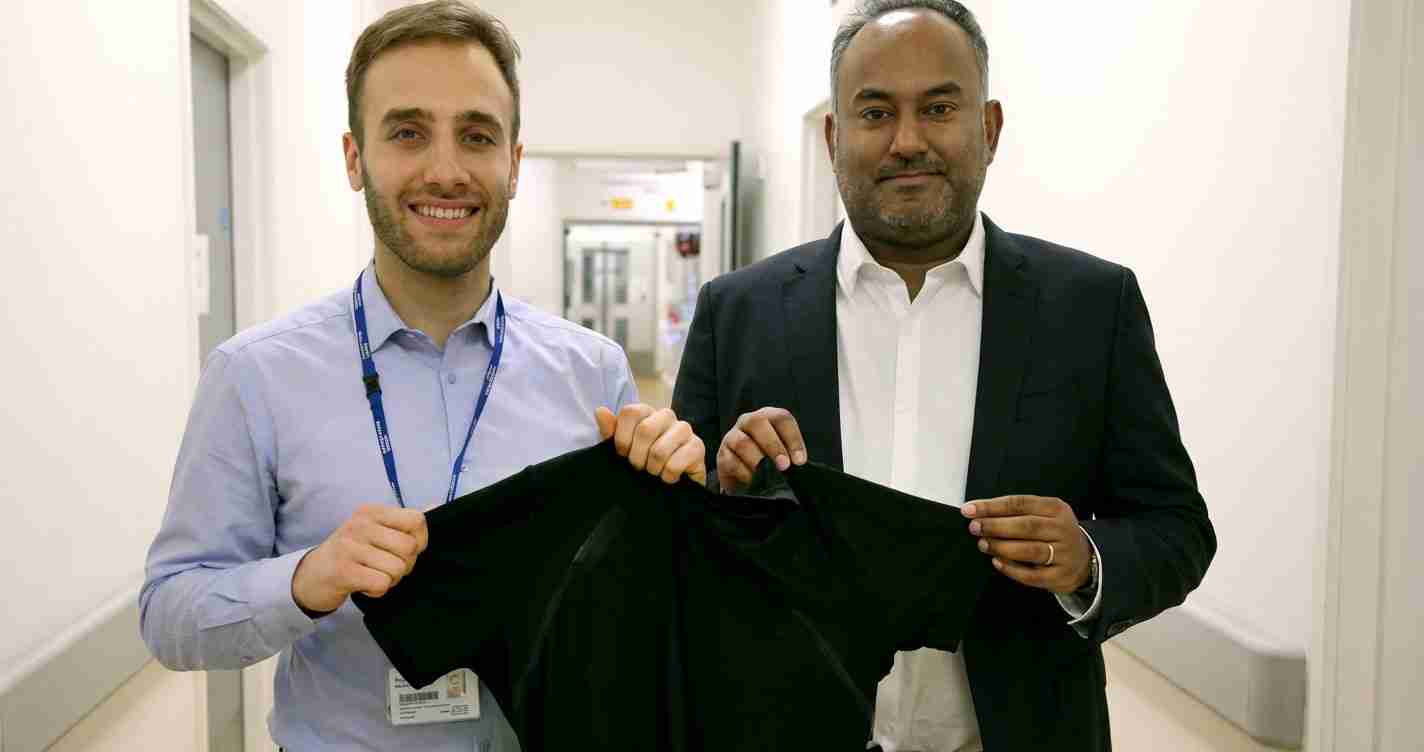
AI Smart T‑shirt with 50 Woven ECG Sensors Aims to Improve Detection of Inherited Heart Rhythm Disorders
Researchers at Imperial College London are developing an AI‑powered smart T‑shirt woven with up to 50 ECG sensors to record continuous heart signals, aiming to detect intermittent inherited rhythm disorders—like Brugada syndrome—that short clinic ECGs can miss.
- Continuous monitoring: A sportswear‑style T‑shirt contains up to 50 woven ECG sensors to record days or weeks of heart data for AI analysis.
- AI training: The algorithm was trained on ECGs from more than 1,000 people to identify subtle, intermittent signs of inherited rhythm disorders.
- Feasibility study planned: About 200 volunteers at Hammersmith Hospital will wear the shirt for up to three months to test real‑world performance.
- Funding and timeline: Led by Professor Zachary Whinnett at Imperial’s National Heart and Lung Institute, funded by the British Heart Foundation; clinical use could take roughly five years if trials and regulation succeed.
How the AI smart T‑shirt works
The garment is designed to look and feel like sportswear rather than hospital equipment. Soft fabric holds dozens of thin, ECG‑style sensors that sit against the skin. Wires and small electronics tucked into a pocket collect signals and upload them for analysis.
Because the sensors are woven into the shirt, patients can wear it under normal clothes, sleep in it, and wash it — making long monitoring periods practical. For project details see Imperial College London and a complementary briefing at Imperial College London (detailed article).
AI, training data and signal processing
Instead of a few minutes in a clinic, the system aims to provide days or weeks of continuous electrical recordings. That data feeds an AI algorithm trained to separate routine heart variations from the subtle, intermittent signals tied to inherited conditions such as Brugada syndrome. Researchers report the training set includes ECGs from more than 1,000 people — a mix of affected and unaffected individuals to teach the machine what is normal and what is a red flag.
Why extended monitoring matters
Many inherited rhythm disorders are intermittent. A dangerous pattern may appear for minutes or hours and then vanish. Standard electrocardiograms (ECGs) in hospitals typically last about 10 minutes, which can leave a blind spot. Even 24‑ to 48‑hour adhesive‑lead monitors can be inconvenient and uncomfortable for long durations.
Weeks of continuous data give cardiologists context: subtle irregularities that slip past short tests can appear as repeating patterns over longer records, improving the chance of diagnosis and timely treatment.
Leadership, funding and supporting quotes
The project is led by Professor Zachary Whinnett, a consultant cardiologist with Imperial College Healthcare NHS Trust and Imperial’s National Heart and Lung Institute. Whinnett said:
“Far too many people die from inherited heart conditions which could be treated if they were identified earlier.”
The British Heart Foundation has provided more than £340,000 in support. Professor James Leiper of the British Heart Foundation said:
“This innovative research will leverage the power of AI to help clinicians unmask these hidden conditions and identify patients at risk of sudden death.”
Read the BHF announcement British Heart Foundation.
Current progress and planned trials
Imperial reports the AI’s initial training phase is complete using diverse ECG datasets. The next step is a feasibility study with about 200 volunteers who will wear the smart T‑shirt for up to three months at Hammersmith Hospital’s Peart‑Rose Research Unit to test performance in daily life.
If results are positive, researchers plan wider trials, potentially including children and other conditions such as atrial fibrillation, followed by regulatory review. The team estimates possible clinical use in roughly five years if trials and approvals proceed favorably. Further project detail available from Imperial College London (detailed article).
What remains to be proven
Key challenges include demonstrating the AI can detect true danger without excessive false alarms, maintaining signal quality during normal daily activity and after repeated washes, and ensuring training datasets represent diverse ages, ethnicities and body types. Regulators will also evaluate data privacy and security because continuous heart recordings are sensitive medical information.
Independent reporting and oversight will be crucial to public trust; the device will need rigorous trials and approvals by U.K. regulators and, for broader adoption, authorities like the U.S. Food and Drug Administration.
Implications for Utah
Economic impact
- Health systems: Utah hospitals and clinics could adopt the technology to improve diagnosis and reduce emergency care costs, with upfront investment for devices, data handling and clinician training.
- Market opportunities: Utah’s tech and medical device sectors may find openings for production, distribution or data services linked to smart‑wearables, potentially attracting private investment and jobs.
Political consequences
- State health policy: Lawmakers and regulators may need to decide on pilot funding, coverage rules and privacy safeguards; debates may weigh private innovation against public mandates.
- Insurance and reimbursement: Adoption will depend on whether insurers and Medicare agree to pay for prolonged monitoring; cost‑effectiveness data will be decisive.
Social effects and cultural relevance
- Rural care: Wearables could let local clinics and telemedicine teams detect risks without frequent hospital trips, aiding remote communities.
- Family safety: Because inherited conditions run in families, screening programs could identify at‑risk relatives sooner.
- Active lifestyles: A comfortable, washable T‑shirt fits Utah’s outdoor and sports culture better than bulky hospital equipment.
Source material and reporting
This report draws on Imperial College London project pages (Imperial College London and Imperial College London (detailed article)), the British Heart Foundation announcement (British Heart Foundation), and related reporting on Fox News (Spanish), Fox News, and MedicalXpress.
Researchers estimate inherited rhythm disorders affect hundreds of thousands in the U.K., and they argue longer, user‑friendly monitoring could catch risks that short ECGs miss. The Imperial team plans careful testing in the coming months and years to balance accuracy, privacy and cost as the shirt moves from lab studies toward clinical evaluation.