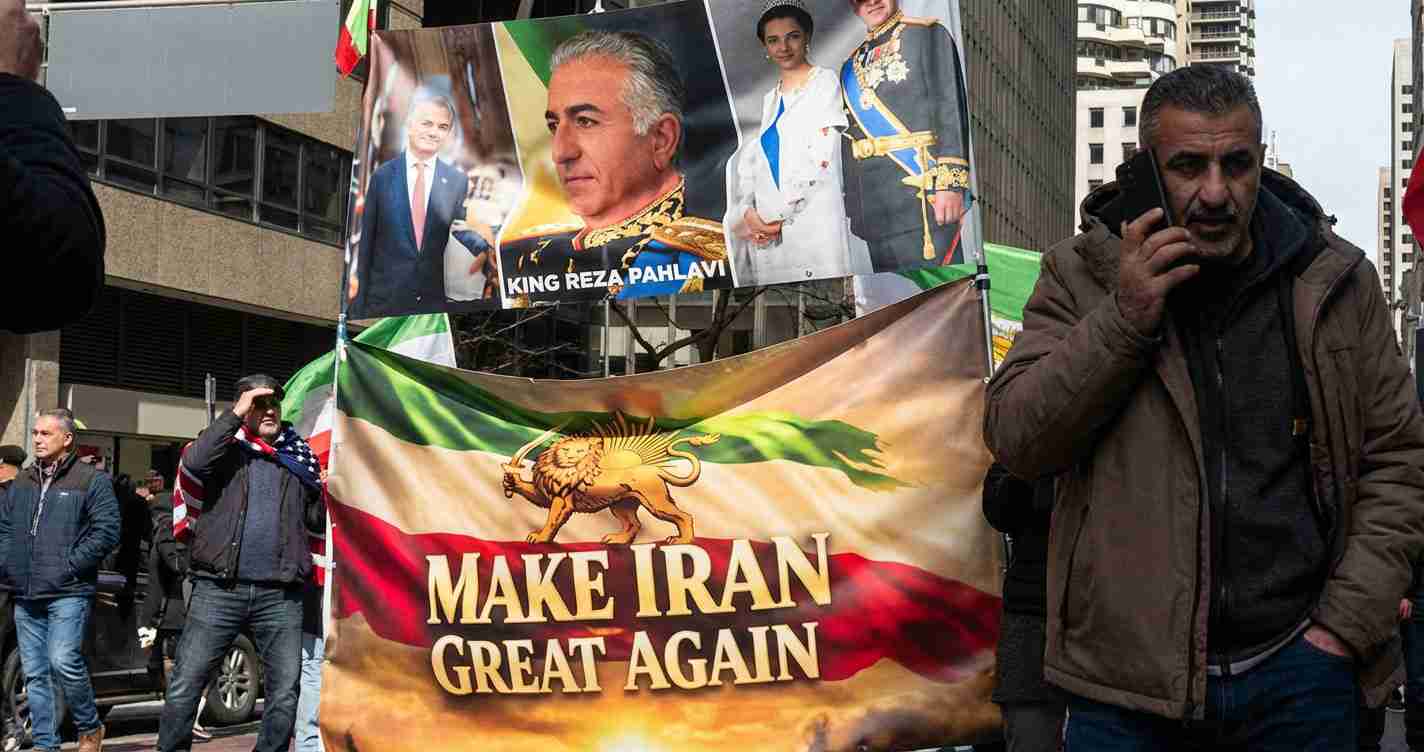
Iranian-Americans Celebrate Khamenei Death in New York City as Counter-Protests Condemn U.S.-Israeli Strikes
New York City saw sharply divided reactions after a U.S.-Israeli strike killed Supreme Leader Ayatollah Ali Khamenei, with hundreds of Iranian-Americans celebrating and other New Yorkers staging anti-war protests condemning the military action and its escalation.
Key takeaways
- Hundreds of Iranian-Americans marched in Manhattan to honor protesters killed in Iran and to mark the reported death of Ayatollah Ali Khamenei (source: CBS News).
- The march was organized by the Lion and Sun group, featured the pre-1979 lion-and-sun flag, and included calls for exiled Crown Prince Reza Pahlavi to lead a transitional government (source: CBS News).
- Simultaneously, anti-war and pro-Palestinian groups held Midtown protests condemning the U.S.-Israeli strikes; New York City leadership called the strikes an escalation (source: AMNY).
- Inside Iran, mass protests and harsh crackdowns have produced fear and uncertainty, the backdrop to diaspora reactions (source: The News & Sentinel).
The celebratory march: flags, grief and calls for change
On Sunday, groups of Iranian-Americans gathered in Manhattan in a march organized by the Lion and Sun group. Participants carried the pre-1979 Persian lion-and-sun flag, U.S. flags and Israeli flags as they walked and chanted, saying they were honoring protesters killed in Iran and celebrating the reported death of Ayatollah Khamenei (source: CBS News).
Organizers and demands
Organizers and speakers urged support for Crown Prince Reza Pahlavi, the exiled member of Iran’s former royal family, saying he should be allowed to form a transitional government until Iranians can choose their own leaders. The Lion and Sun group has promoted the prince as a unifying figure for the Iranian diaspora seeking democratic change (source: CBS News).
Voices from the march
Personal testimony underscored pain and resolution. NYU student Foujan Gharib, who said she came to the United States in 2023, recounted being hit by rubber bullets during protests in Iran and watching classmates and friends taken by security forces. “I was crying and dancing the whole day yesterday after 50 days of torture,” Gharib told reporters (source: CBS News).
Manhattan resident Fariborz Aghili said the march had a dual purpose: “We are honoring all the people that were murdered by the Ayatollah regime 50 days ago and also celebrating the death of the Ayatollah,” according to reporters (source: CBS News).
Shadi Hosseini, who fled Iran as a child after the 1979 Islamic Revolution, said her family remains in Iran and belongs to the Bahai faith, a group long persecuted there: “The people of Iran have been suffering, all of us. There is not one person outside of Iran that doesn’t have family member or acquaintance they know that have been slaughtered” (source: CBS News).
Acknowledging costs and American service members
Organizers and marchers also acknowledged the human cost of the military strikes. Riag Javid, head of the Persian American Parade, noted that three American service members had been killed and called them “our heroes,” expressing sorrow even as protesters celebrated what they see as a step toward freeing Iran from the regime (source: CBS News).
Some attendees expressed gratitude to U.S. leaders they say supported Iranian dissidents. Iranian-American Shawn Azzeam was quoted thanking former President Trump for backing U.S. support for Iranians abroad (source: CBS News).
Opposition on the streets: NYC anti-war protests
At the same time, other New Yorkers marched in Midtown Manhattan to protest the U.S.-Israeli military action. Those demonstrations drew anti-war, socialist and pro-Palestinian groups, organized in part by the People’s Forum and the ANSWER Coalition, and called for an end to U.S. intervention in the Middle East (source: AMNY).
New York City Mayor Jamaal Mamdani criticized the strikes, calling them “a catastrophic escalation in an illegal war of aggression” and arguing that Americans want relief from domestic problems rather than regime-change wars abroad. He also pledged solidarity with Iranian-Americans and emphasized their safety in the city (source: AMNY).
Context inside Iran: mass protests, harsh crackdowns
The backdrop for both the celebratory marches in New York and the anti-war demonstrations is a months-long wave of unrest inside Iran. Last month, hundreds of thousands took to the streets across Iran, with many chanting “Death to Khamenei”, in what observers described as possibly the largest protests against the clerical leadership since the 1979 revolution. These protests were met with a bloody crackdown that suppressed public gatherings but left deep fear and uncertainty among Iranians (source: The News & Sentinel).
Analysts say demonstrations in the United States reflect the pain and anger of the Iranian diaspora. For many who fled persecution or lost family members, the death of Khamenei — and the U.S.-Israeli role in that outcome — is seen as a turning point, even as others warn of wider conflict and civilian harm (sources: CBS News; The News & Sentinel).
Who organized the march and what they want
The Lion and Sun group, which arranged the Manhattan march, advocates for a transition led by Reza Pahlavi until Iranians can freely determine their government. The group’s supporters view the exiled crown prince as a potential symbol of national unity and a step away from clerical rule. Organizers said they want the same rights for people inside Iran that Iranian-Americans live with in the United States (source: CBS News).
Security and civic response in New York
City officials monitored both the celebratory march and the anti-war protests to maintain public safety. Mayor Mamdani’s dual message — condemning the strikes while protecting Iranian-American residents — reflected the city’s need to balance free expression with security concerns (source: AMNY).
Implications for Utah
Though the events unfolded in New York and abroad, there are potential ripple effects for Utah across economic, political, social and cultural dimensions:
- Economic impact: Escalation in the Middle East can raise oil and energy prices, affecting fuel costs and household budgets in energy-importing states like Utah and potentially disrupting businesses reliant on stable shipping and supply chains.
- Political consequences: Utah’s conservative audience may sympathize with pro-democracy sentiment in the Iranian diaspora while also expressing concern about entangling U.S. forces in prolonged conflicts.
- Social effects: Utah’s Iranian-American community and families with ties abroad may experience increased anxiety; local advocacy groups and houses of worship may see more requests for assistance.
- Cultural relevance: Values such as religious freedom and rule of law may resonate with marchers’ demands for rights inside Iran, and the Lion and Sun flag and calls for a transitional government may find sympathetic listeners.
- Practical applications: State and local leaders should prepare information for residents checking on relatives abroad, connecting with consular services, and supporting vetted humanitarian relief; military families may feel direct impacts if deployments change.
Sources
- CBS News — “U.S.-Israeli attacks prompt marches in New York”
- AMNY — “Mayor condemns strikes, New Yorkers protest”
- The News & Sentinel — “Some celebrate in Iran after supreme leader’s death, but fear remains”
Reporting from Times Media Service; sources cited above.