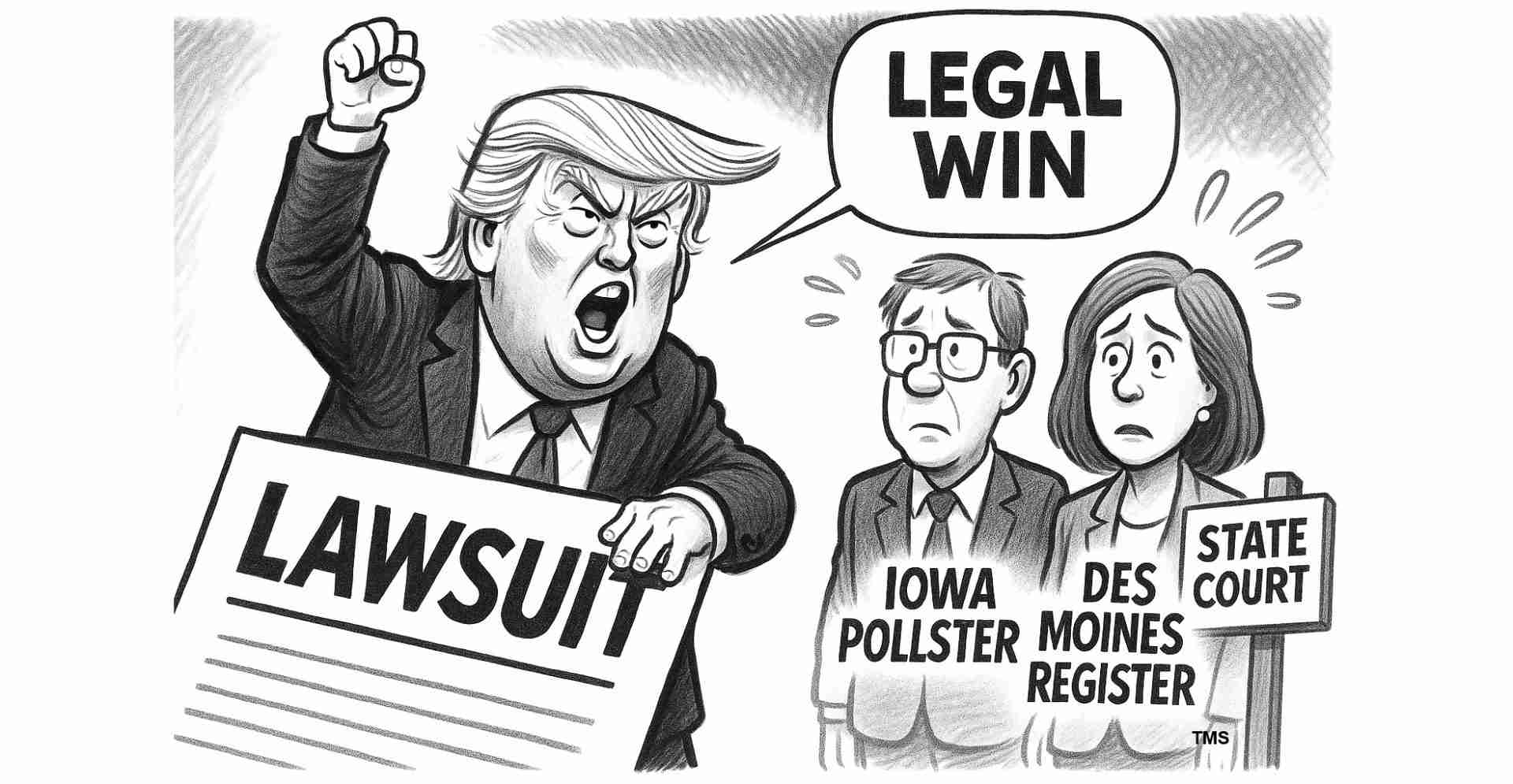
Trump wins procedural victory — Iowa poll lawsuit sent to state court amid ‘election interference’ claims
The U.S. Court of Appeals for the Eighth Circuit ordered Donald Trump’s lawsuit against pollster J. Ann Selzer and The Des Moines Register to be dismissed from federal court so it can be refiled in Iowa state court.
Key takeaways
- Procedural win: The Eighth Circuit directed the federal case be treated as dismissed so Trump may refile in Iowa state court (Source: Fox News).
- Contested poll: A Nov. 2, 2024 poll showed Kamala Harris up three points; actual returns had Trump winning Iowa by over 13 points (Source: Fox News).
- First Amendment fight: Defendants and FIRE argue the suit threatens free speech and is a SLAPP-style attack.
- Broader stakes: A favorable ruling on the merits could reshape polling, newsroom practices and liability for published surveys.
Background: the contested poll and the claims
The poll at the center of the dispute was released on Nov. 2, 2024 and showed Democrat Kamala Harris leading former President Donald Trump by three percentage points in Iowa. That was roughly a seven-point swing from a September poll that had Trump ahead by four points. Three days later, voters delivered a different result: Trump won Iowa by more than 13 points.
Trump’s legal team contends the late poll was not a simple error but a deliberate effort to shape voter expectations and alter turnout in a way that favored his opponent — calling it “brazen election interference” and asserting violations of Iowa law (Source: Fox News).
Defendants’ response and First Amendment concerns
J. Ann Selzer and The Des Moines Register deny wrongdoing. They say the poll’s methodology and data were disclosed, and that pollsters sometimes miss the mark without committing fraud. The Foundation for Individual Rights and Expression (FIRE) is defending Selzer.
“Punishing someone for their political prediction is about as unconstitutional as it gets,” FIRE said in its defense statement, calling the lawsuit an attack on political speech and polling (Source: FIRE).
Legal defenders describe the suit as a classic SLAPP — a strategic lawsuit against public participation — aimed at intimidating critics rather than vindicating legitimate fraud claims.
Procedural history: how the case reached the Eighth Circuit
Trump filed the complaint in Polk County, Iowa, in December 2024 under Iowa’s Consumer Fraud Act. Defendants removed the case to federal court, and a federal judge initially denied Trump’s motion to return the case to state court. The dispute escalated to the Eighth Circuit.
The appeals court granted a rare writ of mandamus, ordering the district court to treat the federal case as dismissed without prejudice so Trump can refile in Iowa state court. The Eighth Circuit’s order was strictly procedural and did not decide whether the poll was unlawful or whether the allegations have merit (Sources: Fox News; Des Moines Register).
Timing and Iowa’s anti-SLAPP law
Timing is consequential: Trump filed this action immediately before a new Iowa anti-SLAPP law took effect. Anti-SLAPP statutes protect speech on public issues from lawsuits intended to silence critics. Some legal observers suggest the filing’s timing could reflect a strategy to avoid the new protections that may have complicated pursuit of the case (Source: Des Moines Register).
Gannett, parent company of The Des Moines Register, has said it prefers federal court but expects a fair process in Iowa state court.
What the Eighth Circuit did — and did not — decide
The appeals court’s order focused narrowly on jurisdiction: where the suit should be heard, not on the underlying merits. The ruling grants Trump a procedural path to state court but leaves open the central questions: whether the poll amounted to election interference, whether it violated state consumer-fraud law, and how the First Amendment applies to poll publication (Source: Fox News).
Broader stakes: polling, media and the First Amendment
Experts warn a merits ruling for Trump could change how pollsters and newsrooms operate. If state courts permit fraud or interference claims based on published polls, media organizations and pollsters might face new legal exposure for incorrect or unpopular predictions.
Critics say such liability would chill reporting and analysis around elections. Supporters counter that greater accountability is needed when polling appears to steer voters or mislead the public shortly before an election. Both sides agree the outcome will affect public trust in polling and newsroom practices (Sources: FIRE; Fox News).
Implications for Utah
Economic impact: Utah news outlets and pollsters may watch the Iowa case closely. If state courts allow fraud claims tied to polling data, media companies could face higher legal costs and greater caution in commissioning and publishing polls (Sources: Fox News; Des Moines Register).
Political consequences: For conservative Utah voters and officials who prioritize election integrity, the case highlights who controls the pre-election narrative. If Trump’s claims gain traction, campaigns may push for more oversight of polling practices.
Social and cultural effects: Local coverage may change as outlets weigh litigation risk; voters may grow more skeptical of polls or demand greater transparency about methodology and timing (Sources: FIRE; Des Moines Register).
Practical applications
Campaigns, county clerks and election observers in Utah should note the legal questions the case raises about polling and public information. Practical steps may include:
- Tightening campaign guidance for responding to polls.
- Updating newsroom transparency practices: publish full questionnaires, response rates and field dates.
- Encouraging poll vendors to disclose methodology and timing to limit legal exposure.
Reporting and sources
Reporting in this story draws on court filings and public statements from parties involved. For more details and original reporting see: Fox News coverage of the procedural ruling, FIRE’s defense statement for J. Ann Selzer, and Des Moines Register reporting on filings and timing related to Iowa’s anti-SLAPP law (Des Moines Register — anti-SLAPP timing; Des Moines Register — procedural filings).
This article preserves reported facts and source links for further review.