Trump’s 50-year mortgage proposal reignites debate over homebuyer affordability and long-term costs
Donald Trump’s proposal for a government-backed 50-year mortgage aims to lower monthly payments and expand homeownership, but experts warn it could raise lifetime interest costs, slow equity build-up and potentially inflate home prices across U.S. markets.
- Proposal: A federally-backed 50-year mortgage pitched to expand access and lower monthly payments; proponents call it a “game changer” (Fox Business, Axios).
- Trade-offs: Lower monthly payments can mask much higher lifetime interest, slower equity, and the risk of higher home prices (see HousingWire, Axios).
- Policy context: Critics say the plan is a short-term fix that won’t tackle supply problems that drive long-term affordability (Politico, CBS News).
Overview
The administration’s idea would have the federal government guarantee home loans amortized over 50 years rather than the typical 30-year term. Supporters — including FHFA director Bill Pulte — have portrayed the plan as a way to increase ownership by lowering monthly payments; critics say it shifts costs to the long run, raising questions about borrower risk and taxpayer exposure (Fox Business, Axios).
How the proposed 50-year home loans would work
Under the proposal, mortgages would amortize over 50 years, spreading principal across more payments and reducing monthly obligations. Proponents compare the idea to the historical expansion of the 30-year loan under FDR, arguing a federal role can broaden credit access and help young or lower-income buyers get into homes sooner (Fox Business, Axios).
“A 50-year mortgage could let more Americans buy homes today rather than rent,” supporters argue, while many experts call that framing incomplete without supply-side changes.
Financial implications for homebuyers
Lower monthly payments can be attractive, but analysts highlight several major downsides:
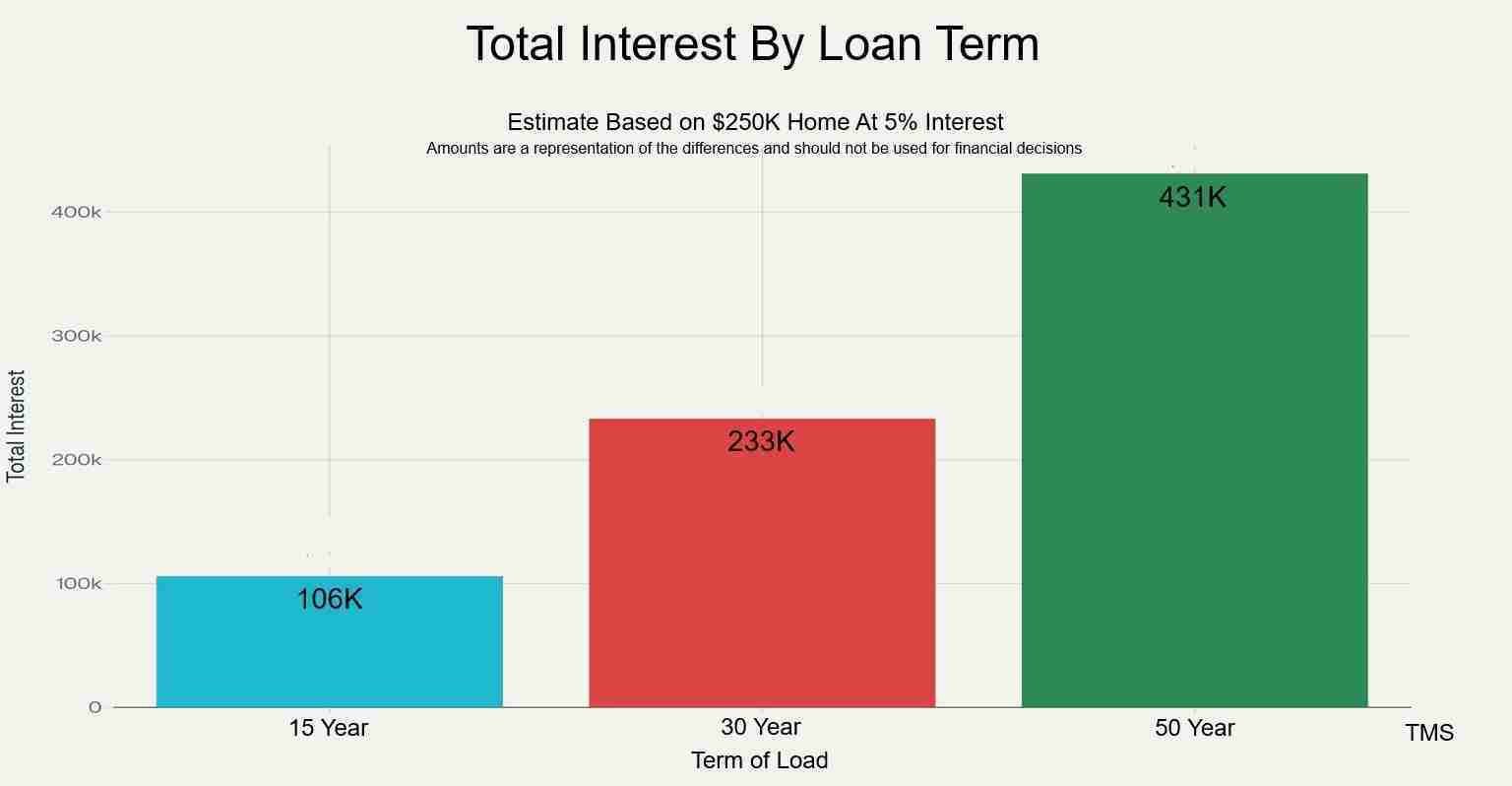
- Much higher total interest paid: Extending amortization to 50 years usually increases cumulative interest over the life of the loan. Models show lifetime interest can balloon on longer terms (HousingWire, Axios).
- Slower equity build-up: Early payments on long amortizations go largely to interest, so homeowners accumulate equity far more slowly and remain vulnerable if prices fall (Axios, LiveNOW from Fox).
- Higher interest rates likely: Lenders price long-term risk into rates, so a 50-year mortgage may carry a rate premium above current 30-year pricing, reducing the monthly-savings benefit (Fox Business, Axios).
- Potential to push up home prices: Increased buyer purchasing power from smaller monthly payments can spur demand and upward pressure on prices; sellers could capture the benefit, negating affordability gains (see HousingWire, Fox Business).
Examples and numbers
Analysts model simple scenarios — for example, a $500,000 loan — to show trade-offs. While monthly outlays can be lower on a 50-year term at the same nominal rate, cumulative interest paid over decades often exceeds what borrowers pay on a 30-year loan. Those modeled scenarios underline why experts caution that monthly savings can be misleading (Axios, HousingWire).
Expert and industry reactions
Mixed industry response: Some officials — including FHFA’s Bill Pulte — support a federal role to expand credit. Many economists and housing analysts are sharply critical, calling the proposal a “Band-aid,” a “distraction,” or a “gimmick” because it fails to address supply-side drivers of housing costs. Opponents warn of long-term financial risks for borrowers and taxpayers if the government guarantees longer, riskier loans (Politico, CBS News).
Policy and market context
The proposal arrives with mortgage rates elevated and prices high relative to incomes. Supporters say the measure would help people buy now instead of being priced out, while experts emphasize that supply-side reforms — more construction, zoning changes, lower building costs — are the long-term solutions that will actually improve affordability (Politico, HousingWire).
International experience and rarity in the U.S.
Fifty-year mortgages are rare in the U.S. and have produced mixed results abroad: extended terms increased demand and prices in some markets without delivering lasting affordability for average buyers. Experts say underwriting, regulatory design and taxpayer exposure would pose complex questions before widespread adoption (HousingWire).
Implications for Utah
Economic impact: Utah’s rapid home-price growth means the policy could lower monthly payments for some buyers but not necessarily improve true affordability. In tight Utah markets, any payment relief could be absorbed by higher asking prices, leaving buyers worse off over the long run (Fox Business, HousingWire).
Local construction and builders: Mortgages don’t create more lots or lower building costs. Utah’s supply constraints are driven by zoning and construction costs; longer terms wouldn’t directly increase new construction, though builders might see short-term demand boosts (Politico).
Political consequences: The proposal may appeal to some Utah conservatives focused on homeownership, but critics who favor market-based supply solutions may resist a policy that raises long-term taxpayer risk while leaving zoning and construction issues untouched (Fox Business, Politico).
Social and community effects
First-time buyers: Younger families could find lower monthly payments attractive, but slower equity growth reduces wealth accumulation over decades — a key trade-off for retirement and intergenerational wealth (Axios, HousingWire).
Risk of housing bubbles: If longer-term financing expands demand without matching supply, communities — especially those in Utah with limited developable land — could face greater price volatility (Fox Business).
Practical considerations for Utah homebuyers
- Read the fine print: Compare lifetime interest, not just monthly payments; a lower monthly note can mask much higher total payments (Axios, HousingWire).
- Think about plans: For buyers likely to move or refinance in 5–10 years, slow equity build-up may leave little principal reduction to show after a decade (LiveNOW from Fox).
- Watch market responses: Sellers, builders and lenders will react. Utah buyers should monitor local listings to see if price increases or rate premiums negate payment relief (Fox Business).
Policy uncertainty and next steps
There is no guarantee the 50-year mortgage proposal becomes law. Major regulatory, fiscal and market questions remain, and many housing experts argue supply-side reforms would do more to improve affordability than extending mortgage terms. For now, the plan has re-opened a national debate about expanding homeownership while protecting buyers and taxpayers (Politico, CBS News).
Sources and further reading
Primary articles and analyses referenced in this story: