UC Berkeley astronomers witness magnetar birth supernova, confirm magnetars power the universe’s brightest explosions and reveal a new general relativity “chirp”
UC Berkeley-led astronomers observed the birth of a magnetar inside superluminous supernova SN 2024afav, detected in December 2024 about one billion light-years away, confirming magnetars power some of the universe’s brightest explosions and revealing a novel general-relativity “chirp.”
Key takeaways
- First direct detection of a newborn magnetar inside a superluminous supernova, SN 2024afav.
- Magnetar properties: initial spin ≈ 4.2 milliseconds; magnetic field ≈ 300 trillion times Earth’s.
- Relativistic “chirp”: first measurement of a general-relativity modulation in a supernova light curve.
- Paper: published March 11, 2026, in Nature, led by Joseph Farah with collaborators across multiple institutions.
Main story
What the team saw
UC Berkeley astronomers and collaborators assembled time-series photometry and spectroscopy from multiple observatories to study an unusually bright event categorized as an SLSN-I. The transient’s light curve showed pronounced bumps and a rising-and-falling pattern — a distinctive “chirp” — that matches theoretical predictions for energy injection by a newly formed, ultra-fast magnetar. This detailed observational behavior is described in the UC Berkeley release and affiliated summaries.
How a magnetar powers a supernova
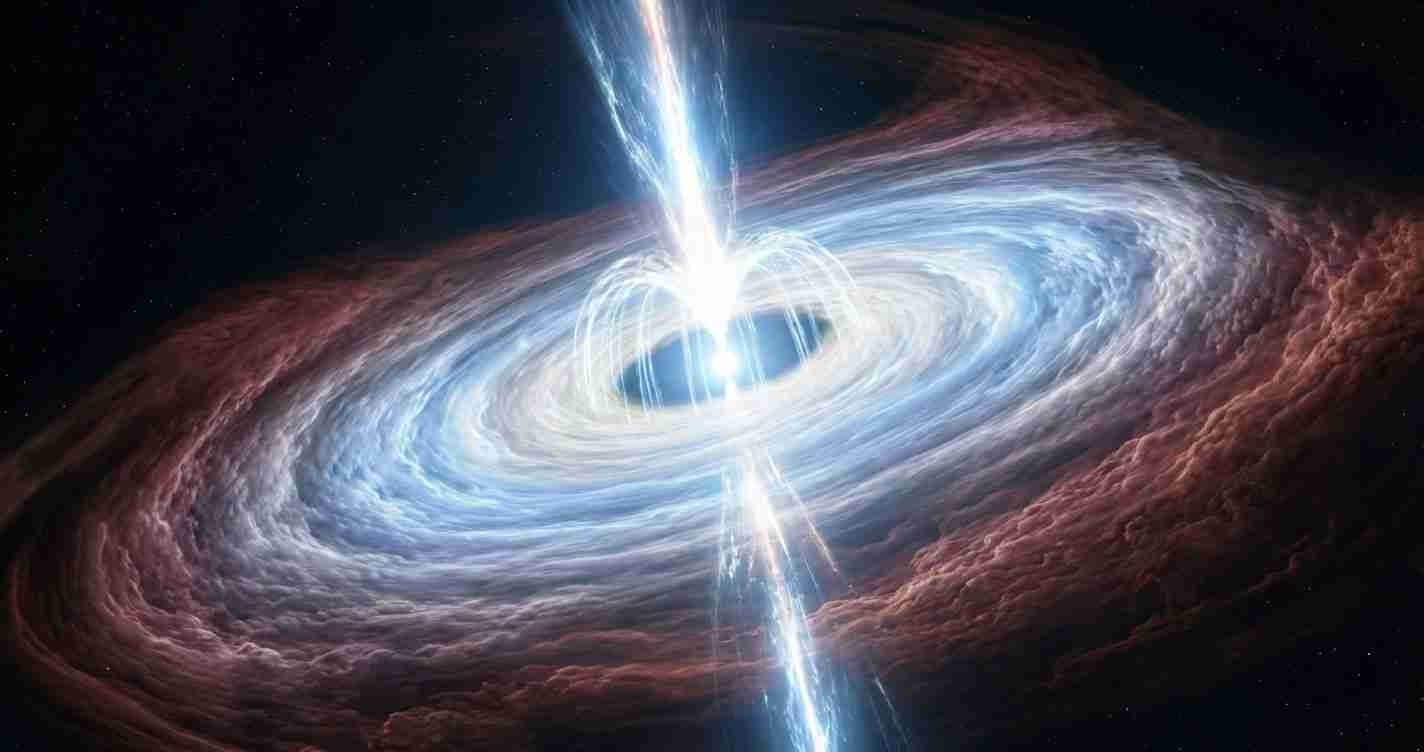
When a massive star’s core collapses, much of the mass compresses into a neutron star roughly 10 miles across. If the progenitor had a strong magnetic field, collapse can amplify that field, producing a magnetar with fields hundreds to thousands of times stronger than ordinary pulsars and spin rates exceeding 1,000 rotations per second. The newborn magnetar deposits rotational energy into expanding debris, keeping the blast far brighter and longer than a radioactivity-powered supernova — a mechanism first proposed by Dan Kasen in 2010 and now directly supported by these observations.
Relativity’s fingerprint: the “chirp”
The most striking new element is a time-dependent modulation in brightness identified as a relativistic “chirp.” As the magnetar spins down, its changing rotational state interacts with the ejecta and spacetime in ways predicted by Einstein’s general relativity, producing measurable oscillations in the light curve. UC Berkeley professor Alex Filippenko said,
“To see a clear effect of Einstein’s general theory of relativity is always exciting, but seeing it for the first time in a supernova is especially rewarding.”
Magnetar estimates and distance
The event occurred roughly one billion light-years from Earth. Model fits yield an estimated initial spin period of ≈ 4.2 milliseconds and a magnetic field strength on the order of ≈ 300 trillion times that of Earth. Those quantified parameters align with predictions for magnetar-powered SLSNe and underpin the interpretation of the observed chirp.
The discovery in context
Superluminous supernovae have challenged astronomers since their discovery in the early 2000s, being up to ten times brighter and longer-lived than typical supernovae. The magnetar model proposed in 2010 offered a plausible explanation but lacked a direct observational smoking gun — until the SN 2024afav dataset. Joseph Farah, lead author of the team’s paper, described the finding as “the most exciting thing I have ever had the privilege to be a part of.” Las Cumbres Observatory senior scientist D. Andrew Howell called the result the “smoking gun” that reconciles the data with relativistic models.
Who contributed and how the study was done
The Nature paper published March 11, 2026, was led by Joseph Farah and includes contributors from UC Berkeley, UC Santa Barbara, Las Cumbres Observatory, the Flatiron Institute, and others. Equal contributors include Logan Prust (Flatiron) and Yuan Qi Ni (UCSB). The team coordinated observations across telescopes, shared data, and applied theoretical modeling to match magnetar-powered light-curve predictions to the observed chirp.
Why it matters for science
This finding gives astronomers a clear observational template to identify magnetar-powered supernovae in future time-domain surveys. It refines models of massive-star death and neutron-star formation under extreme conditions, and it links young magnetars to other phenomena such as fast radio bursts. Observing a relativistic chirp in a supernova also provides a rare, high-energy test of general relativity.
Implications for Utah
Economic: Utah’s growing tech and space sector could benefit from demand for data-analysis tools, software, and instrumentation contracts as surveys expand searches for rare magnetar events. Local suppliers and university labs may gain opportunities for partnerships and contracts.
Political: State leaders can point to practical returns from investing in STEM — workforce development, federal research dollars, and regional prestige tied to participation in large observational programs.
Social and cultural: The discovery can inspire students and communities across Utah through outreach, planetarium programs, and school curricula centered on neutron stars and relativity. It underscores the value of local training programs that feed national and global science efforts.
Next steps in research
The team will search for more examples of the relativistic chirp and additional magnetar-powered supernovae to determine occurrence rates, property distributions, and connections to fast radio bursts. Future wide-field surveys and targeted spectroscopic follow-up, combined with refined theoretical models, will be central to expanding the sample and testing the interpretation.