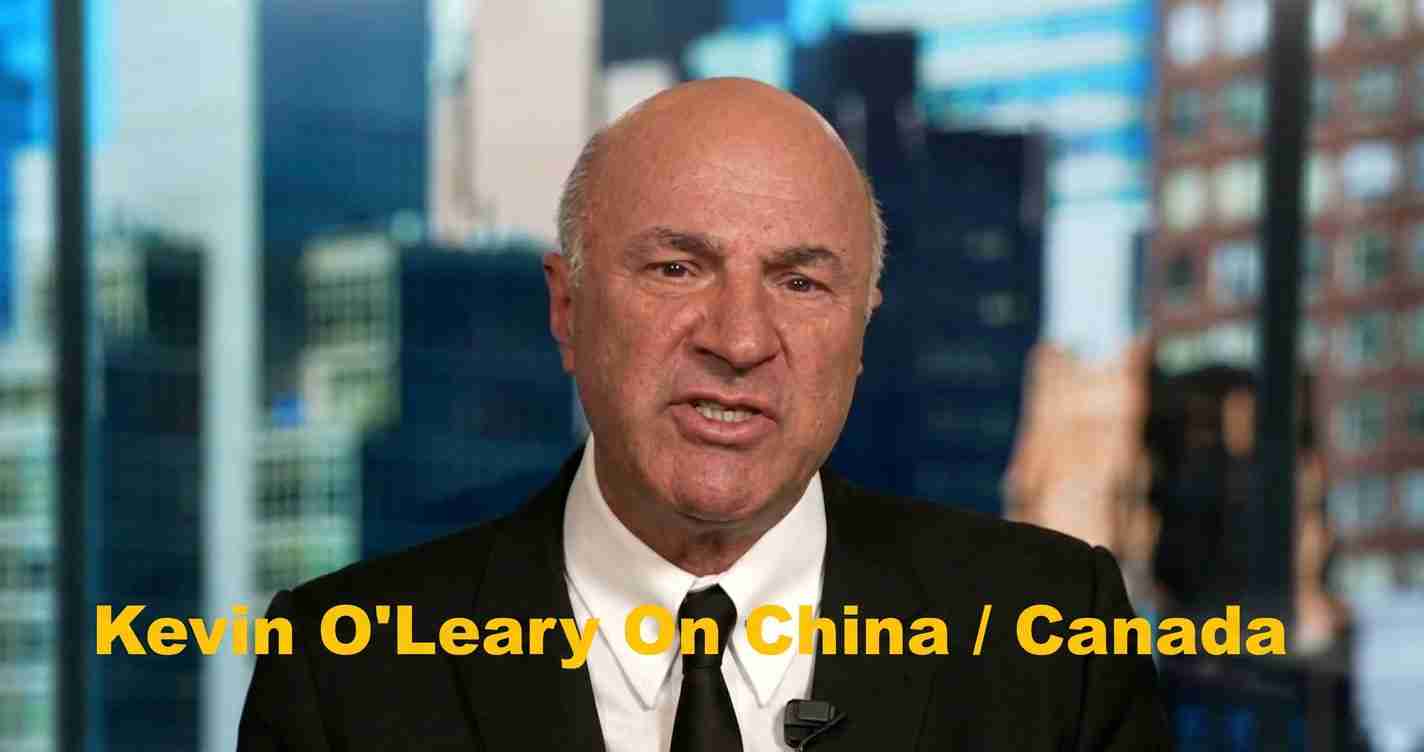
Kevin O’Leary warns Canada: ‘China is not your friend’ as Trump threatens 100% tariffs
Businessman Kevin O’Leary warned Canada against deepening trade ties with China, saying Beijing exploits partners, as President Trump threatened 100% tariffs over transshipment concerns—raising economic, defense, and regional implications for U.S.-Canada relations and prompting debate on supply chains and national security.
- China warning: Kevin O’Leary told Fox Business that “China is not your friend” and said Canada would be exploited if it deepened ties with Beijing.
- Tariff threat: President Trump warned on social media he could impose a 100% tariff on Canadian imports amid concerns Canada could be used to transship Chinese goods into the U.S.
- Canada’s stance: Ottawa says it does not intend a full free-trade deal with China and frames recent measures as limited tariff reductions in targeted sectors.
- Regional risks: Deep U.S.-Canada economic integration raises the stakes for any tariff action and could ripple through states such as Utah via supply-chain disruptions and higher prices.
O’Leary’s warning and where it came from
Kevin O’Leary spoke on Fox Business’s The Claman Countdown, declaring,
“China is not your friend.”
He argued Canada “will be no exception” to Beijing’s pattern of exploiting trading partners and framed China as an economic, military and AI rival to both Canada and the United States.
O’Leary used direct language aimed at business leaders and policymakers, stressing the deep financial ties between the U.S. and Canada — “We’re in love that way financially,” he said — while urging safeguards in any trade arrangement with China. The interview clip circulated widely on conservative and business outlets, renewing debate over North American supply chains and national security. See Fox Business for the original segment.
Trump’s social posts and the 100% tariff threat
President Trump posted warnings on social media that Canada could act as a conduit for Chinese products into the U.S., calling such a scenario unacceptable and threatening a 100% tariff on Canadian imports if transshipment risks materialize. He also warned that “China will eat Canada alive” in trade leverage, reflecting a hard-line stance toward perceived openings between Canada and China.
Economists and trade experts cautioned that tariffs at that scale would be highly disruptive: they would push up consumer prices, strain supply chains, and hurt exporters on both sides of the border. The public social-media warnings underscore how national security and trade policy are increasingly intertwined in public debate.
Canada’s response and clarity on its position
Canadian officials emphasized Ottawa has no plans for a comprehensive free-trade agreement with China, describing a recent accord as narrow and focused on lowering tariffs in targeted sectors rather than broad market opening. The government framed the steps as measured and aimed at limiting strategic risk.
Some media coverage introduced factual confusion — for example, references to Mark Carney in contexts implying government leadership — prompting officials to reiterate the limited scope of engagement with Beijing and to reassure partners about transshipment safeguards. For coverage, refer to Fox Business.
Why the U.S.-Canada trade relationship complicates threats
The U.S. and Canada maintain deeply integrated supply chains: Canada is the top export market for many U.S. states and sends a substantial share of its output southward. Any sweeping tariff on Canada would therefore risk broad economic fallout for U.S. states and industries dependent on cross-border trade.
Observers note that the interdependence creates strong incentives for leaders to de-escalate before damage occurs. As O’Leary pointed out, trade friction can bleed into other domains — he specifically tied the dispute to defense planning and the proposed missile-defense idea dubbed the “Golden Dome.”
Implications for Utah
Economic impact: Utah’s technology, manufacturing components, outdoor products, and energy sectors are connected to U.S.-Canada trade. A 100% tariff or prolonged tariff fight could increase costs for Utah businesses that rely on cross-border inputs, slow exports, and raise prices for consumers.
Political consequences: Utah’s conservative electorate may generally support tough stances on China and strong national-defense postures, but state leaders and business groups would likely press for de-escalation if tariffs threaten jobs and regional industries.
Social effects: Tariff-driven price increases and supply interruptions could affect everyday Utah residents and communities tied to trade-related employment, increasing demand for state-level support and retraining programs.
Practical steps for residents:
- Businesses should review supply chains and consider contingency plans or alternative suppliers.
- Farmers and manufacturers exporting to Canada should stay engaged with trade groups and monitor policy announcements.
- Policymakers can press for diplomatic solutions that address transshipment risks without resorting to blanket tariffs.
- Consumers should expect possible price increases and avoid panic stockpiling, which can worsen shortages.
Coverage and related reporting
The exchange drew coverage across business and mainstream outlets. Primary reporting on O’Leary’s comments and President Trump’s posts appeared on Fox Business. Additional summaries and clips ran on sites including AOL and video excerpts on Fox News. International outlets also covered O’Leary’s broader comments on energy and grid expansion; see Times of India.
Sources and further reading
- Fox Business: Kevin O’Leary warns Canada over China ties, Trump threatens 100% tariff on northern neighbor
- AOL News: Kevin O’Leary predicts U.S., Canada economies will remain intertwined
- Fox News: Video coverage of related remarks
- Times of India: Coverage of O’Leary’s broader warnings about China and energy
Reporting based on interviews and coverage from the sources listed above — Times Media Service.