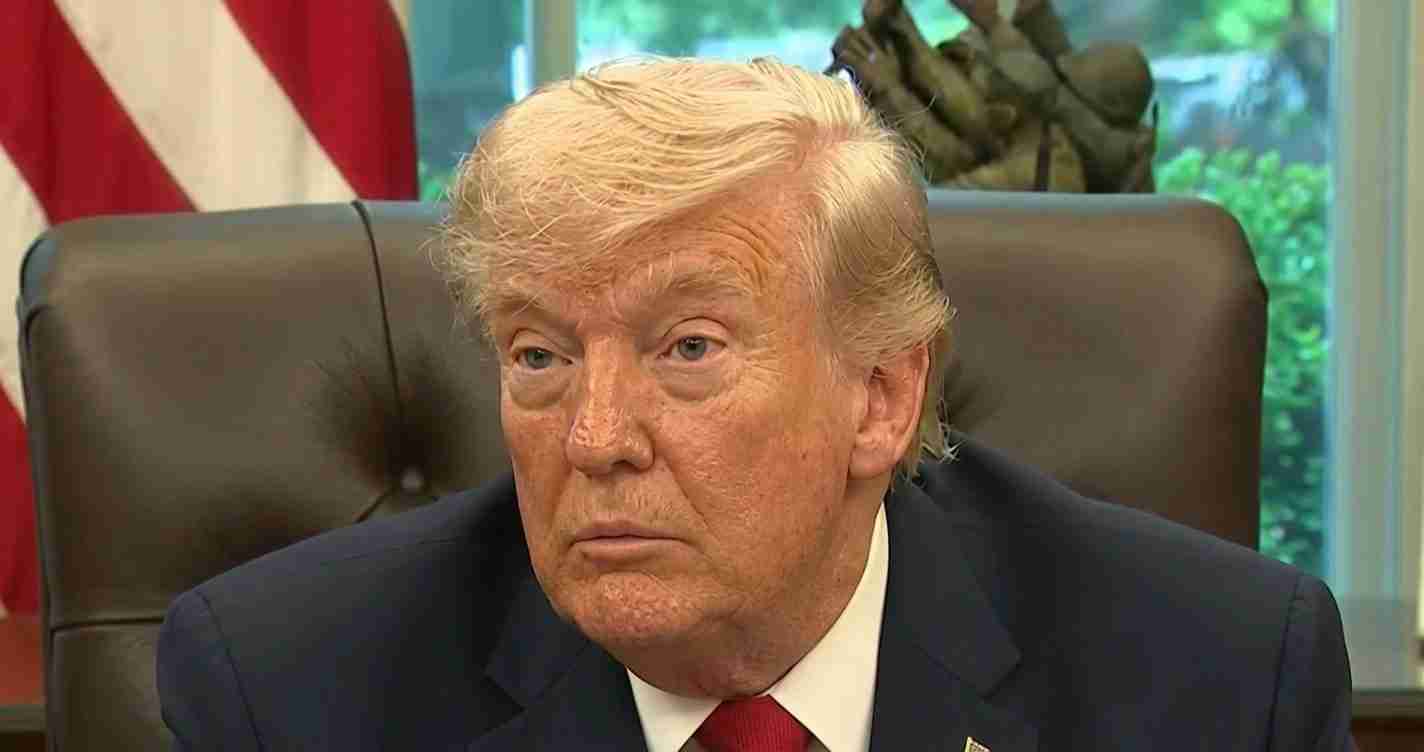
Trump yanks Hurd endorsement, backs Hope Scheppelman after tariff fight
Former President Donald Trump withdrew his endorsement of Colorado Rep. Jeff Hurd and instead backed challenger Hope Scheppelman after a dispute over tariffs, intensifying GOP divisions over trade and raising stakes for Republicans before primary season.
- Trump rescinded his endorsement on Truth Social and praised Scheppelman as a “Highly Respected Patriot.” Statement
- Hurd cited the Constitution and a Supreme Court decision limiting IEEPA, arguing Congress should debate and vote on major trade measures. Hurd post
- The endorsement change followed rapid legal and policy moves — including a presidential shift to Section 122 tariff authority and a recent repeal vote on a Canadian emergency tariff. Reporting
Trump’s message and the rare withdrawal
In a post on Truth Social, Trump accused Hurd of siding with foreign interests and lauded tariffs as “unbelievably successful,” saying they made “America Richer, Stronger, Bigger, and Better than ever before.” He announced he was “WITHDRAWING my Endorsement of RINO Congressman Jeff Hurd” and was “fully Endorsing Highly Respected Patriot, Hope Scheppelman.” Trump post
“He is more interested in protecting Foreign Countries that have been ripping us off for decades than he is the United States of America.”
The rarity of rescinding an endorsement
Trump noted this was only the second time he had rescinded an endorsement — the first involving Rep. Mo Brooks in 2022 — making the move both unusual and politically consequential. Media analysts framed the swap as a test of loyalty to Trump’s trade agenda. Analysis
Hurd’s constitutional argument and the Supreme Court ruling
Rep. Jeff Hurd posted on X that the Supreme Court’s 6-3 decision clarified IEEPA’s limited scope and emphasized that Article I assigns Congress the authority to regulate commerce with foreign nations and to impose tariffs. Hurd said major trade decisions should rest on clear statutory authority and congressional debate to ensure durable legal footing. Hurd post and coverage
Hurd’s stance followed his vote on H.J.Res.72, which repealed a 25% tariff on certain Canadian goods imposed under a national emergency declaration; Hurd sided with lawmakers who viewed the emergency tariff as exceeding presidential authority without explicit congressional approval. Reporting
Timing: policy, law and politics collide
The sequence of events was swift: the Supreme Court limited IEEPA-based tariffs, the White House pivoted to Section 122 of the Trade Act of 1974 and Trump moved to raise a global tariff first to 10% and then to 15%. Trump criticized the Court’s decision and some justices he appointed. The rapid policy shifts amplified intra-GOP tensions and created immediate political fallout.
Who is Hope Scheppelman?
Trump called Scheppelman a “Highly Respected Patriot.” Coverage notes her background as a U.S. Navy veteran, a critical care nurse practitioner, and a former vice chair of the Colorado Republican Party. Her Trump endorsement positions her as a loyalist to the former president’s trade agenda and is likely to boost her profile and fundraising ahead of the primary. Reporting Reporting
Rare GOP break with an incumbent
Reporters emphasized that public breaks between Trump and sitting Republicans in Colorado’s 3rd District are uncommon. The rescinded endorsement underscores how alignment with Trump’s trade policies can become a primary litmus test. Hurd’s office did not immediately respond to requests for comment. Coverage
Legal and legislative fallout
The Supreme Court’s narrowing of IEEPA forced the White House to rely on alternative statutory authority for broad trade actions. That legal shift highlights Congress’s role under Article I: if major trade moves require congressional votes, leverage could shift to lawmakers, reshaping how future tariffs are imposed and opening opportunities for state-specific protections.
Implications for Utah
Economic impact
Utah industries — manufacturing, aerospace, outdoor goods, mining and agriculture — are tied to global supply chains. Higher worldwide tariffs could protect some firms from foreign competition but raise costs for companies that import parts or raw materials and for consumers. Farmers may face mixed results depending on trading partner responses.
Political consequences
Trump’s public withdrawal signals to Utah Republicans that support for his tariff policies could be a primary litmus test. Utah’s conservative base may favor trade protectionism on national-security and economic-independence grounds, while establishment business interests may resist policies that raise costs or hamper growth.
Social effects
If tariffs raise consumer prices, Utah households could feel higher costs at the store. Voters who prioritize low prices versus protection for local industry may view candidates’ stances through that trade-off lens; veterans and small-business owners could be particularly influential voices.
Cultural relevance
Trade politics in Utah tap themes of American industry, national strength, and self-reliance. Trump’s tariff messaging resonates with protectionist voters, while the state’s business community may push back if tariffs threaten competitiveness.
Practical applications for Utah voters
Voters should note that candidates who back Trump’s tariff agenda may gain favor with his base, while those advocating congressional debate on tariffs could appeal to voters prioritizing constitutional checks and predictable lawmaking. Observing how local lawmakers react to tariff proposals will be key.
Sources and further reading
This endorsement reversal shifts the political landscape in Colorado’s 3rd District and sends a strong signal across the Mountain West, including Utah, where lawmakers and voters must weigh the economic and constitutional questions raised by the tariff debate.