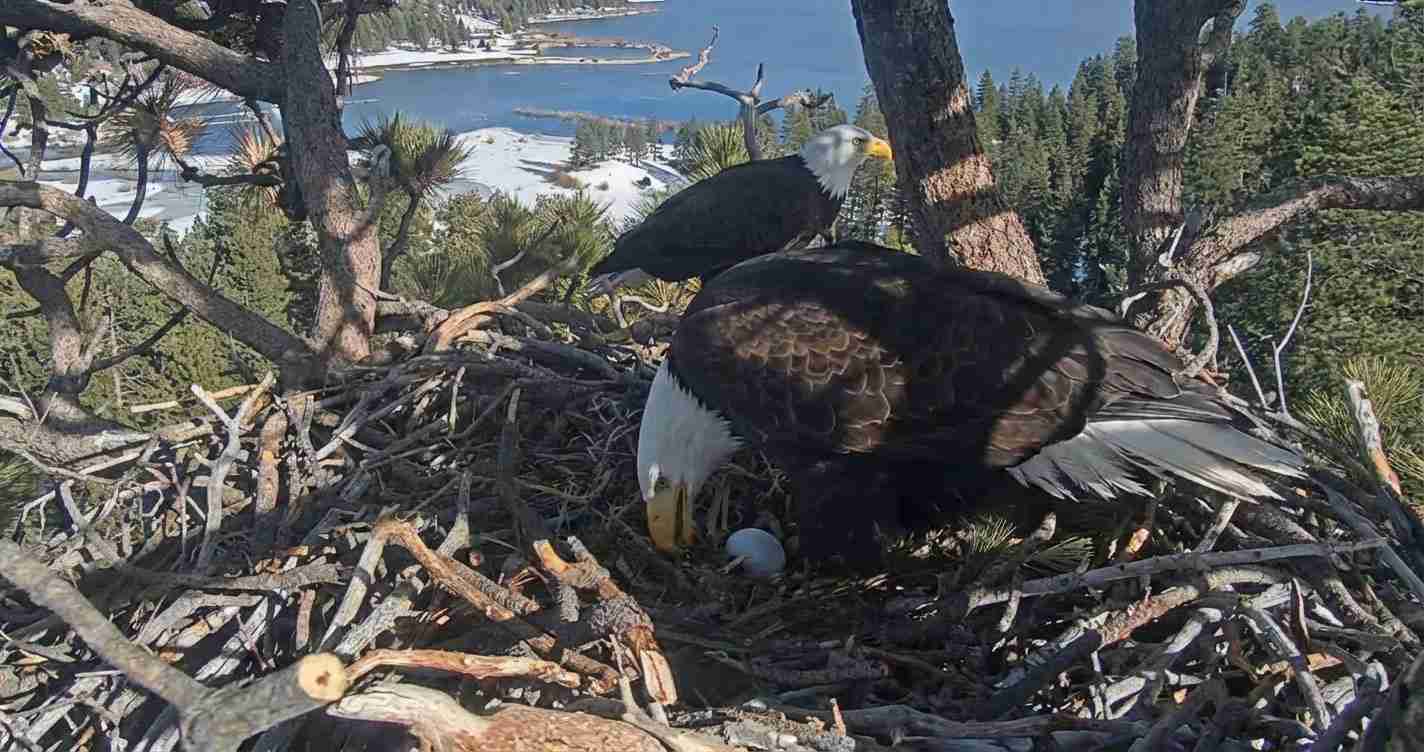
Big Bear bald eagles new egg fuels hope after raven attack — Jackie and Shadow egg spotted on Eagle Nest Cam
Big Bear Lake’s iconic bald eagle pair, Jackie and Shadow, laid a new egg Feb. 24, 2026, about 2:30 p.m., shown live on the Friends of Big Bear Valley Eagle Nest Cam, renewing hopes after ravens destroyed earlier eggs.
- New egg visible Feb. 24, 2026: Jackie and Shadow’s nest showed a fresh egg on the FOBBV live cam at about 2:30 p.m.; Jackie inspected and settled while Shadow returned minutes later.
- Previous clutch lost to ravens: Two eggs laid Jan. 23 and Jan. 26 were breached by ravens on Jan. 30 after adults were away for several hours (ABC7; CBS Los Angeles).
- Incubation and season: Bald eagle eggs typically incubate ~35 days; nesting at Big Bear runs through April and additional eggs are possible every ~three days.
New egg, live cam and timing
What viewers saw: On Tuesday afternoon the volunteer-run Big Bear Eagle Nest Cam captured the moment: at about 2:30 p.m. on Feb. 24 Jackie shifted and a fresh white egg became visible. Jackie stood, rearranged nest material and resettled; Shadow returned minutes later to stand nearby.
The cam is maintained by the Friends of the Big Bear Valley and streams 24/7, making it the primary way fans follow the pair’s behavior. Nest footage of the laying and early incubation was posted alongside recaps (nest footage).
Earlier in the week the area saw snow; viewers watched Jackie and Shadow kick snow from the nest. By Feb. 24 the snow had melted, skies were clear and afternoon temps reached the mid-50s — conditions FOBBV said were favorable for another incubation attempt.
What happened to the first two eggs
Loss and evidence: Jackie laid eggs on Jan. 23 and Jan. 26, but both were destroyed when ravens breached the clutch on Jan. 30 while the adults were away for several hours. Video and eyewitness accounts show ravens probing and breaching the eggs (ABC7; CBS Los Angeles).
FOBBV volunteers noted the adults had been incubating faithfully before the losses. Volunteers suggested possible reasons the adults left — sensing a problem with an egg or defending territory — but camera footage showed ravens had an extended window to breach the clutch. Jackie was later seen incubating a breached egg, underscoring the birds’ investment in the nest.
Nest history and success rates
Big Bear’s nest has a recorded history stretching back more than a decade. The first recorded chick in the Big Bear Valley hatched in 2012 and fledged. Since then, Jackie and Shadow — and earlier pairs — have produced roughly a dozen eggs, with only a fraction producing fledged eaglets.
Nationally, about half of eaglets survive to adulthood, highlighting the fragility of recovery efforts and the importance of protecting nesting habitat. Jackie is believed hatched around 2012 and resident since 2016; Shadow hatched about 2014 and arrived in 2018. Recent successful fledglings include chicks from 2019, 2022 and 2025 (Sunny and Gizmo).
Community, cams and conservation
The Friends of the Big Bear Valley operate two primary streams — a main Nest Cam and a Wide View Cam — that reach a global audience. Volunteers moderate streams, post recaps and educate viewers on eagle behavior, turning the cams into conservation tools that increase local awareness.
“The cams create a community that mobilizes after setbacks,” volunteers said, noting both heartbreak and renewed calls for nest protections after the January raven attack.
The recent passing of Sandy Steers, the activist who helped start the original eagle-cam project, was noted by FOBBV and local media as a loss to the volunteer community that put Big Bear’s eagles on the map (CBS Los Angeles).
Investigative questions: predators, timing and human impact
Key investigative concerns: What made the nest vulnerable to ravens on Jan. 30? Did human activity or shifts in food supply alter parental attendance? Could more monitoring or deterrence reduce future losses?
Volunteers and experts have been cautious assigning cause; possibilities include territorial defense, egg issues prompting adults to leave, or increased corvid activity near human habitat. Broader factors — raven density, food availability and raptor behavior trends — warrant study to reduce repeat losses.
Timing and biology: Bald eagles usually lay eggs about every three days until a clutch is complete, then incubate roughly 35 days. With the season running through April, Jackie and Shadow may lay additional eggs; close monitoring via the nest cam is critical to detect threats early.
Implications for Utah
- Wildlife stewardship: Utah communities can learn from Big Bear — protecting nesting trees, shorelines and food sources is vital for raptor recovery.
- Local monitoring: The success of the Big Bear Eagle Nest Cam shows how low-cost, volunteer-run cameras can engage the public and provide real-time data for osprey and eagles near the Great Salt Lake.
- Policy and practice: Reduce corvid attractants, enforce nest disturbance laws, limit drone flights near nests, and secure trash to lower predation risk.
- Education and tourism: Live-cam projects and school partnerships can teach conservation, foster stewardship and generate eco-tourism while aligning with local values of responsibility.
- Emergency response: Quick coordination between volunteers and wildlife officials matters; Utah managers can review FOBBV protocols and develop contingency plans for high-profile nests.
Sources and additional viewing
- Friends of the Big Bear Valley Eagle Nest Cam (YouTube) and streams nest footage and recap footage
- ABC7 Los Angeles reporting
- CBS Los Angeles reporting
Readers in Utah interested in supporting raptor conservation or starting local nest-cam projects can contact state wildlife agencies and volunteer groups to learn best practices for monitoring, public outreach and nest protection.