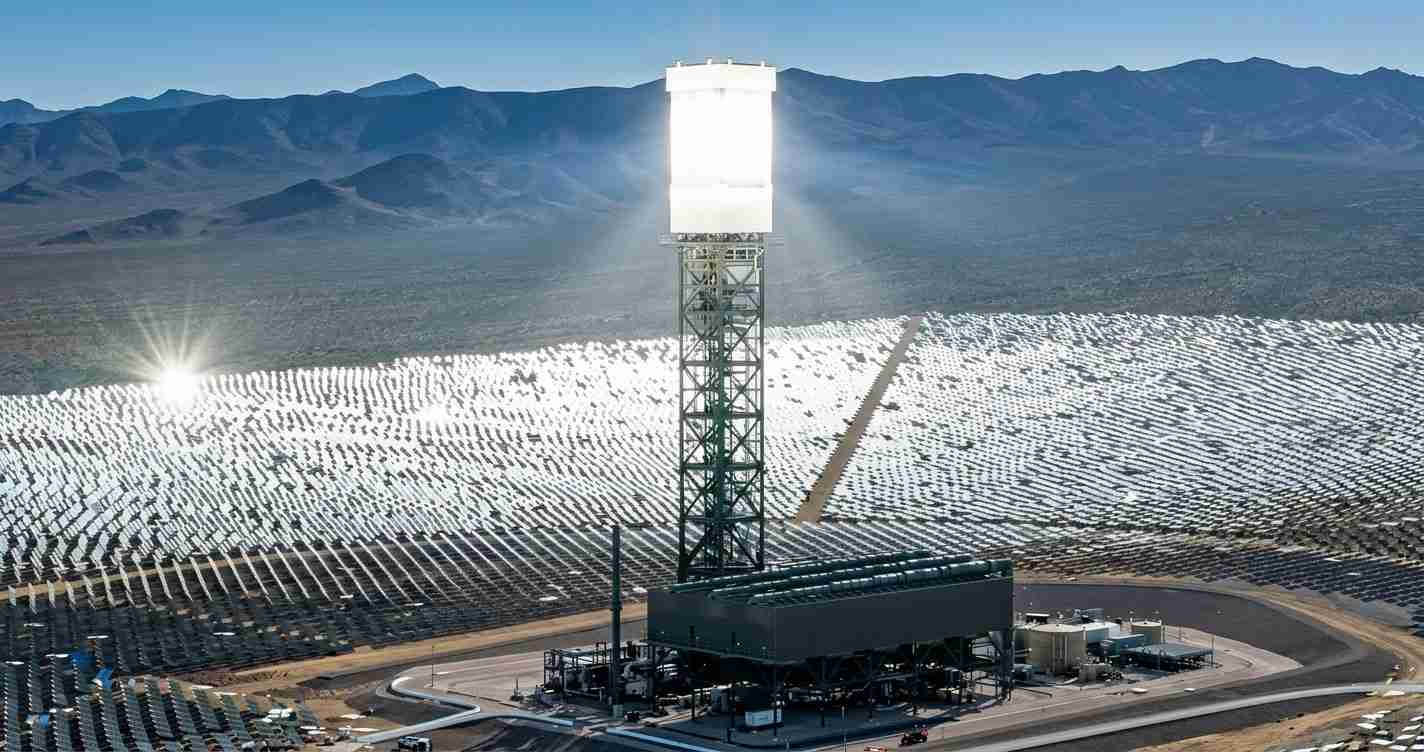
Ivanpah Solar Plant’s Promise and Costs: Bird Deaths, Billions in Federal Aid and Questions About “Clean” Power
Ivanpah Solar Electric Generating System, a 392 MW concentrated solar thermal plant in the Mojave Desert, has faced scrutiny for high costs, underperformance, reliance on gas startups and documented bird fatalities despite billions in federal support.
Key takeaways
- Large federal backing: Ivanpah cost roughly $2.2 billion and relied on major U.S. Department of Energy loan guarantees and Treasury grants.
- Environmental trade-offs: Concentrated solar flux has caused significant bird fatalities and created unexpected wildlife hazards.
- Operational limits: The plant underperformed early, uses natural gas for daily startups, and has been the subject of buyout and closure talks.
- Policy lessons: The project raises questions about taxpayer risk, permitting of projects on public land, and the need for realistic emissions accounting.
Key information
Location and size: Ivanpah sits in the Mojave Desert near the California–Nevada border, covering roughly 3,500 acres and using about 173,500 heliostats (347,000 mirrors) aimed at three 459-foot towers. (Sources: Ivanpah Solar Power Facility — Wikipedia; Bechtel project page)
Technology and capacity: The plant is a concentrated solar power (CSP) facility with a gross capacity of 392 MW. Mirrors focus sunlight to heat boilers atop towers and drive steam turbines. It was designed to produce about 940,000 MWh a year. (Sources: Ivanpah Solar Power Facility — Wikipedia; U.S. Department of Energy overview)
Funding and costs: The project cost roughly $2.2 billion. It received $1.6 billion in U.S. Department of Energy loan guarantees and roughly $539 million in a Treasury grant; private investors included NRG and Google. (Sources: Ivanpah Solar Power Facility — Wikipedia; Bechtel project page)
Wildlife and safety problems: Federal monitoring has documented bird mortality linked to concentrated solar beams (solar flux). Insects attracted to the glowing towers appear to draw birds into hazardous zones. (Sources: Ivanpah Solar Power Facility — Wikipedia; ENSIA photo essay)
Natural gas use and emissions: Ivanpah relies on natural gas to start plant operations daily. That startup fuel produces carbon dioxide and erodes some of the emissions advantages commonly associated with renewables. (Sources: U.S. Department of Energy overview; California Energy Commission profile)
Performance and status: The plant underperformed early on and produced less electricity than planned. Closure and buyout talks for some units have been underway amid bids to cut costly contracts; regulators have weighed closing units while also citing grid needs. (Sources: Ivanpah Solar Power Facility — Wikipedia; Environment & Energy Leader coverage; NRG update on PPA buyout)
How Ivanpah was supposed to work — and how it differs from panels
Ivanpah was built as a concentrated solar thermal plant, not a field of photovoltaic panels. Hundreds of thousands of mirrors called heliostats track the sun and reflect light toward boilers at the top of three towers. The intense heat turns water into steam, which spins turbines to make electricity. Designers said the towers could produce large amounts of daytime power and help the grid. (Sources: Ivanpah Solar Power Facility — Wikipedia; U.S. Department of Energy overview)
The technology was promoted as a way to scale “clean” power on public land. Developers and contractors — BrightSource Energy, Bechtel, NRG and Google among them — built the project with large federal guarantees and incentives. That public backing helped the plant get built on a massive desert footprint. (Sources: Bechtel project page; Ivanpah Solar Power Facility — Wikipedia)
Wildlife impacts: solar flux, insects and birds
From its earliest years, Ivanpah drew attention for an unexpected hazard: solar flux. As beams converge at the tower receivers, the area around the receivers becomes intensely hot and brightly lit. Insects are attracted to the glowing towers. Birds feeding on those insects can fly through the concentrated beams and be singed or killed. Federal monitoring and peer-reviewed studies have documented bird fatalities at the site, with reports totaling into the thousands over years of operation. (Sources: Ivanpah Solar Power Facility — Wikipedia; ENSIA photo essay)
“Those wildlife costs complicate the simple message that large renewable projects are always benign for nature.”
The plant also required moving and limiting development to protect known desert tortoise habitat, but bird impacts were harder to avoid once the towers began operating. (Source: Ivanpah Solar Power Facility — Wikipedia)
Costs, taxpayer backing and the politics of “green” labeling
Financial backing: Ivanpah was built with about $1.6 billion in U.S. Department of Energy loan guarantees and received additional federal incentives, including a multi-hundred-million-dollar Treasury grant. Total costs approached $2.2 billion, and private partners and investors covered the remainder. (Sources: Ivanpah Solar Power Facility — Wikipedia; Bechtel project page)
That mix of federal backing and private investment left taxpayers exposed if the plant failed to deliver promised returns. Critics argue that labeling projects as “clean” sometimes scaled back regulatory pushback, allowing higher overall public costs before performance and environmental trade-offs were fully known.
Operational performance and greenhouse-gas math
Ivanpah did produce electricity, powering an amount roughly equivalent to tens of thousands of homes. But it fell short of initial performance targets in its early years and required natural gas each morning to fire up steam systems. That natural gas use produces carbon dioxide. While proponents point to the plant’s net emissions reductions compared with fossil plants, the daily gas startups and underperformance complicate the net-benefit calculation. (Sources: Ivanpah Solar Power Facility — Wikipedia; U.S. Department of Energy overview; California Energy Commission profile)
For realistic accounting: the plant’s emissions and operational costs underscore the need for clear disclosure about backup-fuel reliance and realistic performance estimates when judging renewable projects.
Regulation, grid needs and the future of the site
Ivanpah’s future has been the subject of regulatory fights. Some federal officials under different administrations have signaled that buyouts or shutdowns could be the best path forward because newer, cheaper solar and storage now undercut the plant’s economics. California regulators, however, have resisted an outright shutdown in some cases, arguing the units are still needed for grid reliability. Plans to close or buy out portions of the plant have been floated, including contract terminations and negotiations with utilities; those moves are tied to complex power-purchase agreements and CPUC approvals. (Sources: Ivanpah Solar Power Facility — Wikipedia; Environment & Energy Leader coverage; NRG update on PPA buyout; California Energy Commission profile)
That regulatory balancing act—between environmental harm, ratepayer costs and grid reliability—illustrates the hard choices states face as older or troubled projects age and new technologies arrive.
Implications for Utah
- Economic and taxpayer accountability: Utah conservatives who favor limited federal spending should note that large federally backed energy projects can carry long-term costs for taxpayers and ratepayers. Ivanpah’s mix of loan guarantees and grants offers a case study in weighing federal risk on infrastructure built on public land. (Sources: Ivanpah Solar Power Facility — Wikipedia; Bechtel project page)
- Energy markets and power prices: Utah utilities compete in the same regional power markets that affect California. High-priced or underperforming generation in one state can ripple across costs and investment decisions elsewhere. Policymakers may take lessons about contract terms, procurement transparency and comparing alternatives such as photovoltaic arrays with battery storage. (Sources: U.S. Department of Energy overview; Environment & Energy Leader coverage)
- Wildlife and migration routes: Birds that migrate across the West use flyways that include Utah. Large solar facilities that create hazardous concentrated-light zones can affect species beyond state borders. Utah agencies and conservation groups will want clear monitoring and mitigation plans for projects proposed on or near migration corridors. (Sources: Ivanpah Solar Power Facility — Wikipedia; ENSIA photo essay)
- Public lands and local control: Ivanpah sits on federal land. Utah leaders who favor stronger local control over land use may use this example to argue for stricter review and community input before approving large-scale projects on public lands that support recreation and local economies. (Source: Ivanpah Solar Power Facility — Wikipedia)
- Reliability and fuel mix: The plant’s need for natural gas startup highlights that some renewable technologies still rely on fossil fuels. For Utah—where natural gas and dispatchable generation play major roles—careful planning is required to ensure that renewables are paired with storage or backup that minimize emissions and maintain reliability. (Sources: U.S. Department of Energy overview; California Energy Commission profile)