A’s Break Ground on “Armadillo” Stadium in Las Vegas, Owner Declares: “We Are Vegas’ Team”
The Oakland Athletics officially broke ground on their $2 billion, 33,000-seat “Armadillo” stadium at the former Tropicana site in Las Vegas, marking a major milestone as construction advances toward a targeted 2028 MLB season opening.
- Major milestone: Ceremonial groundbreaking took place June 23, 2025; foundation and deck pours are underway.
- Cost and funding: Project cost rose from $1.75 billion to about $2 billion, with $380 million in public funds approved.
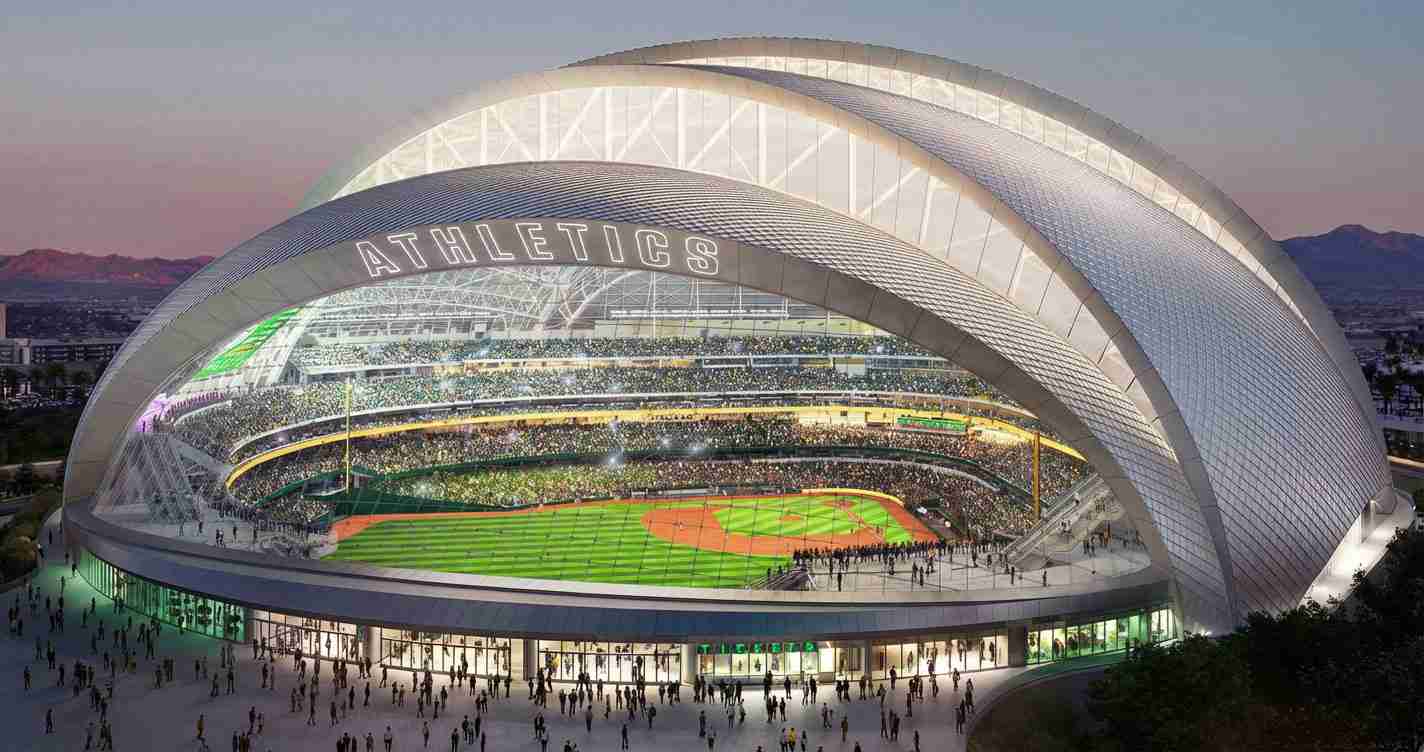
- Design and capacity: The BIG/HNTB-designed “Armadillo” will seat 33,000 and concentrate roughly 84% of seating between the foul poles.
- Local impact: Planners emphasize local labor and broader site development on the 35-acre parcel formerly occupied by the Tropicana.
Groundbreaking and ceremony
Ceremony details: Team owner John Fisher addressed the crowd on a clear June morning, emphatically stating, “We are Vegas’ team.”
The ceremonial groundbreaking on June 23, 2025 drew MLB Commissioner Rob Manfred, former A’s stars Rollie Fingers and Dave Stewart, Little Leaguers and state and local dignitaries. (Source: ESPN)
Event visuals presented layered, angular forms that designers and many fans have nicknamed the “Armadillo” — a reference to the shell-like, overlapping metal-paneled volumes shown at the event. (Design coverage: Dezeen)
Construction progress and timeline
Current status: Foundation work and concrete pouring are progressing steadily. Team president Marc Badain reported the first outfield deck pour is complete and that roughly half of the ballpark’s decks have been poured; the second-level concourse has been poured from the third-base foul pole toward first base. Officials confirm that about 84% of seats will sit between the foul poles. (Source: ESPN)
Timeline highlights: Project documents and updates set key milestones: steel work in the stadium bowl was planned to begin in March 2026; the fifth of six roof-support buttresses was due by the end of February 2026 with the sixth in spring 2026; roof steel expected by June 2026. Project leaders expected the stadium frame to rise through summer and early fall 2026, with escalator deliveries and installation following. (Research summary and project timeline: Wikipedia; additional reporting: ESPN)
Costs, funding and approvals
Financials: The project was originally estimated at $1.75 billion and was reported to have risen to about $2 billion by December 2025. Public support included $380 million approved by Nevada and Clark County as part of a broader financing plan that pairs public funds with private investment. (Sources: ESPN; Wikipedia)
Lease and oversight: The Las Vegas Stadium Authority approved lease and non-relocation agreements in December 2024, including a 30‑year rent-free lease with a buyout option for the team — provisions that have raised questions about taxpayer protections and long-term obligations. (Documentation: Wikipedia)
Design, capacity and features
Architectural lead: Danish firm BIG together with HNTB lead the scheme, which features overlapping arched volumes clad in metal panels and a large cable-net glass entrance wall evoking pennant shapes and the desert landscape. Key amenities include a partially retractable roof, domed lounges, snack bars and concentrated seating within the foul poles. (Design reporting: Dezeen; event coverage: ESPN)
Broader site plan
Parcel and phases: The stadium sits on part of a larger Bally’s-owned 35-acre parcel. The Tropicana hotel and casino was demolished in October 2024 to clear the site. Future development phases envision a major Bally’s hotel and casino — a proposed 3,005-room complex targeted for completion by December 2030. (Coverage: Dezeen; documentation: Wikipedia)
Team context and the move from Oakland
Relocation timeline: The A’s left the Oakland Coliseum after the 2024 season and have been playing at a temporary Triple-A park in West Sacramento through at least 2027. Players have worn transitional patches referencing both Sacramento and Las Vegas.
Approval: Major League Baseball owners unanimously approved the relocation to Las Vegas in November 2024, citing market demographics, tourism draw and success of other Las Vegas pro teams. (Reporting: ESPN; summary: Wikipedia)
Vendor engagement and local workforce
Local hiring: Project leaders emphasize use of a skilled local workforce and staged construction pacing. Earlier vendor outreach sought to bring local contractors into the project pipeline and highlighted staged completions such as bridge work and core installations. (Vendor reporting: LVSportsBiz; project tracker: Athletics construction page)
Investigative questions for taxpayers and observers
- Cost overruns: How will overruns be managed if bids or materials push the price above $2 billion? (Reporting: Wikipedia)
- Taxpayer protections: What safeguards exist given the 30‑year rent-free lease and buyout terms approved by the Las Vegas Stadium Authority? (Lease approvals: Wikipedia)
- Local economic benefit: Will long-term gains go to local workers and vendors, or will specialized contracts favor out-of-state firms? (Vendor outreach: LVSportsBiz)
Implications for Utah
Overview: The A’s move to Las Vegas has cross-state effects for Utah travelers, businesses and policymakers — from increased visitation to political debate about public subsidies.
Economic impact
Utah residents already travel frequently to Las Vegas; the new stadium is likely to increase weekend trips, flights and hotel demand during baseball season and special events tied to the A’s 2028 campaign. Utah-based airlines, ground-transport firms, travel agencies, hospitality firms and regional suppliers could see increased revenue depending on contracting and transport capacity.
Political consequences
Conservative Utah voters who favor fiscal restraint are likely to scrutinize the $380 million Nevada public subsidy as an example of inter-state competition for pro sports and tourism. Utah lawmakers may use Nevada’s financing model as a case study when evaluating incentives for economic development at home.
Social and community effects
More games and events in Las Vegas could shift leisure spending patterns for Utah families, moving entertainment dollars out of state and prompting local leaders to consider expanded events or sports options to retain consumer spending.
Cultural relevance
With the A’s joining the Raiders, Golden Knights and Aces, Las Vegas completes a quartet of major pro teams. For Utah fans who follow baseball, the Armadillo stadium provides a nearby major-league destination, shaping regional rivalries and fan choices.
Practical applications for Utah residents
- Travel planning: Expect more weekend flights and seasonal fares; travel businesses can prepare game packages.
- Business opportunities: Utah suppliers and event planners should explore bids for ancillary services as construction and operations progress.
- Civic oversight: Policymakers can study Nevada’s public funding model when evaluating any future stadium subsidy proposals in Utah.
Sources and reporting notes
Primary coverage of the groundbreaking and team statements: ESPN. Architecture and design coverage: Dezeen. Project timeline, cost and approvals: Wikipedia. Vendor engagement reporting: LVSportsBiz. Team construction tracker and site details: Athletics construction page. Video of the groundbreaking event: YouTube.