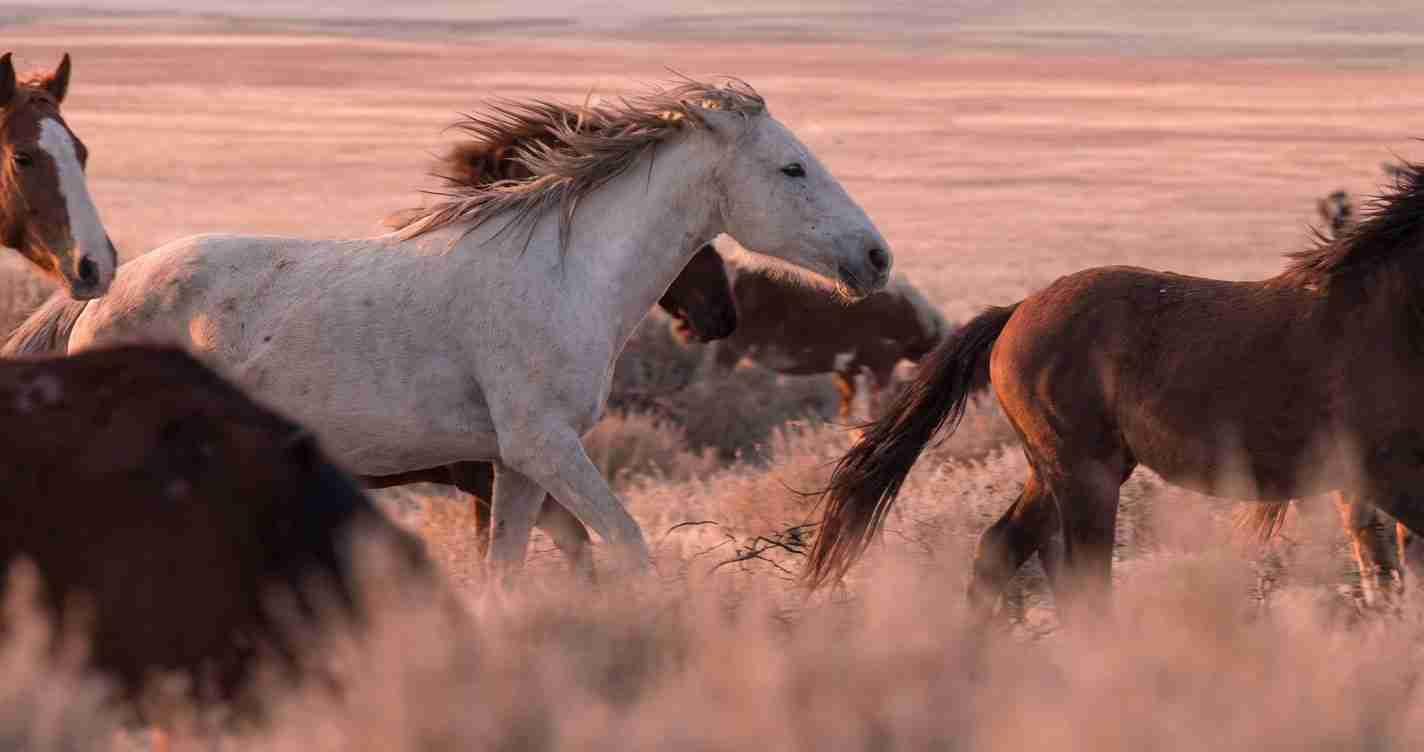
BLM begins Spring Mountains wild horse and burro gather near Las Vegas, targeting nearly 850 animals amid land and safety concerns
The Bureau of Land Management’s Pahrump Field Office began a bait-and-water gather on March 15, 2026, in the Spring Mountains Complex near Las Vegas, aiming to remove about 425 wild horses and 425 wild burros to address overpopulation and safety risks.
Key takeaways
- Scale: The gather targets approximately 425 wild horses and 425 wild burros, drawn by bait-and-water traps.
- Method: Temporary bait and water traps will be used; no helicopters will take part.
- Destination: Captured animals will go to Palomino Valley Off-Range Corrals in Reno for vet checks and adoption prep.
- Reason: BLM cites rangeland health, public safety and the Wild Free-Roaming Horses and Burros Act of 1971 as legal basis.
Details of the gather
The gather began on or around March 15, 2026. The BLM’s announcement provides operational timing and procedures; see the BLM announcement for the agency statement and updates.
Location: The operation takes place in the Spring Mountains Complex, roughly 60 miles west and northwest of Las Vegas in Clark County. More site details are available on the BLM gather page.
Population counts and targets
- Target removals: approximately 425 wild horses and 425 wild burros (total ~850).
- Estimated pre-gather population (excluding 2026 foals): 749 wild horses and 1,048 wild burros across the complex.
- Status update (March 15): BLM reported zero animals gathered, shipped, released or recorded deceased at that time.
Sources and operational numbers are outlined in the BLM announcement and the BLM gather page.
What the Spring Mountains Complex includes
The complex covers roughly 616,912 acres and comprises three Herd Management Areas (HMAs) spanning BLM and adjacent lands:
- Johnnie HMA: 177,237 acres of BLM land plus 2,131 acres private/other (179,368 acres total). BLM lists an Appropriate Management Level (AML) of 65–108 wild burros and does not manage this HMA for wild horses.
- Red Rock HMA: 157,443 acres of BLM land plus 4,526 acres private/other (161,969 acres total). AML is 16–27 wild horses and 29–49 wild burros. The most recent gather here occurred in 2024.
- Wheeler Pass HMA: 273,898 acres of BLM land plus 1,677 acres private/other (275,575 acres total). AML is 47–66 wild horses and 20–35 wild burros.
BLM states AML levels reflect the numbers needed to maintain healthy rangeland and balance with other land uses, including wildlife habitat and livestock grazing. See the BLM materials on the gather page for maps and AML tables.
Why the gather is happening
BLM says the gather is necessary to prevent “undue or unnecessary degradation” of public lands and to restore a “thriving natural ecological balance” in accordance with the Wild Free-Roaming Horses and Burros Act of 1971.
Public safety concerns are cited: increased animal presence near highways raises the risk of collisions and damage to private property, fencing and water systems. The agency will temporarily close areas around trap sites to protect animals and people.
Full legal and policy rationale is included in the BLM announcement.
Gather method and animal handling
Method: The gather uses temporary bait and water traps—corrals built from panels stocked with water and forage—to draw animals in. The BLM explicitly notes no helicopters will be used for this operation.
After capture: Animals will be transported to the Palomino Valley Off-Range Corrals in Reno for veterinary checks and preparation for the BLM Adoption and Sales Program. Operational details are posted on the BLM announcement.
Environmental review and public records
The gather is being conducted under the Spring Mountains Complex Wild Horses and Burros Herd Management Plan Environmental Assessment. NEPA documents and related materials are available on the BLM National NEPA Register, and gather reports/updates will be posted on the operation’s gather webpage.
See the BLM’s NEPA postings and gather web materials via the BLM announcement and the BLM gather page.
The broader Nevada effort
This roundup is part of a wider wave of BLM gathers in Nevada during the season, including operations in the Caliente, Antelope, Triple B and Pancake complexes. Combined targets reach into the thousands across millions of acres. Independent observers and advocacy groups are monitoring the series of operations.
Coverage and analysis from advocacy outlets include reporting by Wild Horse Education and the Wild Narrative Project.
Implications for Utah
Economic: Utah ranchers and small businesses have an interest in BLM rangeland management; overpopulated HMAs strain water and forage that cross state lines and can affect grazing permits and incomes.
Political & social: Utah officials and communities often seek balanced multiple-use policies. Transparency, NEPA adherence and cost reporting will shape political reaction. Wild horses and burros also carry cultural significance, while safety concerns resonate with families who travel inter-state highways.
Practical actions for Utah residents: Track updates on the BLM gather page and NEPA register; prospective adopters should monitor Palomino Valley postings and contact BLM adoption coordinators. Technical questions may be directed to Allison Meaney at (702) 515-5000.
Records, oversight and transparency
BLM commits to posting gather reports, counts and outcomes as the operation proceeds. The agency references rangeland health standards adopted by the Mojave-Southern Great Basin Resource Advisory Council and the requirements of the 1971 law. Critics emphasize transparency, animal welfare and cost accountability; official documents and on-site reporting will be primary verification sources.
Documents and links for readers
- BLM announcement on Spring Mountains gather
- BLM gather page (status, reports)
- Wild Horse Education coverage
- Wild Narrative Project reporting
Contacts
Technical questions: Allison Meaney, Wild Horse and Burro Specialist, (702) 515-5000.
Media inquiries: Heather O’Hanlon, [email protected], 775-623-1567.
Sources: BLM announcement, BLM gather page, independent reporting from Wild Horse Education and Wild Narrative Project. All original facts, figures and URLs are preserved as linked above.