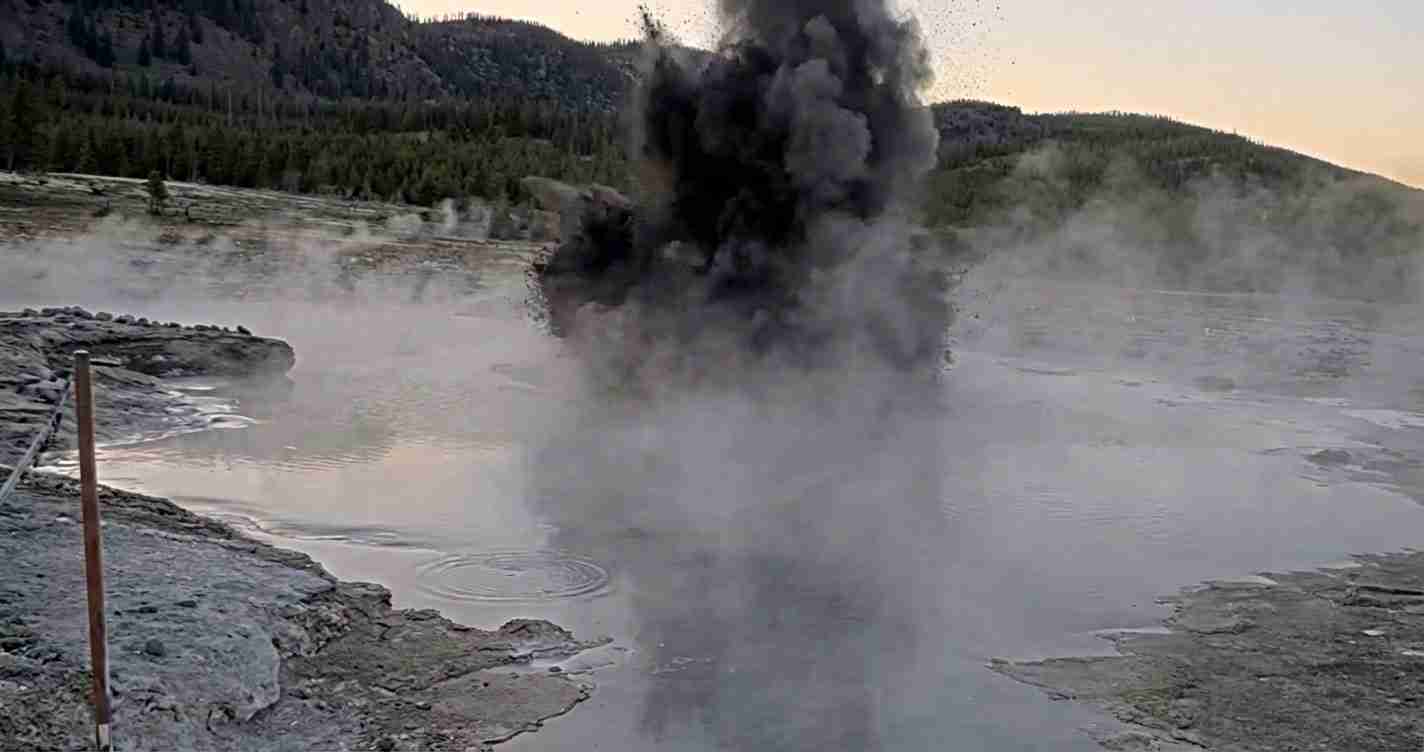
Yellowstone’s Echinus Geyser stuns visitors with rare reawakening after nearly six years
Echinus Geyser in Yellowstone’s Norris Basin reactivated in early February 2026, producing about 40 eruptions after nearly six years of dormancy, with jets rising 20–30 feet and pool temperatures peaking near 176.5°F and drawing park staff and visitors.
- Rare return: Echinus produced roughly 40 eruptions in February 2026 after its last full eruption in December 2020.
- Powerful but brief: Most eruptions reached 20–30 feet and lasted 2–3 minutes; pool temps hit about 176.5°F (80.3°C).
- Cause: Scientists attribute activity to a temporarily “clogged up” hydrothermal system that changed pressure and gas–water mixing.
- Safety note: Park and USGS monitoring show this fits normal hydrothermal behavior; visitors must stay on boardwalks and follow guidance.
What happened in February 2026
Early signs: Park monitors first recorded agitated water and repeated surges in the runoff channel the first week of February. On Feb. 7 Echinus produced its first full eruption since December 2020, with temperature readings near 158°F (70°C).
Additional eruptions were noted on Feb. 9, 12 and 15. Beginning Feb. 16, the U.S. Geological Survey, Yellowstone Volcano Observatory (YVO) logged frequent temperature spikes and eruptions every 2–5 hours. Between Feb. 16–24 Echinus erupted about 40 times, mostly reaching 20–30 feet and typically lasting 2–3 minutes. After Feb. 24 activity tapered to surges and no further full eruptions were reported into early March.
Size, temperatures and eruption character
Echinus’s pool spans roughly 66 feet across. During February eruptions, pool temperatures spiked to about 176.5°F (80.3°C) in some readings; surge temperatures measured near 104–122°F (40–50°C). Individual eruptions typically sent water and steam 20–30 feet into the air for 2–3 minutes.
What scientists say: a “clogged up” hydrothermal system
YVO and park scientists describe the February activity as consistent with a temporarily “clogged” hydrothermal system. Narrow passages or vents can shift or fill, changing pressure and gas release patterns so that acidic gases mix briefly with more neutral waters and trigger bursts to the surface. As YVO notes, these changes reflect plumbing shifts, not volcanic eruption processes.
“This clogging does not mean volcanic danger,” YVO and park scientists said, stressing the activity fits the park’s normal background of geothermal changes.
Why Echinus is different: acidity, cone and history
Acidic chemistry: Echinus is the planet’s largest acid-water geyser with pool pH near 3.3–3.6 — roughly the acidity of tomato juice. Acidic fluids often dissolve geyser plumbing, so acid geysers are uncommon; at Echinus, gas–water mixing yields acidity without destroying the system.
Geologic appearance: Named in the late 1800s for its spiny, sea‑urchin–like cone, the geyser’s cone and nearby rocks are coated with silica and ringed by bright red and orange mineral borders from iron, aluminum and arsenic deposits, giving the feature a striking look.
Historical pattern: Decades ago Echinus erupted more regularly and sometimes reached 40–75 feet and lasted about four minutes. After 1998 its secondary water supply declined and eruptions became rarer; short active phases occurred in 2017–2019 and February 2026 resembled those episodic windows.
Monitoring and park safety
Yellowstone staff and USGS scientists maintain close monitoring of geyser and basin conditions. The park posts current geyser activity and visitor guidance on the National Park Service geyser activity page. Thermal-sensor graphs and live data are available from the YVO monitoring page.
Public safety: Park officials emphasize staying on boardwalks and marked trails — hot water and thin crust around thermal features can be deadly. Follow posted closures and ranger guidance; for general visitor rules see the NPS visitor safety information.
Broader Yellowstone context
Norris Basin is one of Yellowstone’s hottest, most changeable hydrothermal areas. The Echinus flare-up occurred amid a busy period that included a new blue pool formed after 2024–2025 explosions and occasional nearby activity. YVO data through February 2026 — including seismic records showing dozens of small earthquakes (74 events, maximum magnitude 2.4) and paused uplift of the caldera — do not indicate volcanic unrest beyond typical hydrothermal variation.
Implications for Utah
- Tourism and travel: A lively Echinus can draw more visitors from Utah. Travelers should check NPS travel info, gate openings and road conditions before driving to Yellowstone.
- Local economy: Northern Utah lodging, outfitters and services may see increased bookings; plan ahead for limited availability near the park.
- Safety and search-and-rescue: More visitors raises accident potential; Utah teams sometimes coordinate regionally. Pack appropriately, leave trip plans, and follow park rules.
- Education and science: Utah universities and schools can use YVO live data and temperature graphs as educational tools related to hydrothermal systems.
- Infrastructure and policy: This hydrothermal event poses no threat to Utah infrastructure. It is a reminder for continued monitoring, not for emergency action.
Sources and live information
- U.S. Geological Survey, Yellowstone Volcano Observatory — Echinus Geyser back in action (news and monitoring)
- NBC Montana reporting on Echinus eruptions in February 2026
- ABC News coverage of rare acidic geyser activity
- YouTube overview video (monitoring footage and temperature data)
- GeyserTimes historical record for Echinus
- National Park Service geyser activity and NPS visitor safety information
- NPS travel info for road and gate conditions
For Utah travelers and residents: check park conditions and live monitoring before you go, respect all closures, and use official YVO and NPS resources for timing and safety when viewing rare features such as Echinus Geyser.