Perseverance May Have Found Its First Meteorite on Mars — Shiny “Phippsaksla” Shows High Iron, Nickel
NASA’s Perseverance rover may have found its first meteorite in Jezero Crater: a shiny, iron‑nickel candidate nicknamed Phippsaksla, about 80 cm wide, detected by Mastcam‑Z imaging and SuperCam spectroscopy showing elevated iron and nickel.
- Candidate name: Phippsaksla rock — glossy, sculpted, ~80 cm wide.
- Location: Vernodden area, just outside Jezero Crater rim.
- Instruments: Mastcam‑Z imaging and SuperCam laser spectrometer produced images and chemistry.
- Key finding: Spectra indicate high iron and nickel consistent with metallic meteorites.
- Status: Strong candidate; confirmation requires follow-up analyses and context mapping.
What Perseverance saw
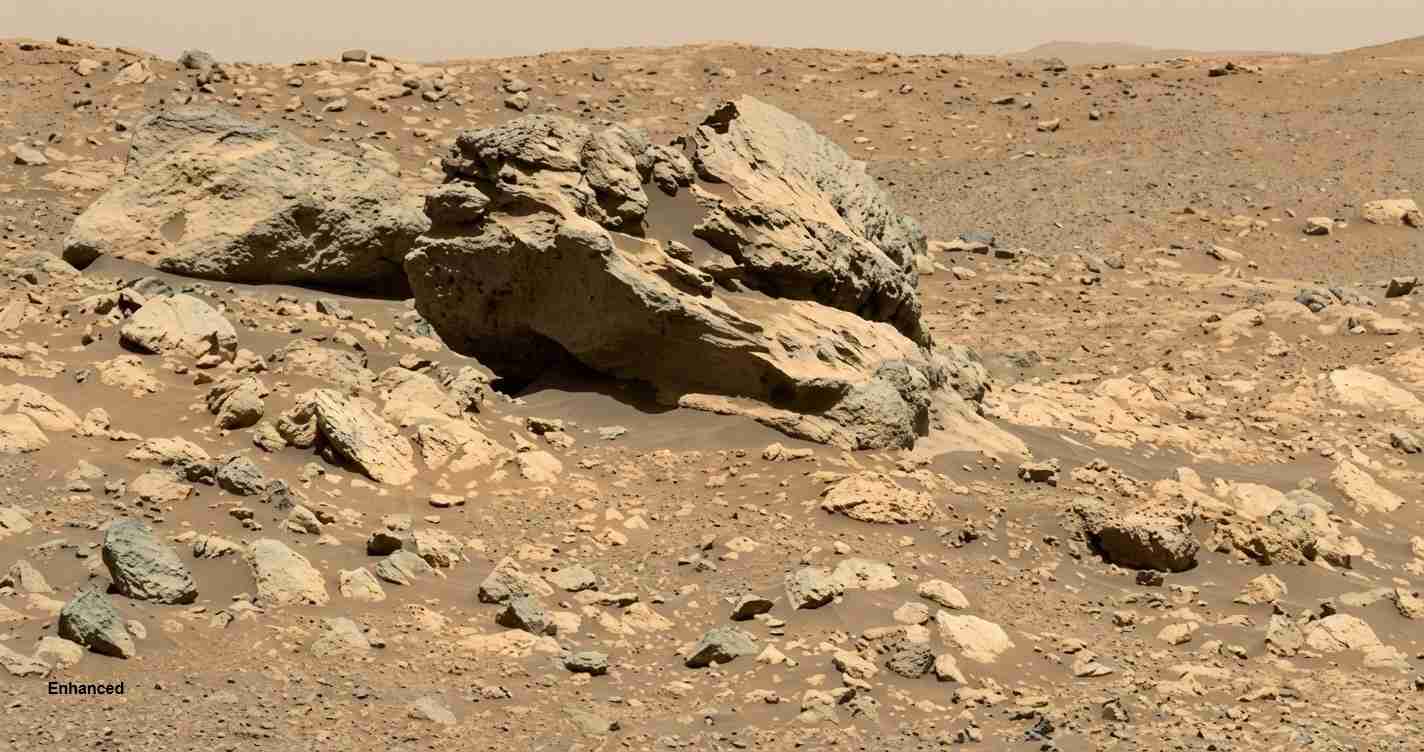
Perseverance photographed the object with Mastcam‑Z (distant and close views) showing a glossy, reflective surface and sculpted shape that contrasts with nearby sedimentary stones. The rover then used its SuperCam laser spectrometer to fire pulses and read returned light; those spectroscopic readings picked up unusually high iron and nickel signals — a signature often seen in metallic meteorites.
Primary mission reporting and media coverage provide early documentation and images (see reporting from NASA, Fox News, and India Today).
Why iron and nickel matter
Iron‑nickel meteorites typically form when large asteroids differentiated and heavy metals sank to form cores; later collisions break those bodies apart and eject fragments. Detecting both iron and nickel together is a strong fingerprint for such metallic meteorites and contrasts with most native Martian rocks, which are richer in silicates and other minerals.
Finding iron + nickel implies a likely extraterrestrial origin and provides samples of asteroid core material that carry information about the early solar system’s interior processes (coverage includes India Today and Union Rayo).
How this compares to past finds
Other Mars rovers — including Curiosity, Opportunity and Spirit — have documented shiny, metallic iron‑nickel meteorites (e.g., Curiosity’s “Lebanon” and “Cacao”). Phippsaksla would be the first likely meteorite identified by Perseverance in Jezero Crater, a key science target known for ancient river‑delta rocks, adding a new regional data point on meteorite survival and weathering on Mars (Fox News).
Scientific caution and next steps
“The SuperCam data strongly suggests a metal‑rich object, but final confirmation needs more context: mapping, additional spectroscopy, and comparisons with known meteorites,” mission teams note.
Scientists emphasize caution: while SuperCam readings are compelling, confirming Phippsaksla as a meteorite requires additional imaging, compositional checks, and contextual mapping of the surrounding terrain to rule out alternative explanations. The team will continue to monitor the rock with Perseverance’s suite of instruments and compare results with known Martian and terrestrial meteorites (see the NASA science blog: A Stranger in Our Midst).
Why this find matters for Mars science
Meteorite discoveries inform how often space rocks reach Mars, how well they survive the thin atmosphere and surface conditions, and how metallic materials weather over time. They also offer direct access to core-like asteroid material that can reveal formation and differentiation processes in early solar system bodies. Studying weathering on Mars helps calibrate timelines for surface processes and refine interpretations of other rock records (Union Rayo; India Today).
Visual evidence and public data
Mastcam‑Z images show a reflective surface compared with duller surrounding stones. NASA has shared early images and commentary through its science blog and mission updates, enabling public and scientific follow‑up — see the NASA post: A Stranger in Our Midst, and press coverage such as Fox News.
Implications for Utah
Economic impact: Utah’s growing aerospace and defense sector could see new federal and private contracts as planetary science and exploration remain priorities. Local companies supplying parts, software, testing, and mission support may benefit from increased demand.
Political consequences: For conservative Utah readers, the find underscores the value of sustained investment in space programs and public‑private partnerships; lawmakers may cite successes like Perseverance when advocating for facility expansions and workforce training.
Social and educational effects: The discovery can boost STEM interest in schools and universities, creating opportunities for internships, scholarships, and training programs that prepare students for roles in engineering, software, and planetary science.
Cultural relevance: The find resonates with Utah’s emphasis on exploration and practical achievement, inspiring civic groups, museums, and community events that link scientific discovery to local values.
Practical applications: While a single meteorite is not a mining target, understanding how metals survive and concentrate on Mars helps planners assess in-situ resource potential and informs technologies developed by Utah companies for off‑Earth work.
Sources and reporting notes
This article draws on initial mission reporting and press coverage, including NASA’s Mars science blog and media reports. Key sources and coverage include: NASA science blog, Fox News, India Today, The Independent, Union Rayo, and LaNASA.
Perseverance continues sending images and data from Jezero Crater as scientists study Phippsaksla. The Mars iron‑nickel meteorite candidate could become a key piece of evidence about how cosmic material lands, weathers and persists on the Red Planet — highlighting the scientific promise of robotic exploration and the economic opportunities that follow.