Jay Jones grilled over reckless driving conviction, community service controversy as Virginia Attorney General race heats up
Jay Jones faces scrutiny over a New Kent County reckless driving conviction after being cited for driving 116 mph, and controversy about whether his court-ordered 1,000 community service hours — partly performed for his PAC — meet legal requirements.
- Reckless driving conviction: Jones was cited for driving 116 mph and sentenced to 1,000 hours of community service.
- Community service questioned: He reports 500 hours with the NAACP and 500 with his PAC, Meet Our Moment, raising legal and ethical concerns.
- Prosecutor scrutiny: New Kent County Commonwealth’s Attorney Scott Renick says court-ordered service typically must benefit a non-political nonprofit.
- Political fallout: Republican opponent Jason Miyares has used the incidents and other controversies to attack Jones’ fitness for attorney general.
Background on Jay Jones
Jay Jones is the Democratic candidate in the Virginia Attorney General race. He has served in public office and built a statewide profile. During the campaign, opponents highlighted a past reckless driving conviction and a set of controversial text messages; media accounts captured intense debate exchanges. For related news reports and an AOL article, see coverage linked below.
Reckless driving conviction: facts and sentencing
What happened: Court records and reporting show Jones was cited for driving 116 miles per hour on an interstate in New Kent County. That speed exceeded posted limits and was charged as reckless driving under Virginia law.
Sentence: Jones was ordered to complete 1,000 hours of community service. Video reporting and subsequent news coverage document the citation and sentence — see video reporting and news coverage.
Community service controversy: NAACP and Meet Our Moment
Jones says he fulfilled the sentence by doing 500 hours with the NAACP and 500 hours with Meet Our Moment, a political action committee he helped found. The campaign’s characterization has prompted questions about whether PAC work satisfies court-ordered service requirements.
Specifically, New Kent County Commonwealth’s Attorney Scott Renick has publicly questioned whether hours credited to a PAC meet the legal standard that service benefit a charitable or non-political organization.
Legal and ethical questions
Procedural point: Prosecutors and legal experts note that court-ordered community service is generally required to benefit a nonprofit or charitable organization, not a political entity, unless the court explicitly approves otherwise.
Renick’s concern is procedural and direct: if hours were credited for PAC work, that could raise both legal and ethical questions about whether the sentence was fulfilled in the spirit intended by the court. See related reporting and video coverage.
Debate exchange and Jones’ response
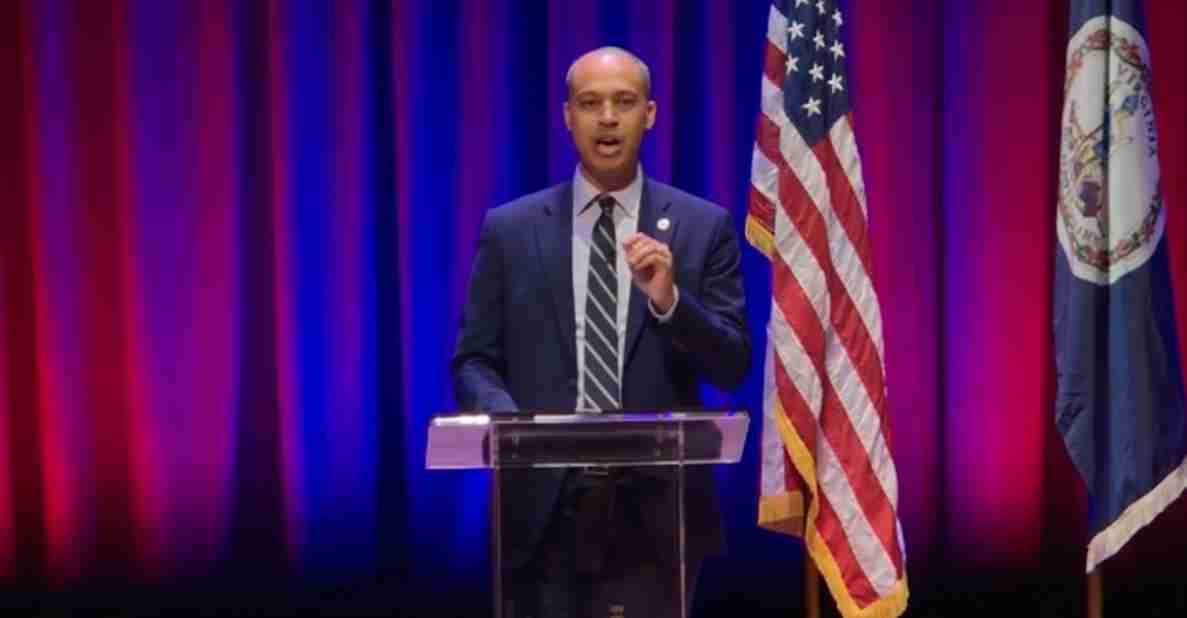
In a televised debate, Jones was pressed by Republican Jason Miyares and moderators about the reckless driving citation and the community service issue. Jones replied,
“I’ve taken accountability for my mistakes.”
He attempted to shift focus to his record and preparedness to serve as attorney general.
Miyares and Republican criticism
Miyares has spotlighted the conviction and other controversies — including incendiary texts reported in the press — to argue Jones lacks the temperament for the state’s top legal office. See reporting from CBS News and an AOL article.
Calls for withdrawal and campaign stance
Some commentators and political opponents have urged Jones to withdraw, but no elected Democratic leaders have publicly demanded he leave the race. Jones has remained in the contest and his campaign has pushed back on parts of the reporting. Notably, the campaign has not produced detailed public documentation showing how the 1,000 hours with Meet Our Moment were logged, which has allowed continued scrutiny.
Implications for Utah
Economic perspective: A Virginia AG race has limited direct economic impact on Utah, but the controversy illustrates how candidate behavior and legal compliance affect public trust — a point of interest for Utah voters and legal institutions.
Political and social effects: Utah’s conservative voters may view the episode as a reminder to demand transparency and accountability from candidates for prosecutorial offices. Local courts and nonprofits might tighten documentation and approval processes for court-ordered service.
Practical actions for Utah stakeholders could include clearer volunteer verification procedures and stronger vetting of candidates’ legal histories to avoid similar campaign disruptions.
Sources and further reading
- Video coverage and reporting on the community service and prosecutor’s comments
- CBS News report on the debate and related controversies
- AOL reporting on the race and Jones’ background
Note: All original facts, phrasing, and source URLs from the reporting have been preserved in this account.