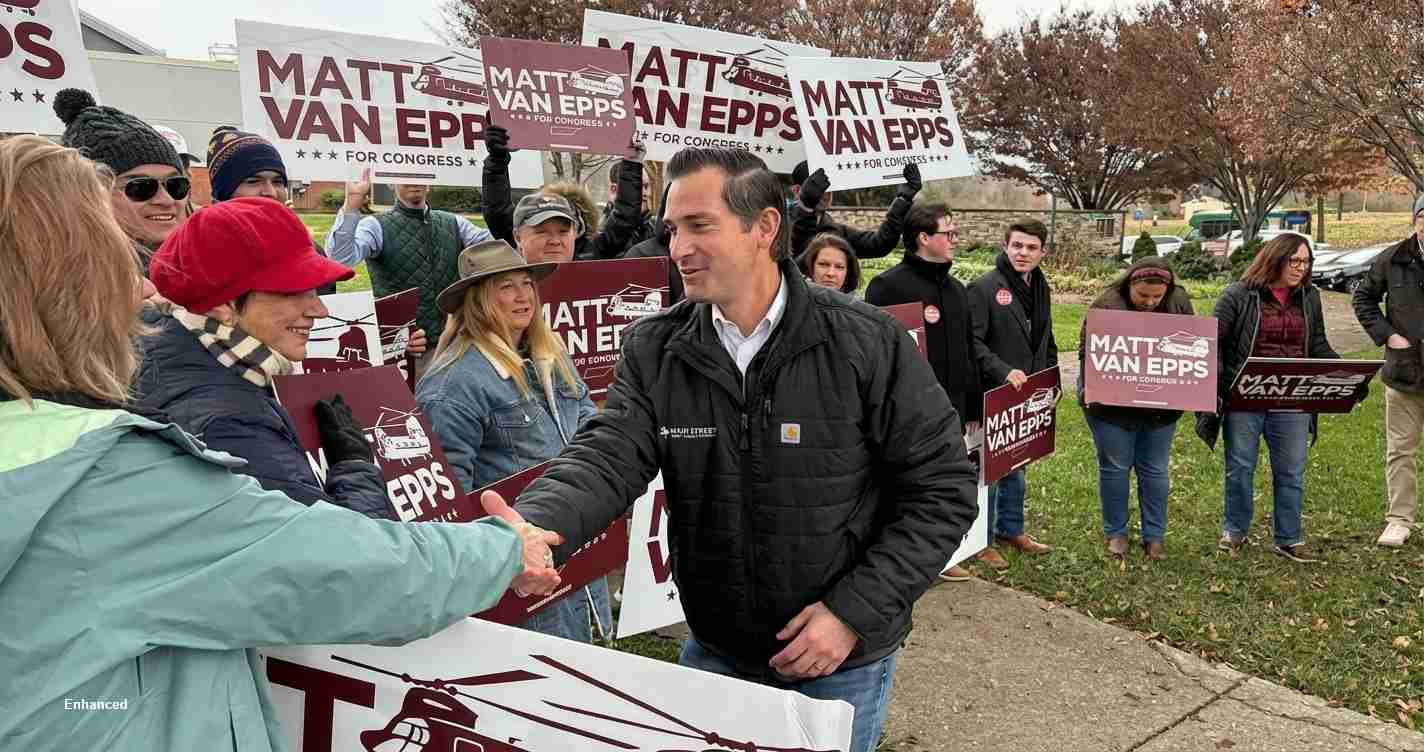
Trump-backed Republican Matt Van Epps Holds Tennessee Seat in Key Special Election Win
Republican Matt Van Epps won Tennessee’s 7th Congressional District special election Dec. 2, 2025, defeating Democrat Aftyn Behn with 53.9% to 45.0%, holding the seat vacated by Mark Green and securing the remainder of the 119th Congress.
Key takeaways
- Van Epps won with 53.9% (96,988 votes) to Aftyn Behn’s 45.0% (81,044 votes), an 8.9-point margin; the Associated Press called the race for Van Epps.
- He will serve the remainder of the 119th Congress through Jan. 3, 2027, filling the vacancy after Mark Green’s July 20, 2025, resignation.
- Van Epps carried 12 of 14 counties; Behn made gains in more populous Montgomery and Davidson counties but fell short overall (vote totals and county detail).
- The result kept a GOP-held seat and offered lessons for Republicans and Democrats heading into 2026.
Background: why the special election mattered
This special election drew national attention as a test of Republican strength in a district GOPs had carried previously. The seat opened when Rep. Mark Green resigned on July 20, 2025, for a private-sector job. Republicans treated the race as a must-win to keep House math steady and to show momentum heading into the 2026 midterms; Democrats aimed to narrow the map and demonstrate gains in suburban and urban counties (2025 Tennessee’s 7th congressional district special election — Wikipedia).
Who the candidates are
Matt Van Epps
Background: Van Epps is a former Tennessee Department of General Services commissioner (2024–2025) who ran as a pro-business, law-and-order conservative. He won the GOP primary decisively on Oct. 7 with 51.56%, carrying 12 of 14 counties in the district. Campaign materials portrayed him as aligned with former President Donald Trump, which helped secure GOP voter support (primary results and context).
Aftyn Behn
Background: Behn, a state representative from Tennessee’s 51st district since 2023, emphasized healthcare, education funding, and economic concerns for working families. She captured strong support in more populated Montgomery and Davidson counties but was unable to overcome Van Epps’s strength in rural counties (county-level results).
The results in detail
The Associated Press called the race for Van Epps after tallies showed him with 96,988 votes (53.9%) to Behn’s 81,044 votes (45.0%), an 8.9 percentage point margin. Early in-person voting ran from Nov. 12 to Nov. 26 ahead of the Dec. 2 election. While Democrats improved their share compared with 2024, they did not flip the district (vote totals and timelines).
“The results preserve a Republican-held seat and provide an early gauge of voter sentiment ahead of 2026,” election analysts said.
County patterns and turnout
Van Epps carried 12 of the district’s 14 counties. Behn’s gains were concentrated in larger population centers — notably Montgomery and Davidson — but could not offset Van Epps’s margins in more rural counties. Turnout showed steady Republican engagement and notable Democratic improvements in urban pockets; analysts will monitor whether those urban gains expand or remain isolated (county breakdowns).
What this means for the House and 2026
Implication: Van Epps’s win keeps a Republican-held seat in GOP hands, easing pressure on the party’s path to maintaining a House majority. For Republicans, the result supports the idea that Trump-backed candidates can still win in mixed districts. For Democrats, the narrowed margin signals suburban vulnerabilities for Republicans but not yet widespread shifts ahead of 2026.
Campaign themes and messaging
Both campaigns sought narrative control. Van Epps emphasized public safety, support for local businesses, lower taxes, and conservative values tied to national GOP priorities. Behn focused on healthcare access, education funding, and economic concerns for working families. Those messages resonated locally but did not change the overall balance in the district.
Verification and sources
Vote totals, candidate backgrounds, primary results and timelines in this article are drawn from compiled election reporting and official tallies summarized on 2025 Tennessee’s 7th congressional district special election — Wikipedia. The Associated Press reported on Van Epps’s victory as results were certified.
Implications for Utah
Economic impact
- Federal policy and budgets: Van Epps’s victory helps keep a Republican vote in the House during key budget debates, aligning with Utah conservative priorities for fiscal restraint and state-led solutions.
- Business and regulatory outlook: A GOP-led House is likelier to advance legislation favoring lower regulation and business-friendly policies that could benefit Utah’s tech and manufacturing sectors.
Political consequences
- Momentum for conservative candidates: The Trump-backed win reinforces the viability of candidates aligned with former President Trump in mixed districts.
- Messaging for 2026: Utah Republican organizers may emphasize county-level mobilization and suburban outreach lessons from Van Epps’s campaign.
- Fundraising and endorsements: A GOP hold can bolster fundraising appeals and endorsements for like-minded candidates in Utah.
Social effects
- Voter engagement strategies: The race underscores the value of ground games and county-level organization — tactics Utah campaigns may replicate.
- Suburban outreach: Democrats’ urban gains in Tennessee suggest Utah conservatives should focus on suburban issues like schools, public safety, and cost of living.
Cultural relevance
Van Epps’s conservative themes — family values and local control over education — resonate with many Utah voters. His path from state office to Congress illustrates a familiar leadership pipeline for regional politicians.
Practical applications for Utah residents
- Federal representation: While the Tennessee race does not change Utah’s delegation, it affects the overall House makeup and how Utah priorities may be advanced or checked at the federal level.
- Campaign lessons: Utah campaigns can study Van Epps’s county-level strategy, turnout operations, and messaging ahead of 2026.
- Voter priorities: The election shows voters respond to clear, local-focused messaging; Utah residents should expect tailored pitches on economy, education, and safety.
Sources and further reading
Primary compilation and county-level details: 2025 Tennessee’s 7th congressional district special election — Wikipedia. Associated Press reporting on Van Epps’s victory appeared as results were certified.