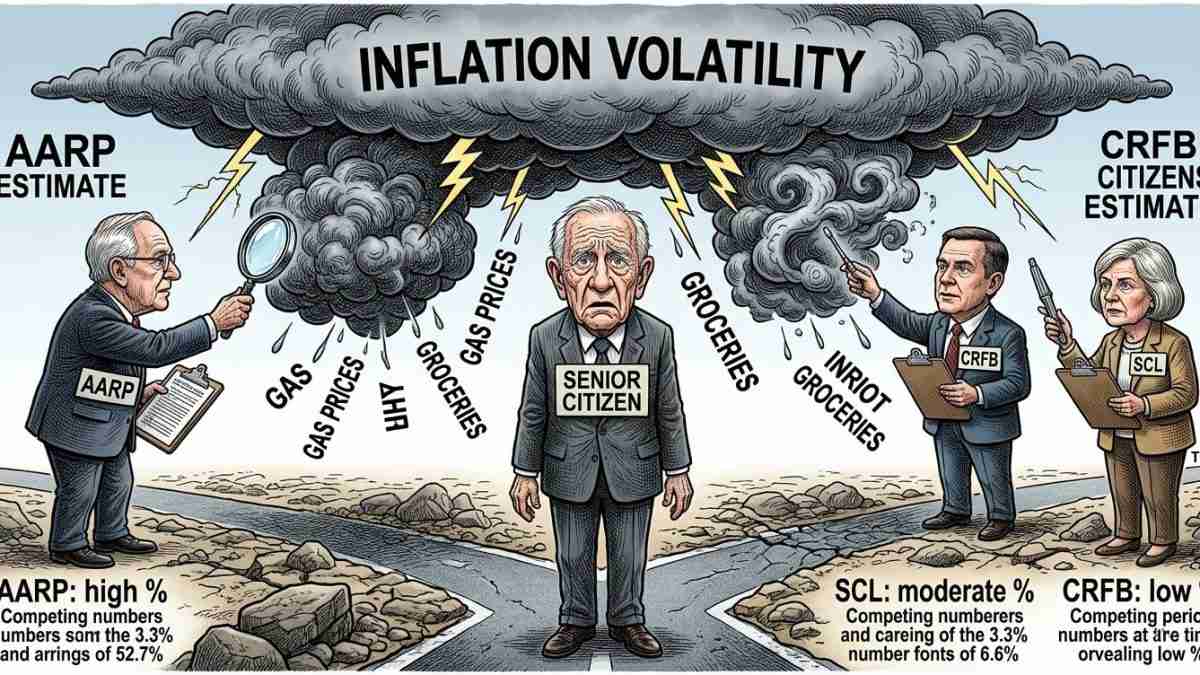
WASHINGTON, Aug. 13 (Senior Newspaper) — Washington — Early forecasts for the 2027 Social Security cost-of-living adjustment now range from 3.2% to 3.6%, giving retirees and other beneficiaries a preliminary view of how their monthly income could change next year.
The estimates moved lower after the Bureau of Labor Statistics reported that the Consumer Price Index for Urban Wage Earners and Clerical Workers, known as CPI-W, rose 3.4% over the 12 months through July. The measure was up 3.5% in June.
The final adjustment has not been set. The Social Security Administration will use CPI-W readings from July, August and September to calculate the 2027 COLA. The agency is expected to announce the result on Oct. 14, after September inflation data are released. Payments reflecting the adjustment are expected to begin in January 2027.
How the estimates compare
The Committee for a Responsible Federal Budget projects a 3.2% COLA, the lowest of the major estimates reported after the July data. The committee said CPI-W was unchanged in July and had risen 3.4% from a year earlier.
AARP estimates a 3.5% adjustment. The organization described the figure as its first forecast before the release of the third-quarter inflation reports.
The Senior Citizens League projects a 3.6% COLA, down from its earlier estimate of 3.8%.
Mary Johnson, an independent Social Security and Medicare policy analyst, estimated a 3.4% adjustment. Her forecast fell from 3.7% in July and 4.7% in June.
The differences matter because the COLA is applied to monthly benefits received by millions of retired workers and other Social Security beneficiaries. A higher adjustment would mean more income for beneficiaries, while also increasing the federal program’s benefit payments.
What the dollar amounts could mean
The Senior Citizens League calculated that a 3.6% increase would raise an average monthly benefit by $69.75, from $1,937.53 to $2,007.28.
That calculation is an estimate, not a promise of what every beneficiary would receive. Individual payments vary, and the final percentage could change as August and September inflation data become available.
For households that depend heavily on Social Security, the adjustment can affect spending on food, energy, housing and health care. The effect also extends beyond beneficiaries: changes in benefit income can influence consumer spending and the finances of families that help support older relatives.
Why the forecasts are moving
The forecasts have shifted as inflation readings changed during the year. The Senior Citizens League said inflation began the year at 2.2%, rose to 4.4% by May and then fell to 3.5% in June. Its estimate declined again after the July data.
Rich Johnson, AARP’s vice president for financial security, said food and energy prices could still change the outlook over the next two months.
“This is not set in stone,” he said.
Mary Johnson said moderating inflation had lowered her estimate from higher levels earlier in the year.
The remaining data are important because the 2027 COLA will not be determined by the July figure alone. August and September CPI-W readings will complete the period used in the calculation.
What happens next
The next key step is the release of August CPI-W data, followed by September’s report. The Social Security Administration will then announce the official adjustment, currently expected on Oct. 14.
Until that announcement, the 3.2% to 3.6% range is best understood as a set of competing forecasts rather than a final benefit increase. The final number will determine how much Social Security income changes for beneficiaries beginning in January 2027.