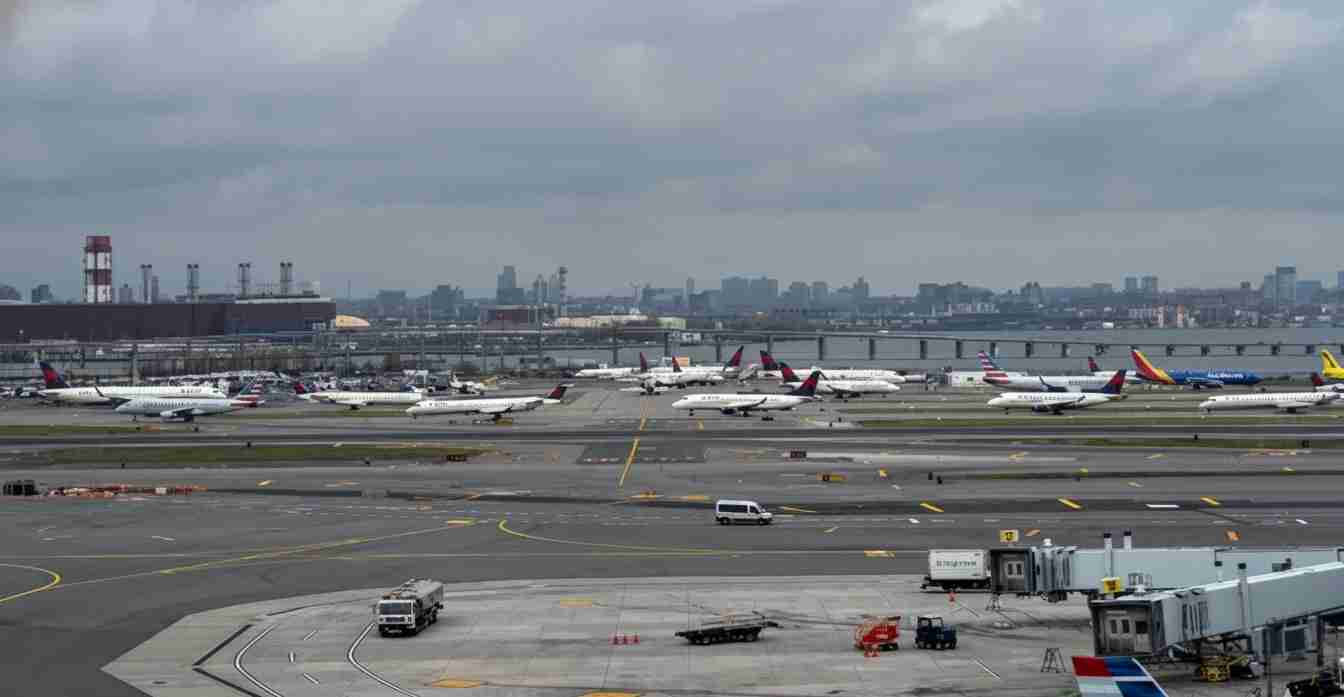
FAA orders phased flight cuts as air traffic controller shortage snarls travel; Senate moves on shutdown fix, Duffy lashes Buttigieg
American air travelers face widespread disruptions as the FAA ordered phased reductions at 40 major airports amid an air traffic controller shortage tied to the government shutdown, causing thousands of delays and cancellations and prompting safety and political concerns nationwide.
- FAA-ordered, stepwise reductions at 40 major U.S. airports will cut scheduled operations between 6 a.m. and 10 p.m. local time in phases from 4% up to 10% to preserve safety amid staffing shortfalls.
- Thousands of delays and cancellations have been reported as airlines rearrange schedules; airlines must meet airport-level targets but choose which flights to cancel.
- Senate action underway: a bipartisan funding package is advancing, but limits remain until staffing and pay issues tied to the shutdown are resolved.
- Travelers bear many costs: federal guidance requires refunds for canceled flights but does not mandate reimbursement for lodging or meals; passengers should document expenses and check insurance.
What the FAA ordered and why
The FAA says the stepwise reductions are a safety measure in response to documented staffing shortfalls and confidential incident reports from pilots and controllers. The agency’s FAA announcement and the FAA Emergency Order (PDF) set a schedule: 4% reductions on Nov. 7, 6% on Nov. 11, 8% on Nov. 13 and 10% on Nov. 14 for operations between 6 a.m. and 10 p.m. local time at the 40 named airports.
The FAA and Department of Transportation framed the directive as necessary to protect safety while many controllers continue to work without pay because of the government shutdown. The order will remain until staffing returns to safe levels or the safety picture improves.
How travelers and airlines are affected
Airlines must meet cumulative airport-level reduction targets but retain discretion over which flights to cancel. The FAA requires carriers to offer full refunds for canceled flights; it does not require reimbursement for lodging, meals or alternate transportation, leaving those costs to travelers, insurers or airline goodwill policies.
Major carriers, including American Airlines, have issued operational updates and are rearranging schedules. Passengers are advised to confirm flight status before heading to the airport and to expect additional schedule adjustments.
“Thousands of delays and cancellations have already been reported,” with at least 2,740 delays over a recent weekend as airlines and airports adjusted schedules, media coverage shows.
Busy hubs in the crosshairs and additional operational limits
The FAA’s list includes top hubs such as Atlanta (ATL), New York’s JFK and LaGuardia (JFK, LGA), Los Angeles (LAX), Chicago O’Hare (ORD) and Dallas/Fort Worth (DFW). Because these airports handle large shares of daily flights, even small percentage cuts remove dozens or hundreds of departures and arrivals.
Beyond scheduled reductions, the FAA has temporarily restricted certain nonessential operations near affected facilities — including some visual flight rule (VFR) activities, parachute drops, photo missions and daytime commercial space launches — to reduce daytime demand on limited controller staffing. See the agency statement: FAA announcement.
Safety vs. convenience
Federal officials emphasize safety. The FAA cited staffing data and confidential incident reports that indicate increased risk if traffic continued at normal levels with fewer controllers. The phased approach is intended to relieve strain while keeping as much of the system open as safely possible.
For travelers, the practical effects are crowded terminals, long lines and delayed or canceled trips — with refunds for canceled fares but limited protections for additional expenses. Reports described “mass chaos” at some airports as passengers and airlines adjusted to the new limits (CBS News coverage).
Political and legislative context
The staffing shortages stem directly from a protracted federal shutdown that left many controllers working without pay and increased stress across the workforce. Lawmakers are advancing bills to reopen the government; the Senate has moved a bipartisan funding package intended to end the shutdown, but operational constraints will persist until funding is signed and staffing stabilizes (CBS News coverage).
The situation has taken on political dimensions. U.S. Transportation Secretary Sean P. Duffy publicly criticized remarks from other officials and media accounts — adding tension to an operational crisis affecting travelers nationwide.
Implications for Utah
Economic impact: Salt Lake City International (SLC) could feel ripple effects even if not among the 40 primary airports. Fewer connecting flights and disrupted cargo schedules can increase costs and disrupt tourism, a key Utah industry.
Political consequences: Utah lawmakers and conservative voters will watch how leaders handle the crisis; the situation raises pressure to resolve the shutdown quickly and restore staffing without long-term harm to the aviation workforce.
Practical advice for residents: check airline alerts, allow extra time at airports, understand refund rights and document expenses for potential reimbursement by carriers or insurers. For airline guidance see American Airlines’ update and FAA guidance at the FAA newsroom.
Traveler tips and airline policies
- Confirm flights: check status with your carrier before leaving home and enroll in alerts.
- Allow extra time: expect longer lines for check-in and rebooking.
- Know your rights: canceled flights must be refunded for the unused portion; keep receipts for out-of-pocket expenses in case airlines or insurers offer reimbursement.
- Consider alternatives: flexible travel or off-peak plans may reduce disruption risk.