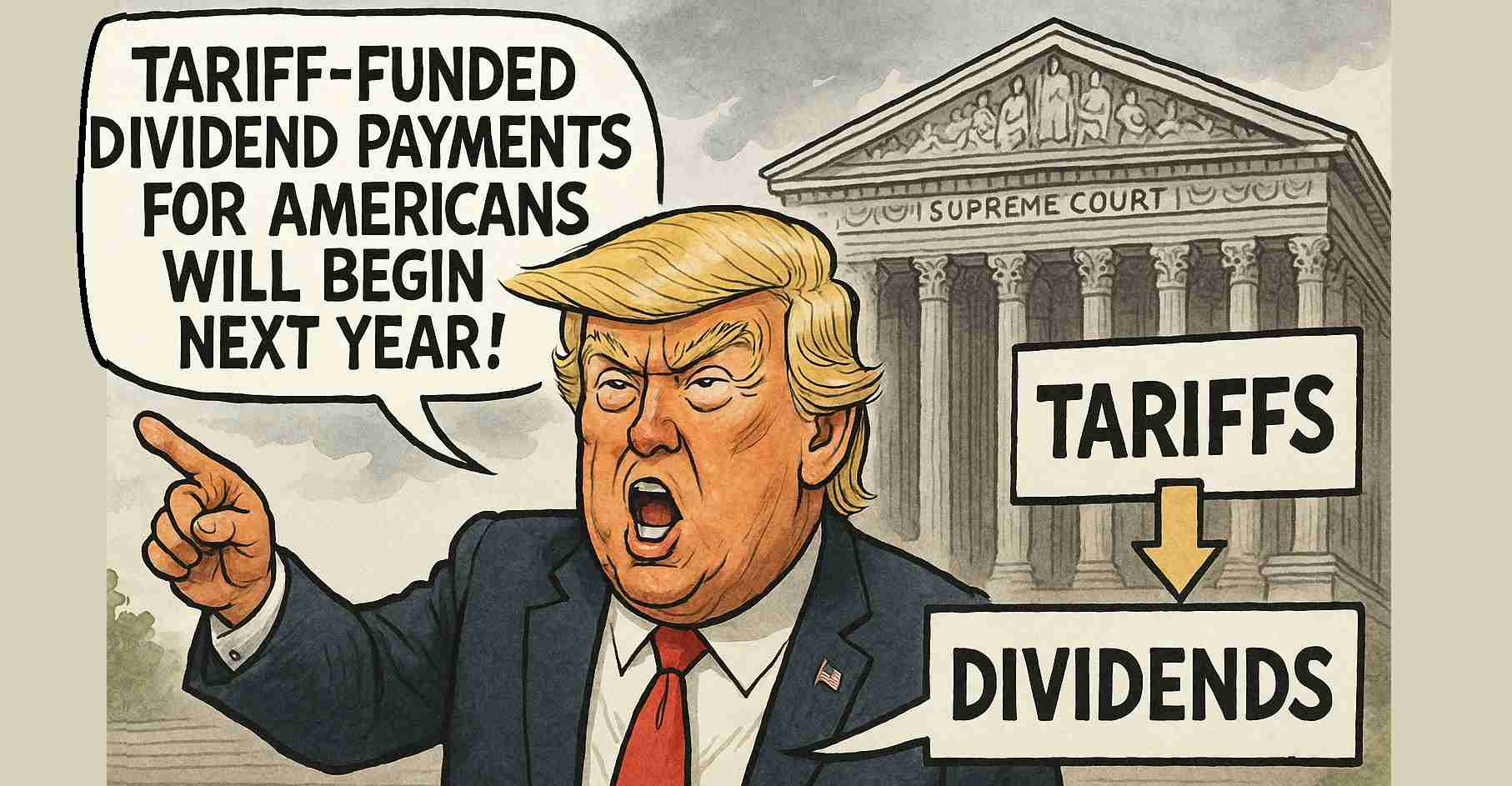
Trump says tariff-funded dividend checks of $2,000 for moderate-income families could roll out by 2026
Former President Donald Trump announced that moderate and middle-income families could get $2,000 tariff-funded dividend checks as soon as next year, with disbursements likely before the 2026 midterms — pending legal and congressional approval.
Key takeaways
- Proposal: Trump said Americans of “moderate income, middle income” could receive checks funded by rising tariff revenue; coverage.
- Timing: Payments are targeted for mid to late 2026, not the 2025 holidays, and could arrive ahead of midterm contests.
- Unclear design: Officials have not defined eligibility, frequency, or the legal route; Congress would likely need to act.
- Economists warn: Critics say direct checks from tariff revenue could raise inflation and may not offset broader price effects from tariffs themselves.
Background: tariffs, dividends and the law
Trump has framed tariffs both as a trade tool and a source of government revenue that can be returned to citizens. He argued tariffs protect U.S. industries and produce receipts that could be paid out as dividends; without tariffs, he said, “this nation would be in serious trouble.” For full reporting, see the original coverage.
At the same time, parts of the administration’s tariff program are under review at the Supreme Court — a process that could change how tariff authority is interpreted and how receipts are collected or used. Any court limits or rulings could affect the size and timing of the revenue pool cited by the White House. See related report.
How the tariff checks are said to work — and what’s missing
Trump and aides sketched a high-level framework: collect tariff revenue, set aside a portion, then deliver checks to households that meet a “moderate-income” test. Treasury Secretary Scott Bessent indicated the dividend could take different forms — from direct payments to targeted tax cuts — and Press Secretary Karoline Leavitt said the plan remains under review. Read the source coverage.
- Eligibility: No income thresholds or qualifiers for “moderate” have been published.
- Amount & frequency: It is unclear whether $2,000 would be a one-time payment or a recurring dividend.
- Legal mechanism: Directly sending tariff revenue to citizens would likely require congressional authorization or a new appropriation.
Economic experts voice caution
Budget experts and economists are skeptical that tariff receipts alone can sustain large, recurring checks without trade-offs. Many warn that broad cash distributions can be inflationary if supply does not match demand, and note that tariffs themselves tend to raise imported-goods prices — potentially offsetting some benefits of a cash dividend. Source: analysis.
Legislative and practical hurdles
Even if tariff collections grow, redistributing that revenue as household checks faces legal and procedural barriers. Congress controls federal spending and would likely have to pass enabling legislation to authorize the Treasury to distribute tariff receipts directly or to enact offsetting tax changes. Absent congressional action, the administration’s options to redirect funds are limited.
Program design also requires work: eligibility systems, fraud prevention, phase-outs by income, or universal targeting will determine cost, complexity, and political viability.
White House signals and alternative options
The White House press office says the idea is under review and multiple options remain on the table, including tax cuts instead of direct checks. Treasury Secretary Bessent emphasized flexibility, noting distribution could be cash payments or other mechanisms. See the original report.
Political timing and motive
Observers note the targeted mid-2026 timing is politically salient: delivering checks before the midterms could boost support among moderate-income voters in key races. The focus on “moderate and middle income” seems designed to appeal to voters facing cost-of-living pressures while also reinforcing trade-protection arguments.
Implications for Utah
Economic effects
Household impact: Many Utah families fall into the targeted brackets; $2,000 checks or tax relief could provide a short-term boost and ease household budgets for housing, education, and child care.
Prices and inflation: Utah could still face higher consumer prices if tariffs raise costs on imported goods and inputs used by local manufacturers and retailers; any cash infusion may be partly offset by higher prices.
Political consequences
Utah’s conservative-leaning electorate often values fiscal responsibility and domestic industry. A tariff-funded dividend aimed at moderates could find support, but state leaders will weigh inflation and federal spending concerns when signaling for or against the plan.
Social and business effects
Small businesses: Firms that rely on imports may face higher input costs; consumer stimulus could help offset demand losses but may not erase margin pressures for businesses with tight margins.
Rural / urban split: Rural counties tied to agriculture and manufacturing may favor protective tariffs, while urban consumers could be more sensitive to higher retail prices. Targeting and program design will shape outcomes across communities.
Practical considerations for Utah residents
- Eligibility: Watch for income thresholds, application processes, and timeline details; without rules, residents cannot determine qualification.
- Local advocacy: State leaders and business groups may push for protections or carve-outs if tariffs harm key industries; lawmakers can influence any federal legislation authorizing tariff-funded dividends.
Sources and further reading
Primary reporting and quotes in this article are drawn from coverage of Trump’s announcement and statements by White House officials and Treasury Secretary Scott Bessent. Full source: ABC3340 report on the tariff dividend proposal.
Additional analysis will be required as the administration releases details, as Congress considers enabling legislation, and as the Supreme Court issues rulings that affect tariff authority and revenue use.
“Officials have not said whether payments would be one-time or recurring, how eligibility would be set, or the exact legal route to distribute funds.” — reporting and statements summarized from the original article.