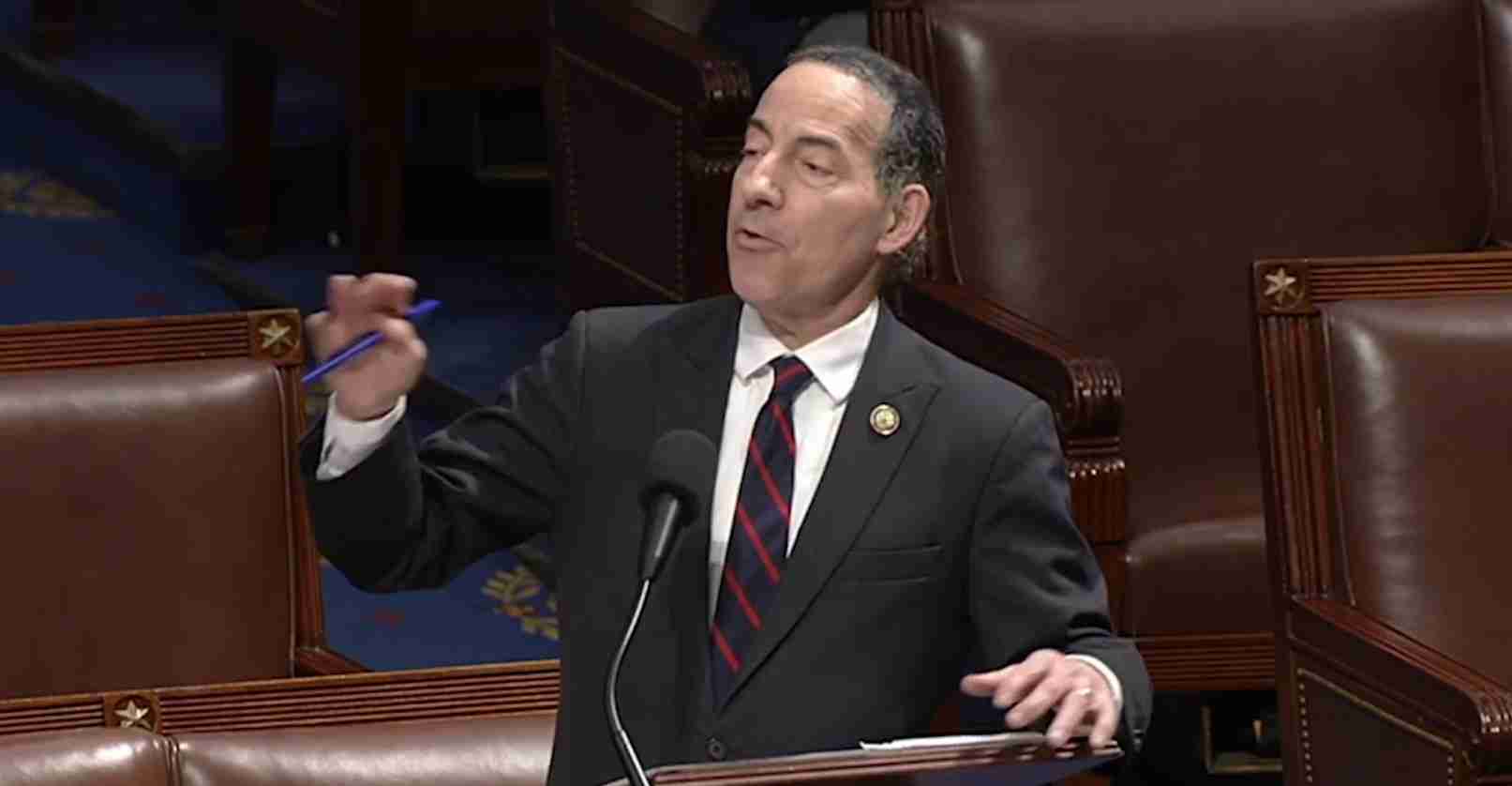
Raskin defends Plaskett as Epstein texts prompt “sick” criticism; files show deeper ties
Rep. Jamie Raskin defended Rep. Stacey Plaskett after newly released files showed text exchanges with Jeffrey Epstein during a 2019 House hearing, prompting a failed censure push and renewed debate over congressional ethics and constituent communications.
Key takeaways
- Released messages: Files show Rep. Stacey Plaskett exchanged texts with Jeffrey Epstein during Michael Cohen’s 2019 testimony, including questions for a witness and casual remarks.
- Censure attempt failed: A GOP-led censure resolution advanced by Rep. Ralph Norman did not pass after three Republicans joined Democrats to block it.
- Raskin’s stance: Rep. Jamie Raskin defended Plaskett on the House floor, calling the effort politically motivated and urging an Ethics Committee review.
- Broader questions: The episode raises concerns about the appearance of impropriety, long-term ties to Epstein-related interests, and how Congress handles constituent communications.
What the records show
Files released by House Republicans include time-stamped text exchanges between Rep. Stacey Plaskett and Jeffrey Epstein from the day former Trump lawyer Michael Cohen testified before the House in 2019. Reporting says the messages include Plaskett asking Epstein for advice on questions to ask Cohen and sending casual comments about what she planned to wear during the hearing — details reported by Fox News, Notus, and Axios.
The records show a string of communications that continued while Cohen testified. Republicans contend the sustained contact suggests “inappropriate coordination” and raises concerns about a sitting member of Congress maintaining ongoing contact with a convicted sex offender. Supporters of that view say the volume and timing of the messages matter for judgment and public trust.
Republican response and censure push
House Republicans pressed the matter on the floor. Rep. Ralph Norman introduced a resolution to censure Plaskett, read portions of the messages into the record, and argued the texts “reflect discreditably on the House,” calling for accountability.
“These messages undercut the integrity of our proceedings and deserve a strong response,” Rep. Norman said on the floor, according to coverage.
Supporters of the censure argued that members who maintain close relationships with controversial figures should face scrutiny. Opponents characterized the censure as politically motivated and urged that the House avoid summary punishment without a full Ethics Committee review.
Raskin’s defense and the backlash
On the House floor, Rep. Jamie Raskin defended Plaskett, calling the censure politically motivated and noting there is no House rule barring members from receiving calls or texts during hearings. He recommended the matter be referred to the Ethics Committee instead. Video of Raskin’s remarks and a Fox News video captured his floor defense.
Raskin’s defense drew sharp criticism from conservative commentators and some journalists who labeled the defense “sick” and “incredibly dishonest.” Critics argued that describing Epstein as a mere constituent ignored reporting that points to longer-term ties, including past professional connections, reported campaign interactions, and Plaskett’s role in local tax credit matters.
Plaskett’s response and context
Rep. Plaskett defended her actions, saying that at the time the texts were exchanged Epstein’s federal investigation was not public knowledge and that she regularly received messages from a wide variety of people — “friends, foes, and constituents” — about the hearing. She maintained the exchanges reflected constituent contact rather than improper coordination.
Reporting also notes that Epstein’s main residence was in the U.S. Virgin Islands — Plaskett’s district — and that prior interactions between local officials and Epstein-related interests complicate the picture, fueling Republican calls for further review.
Ethics, oversight and broader congressional questions
The episode has widened debate over congressional ethics rules and how lawmakers should handle contact with controversial figures. While House rules do not explicitly ban members from receiving constituent messages during hearings, ethics experts emphasize the difference between passive receipt of messages and substantive coordination.
Legal scholars note the line can be complicated: repeated, substantive exchanges while official proceedings are underway raise questions about judgment and the appearance of impropriety. Partisan dynamics also shape responses, with Democrats urging due process and Republicans pressing for immediate accountability.
Implications for Utah
Economic impact
- Federal funding and oversight: High-profile ethics disputes can slow committee work and delay legislation affecting federal programs Utah relies on, potentially stalling land use, public lands management, and infrastructure measures.
- Tourism and reputation: Although the case centers on the Virgin Islands, national attention to how officials interact with wealthy or criminal figures may prompt heightened scrutiny for Utah businesses that contract with federal agencies.
Political consequences
- Heightened partisan oversight: Utah’s conservative congressional delegation may continue to press strict ethical standards and use oversight to highlight perceived lapses by Democrats ahead of future elections.
- Local campaigns: Candidates and campaigns in Utah may cite the dispute to push transparency and tougher rules on interactions between elected officials and outside actors.
Social effects and cultural relevance
Revelations of close ties between lawmakers and discredited figures can deepen voter skepticism. In Utah, where community values and civic trust are strong, the episode may intensify calls for clearer rules and proactive disclosure by lawmakers. Local media may also use the story to advocate ethics reform.
Practical applications for residents
- Contacting representatives: Utah residents can press their members of Congress for clearer distinctions between official business and private correspondence.
- Advocacy and watchdog action: Civic groups may use the case to demand transparency, push for public release of records, and lobby for stronger House disclosure rules.
Reporting and sources
This article draws on primary materials released by House Republicans, news coverage and floor remarks captured on video. Key sources cited in reporting include Fox News coverage, a Fox News video, a House-floor video of Rep. Jamie Raskin’s remarks, regional reporting from Notus, and contextual reporting from Axios.
The incident continues to unfold, and questions remain about the full extent of Rep. Plaskett’s ties to Jeffrey Epstein and whether formal ethics inquiries will follow. Republicans urge a thorough accounting; Democrats stress due process and caution against political punishment without a full review.
Conclusion
At stake: whether the exchanges represent routine constituent contact or a pattern that undermines public trust. The House debate — and any Ethics Committee action — will shape expectations about transparency and appropriate behavior for members of Congress going forward.