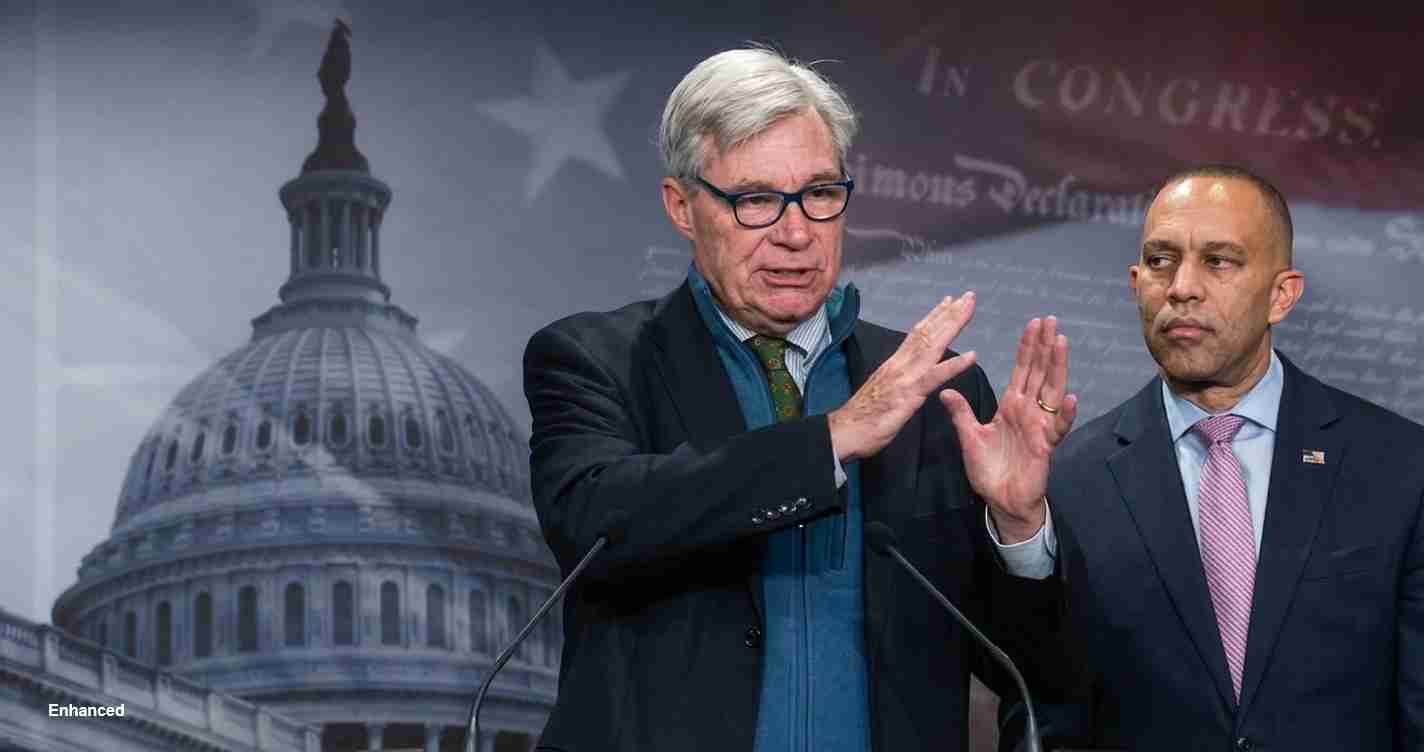
White House Calls Sen. Sheldon Whitehouse a ‘Victim’ of the “Green New Scam” After Funding Fight with Rubio
The White House labeled Sen. Sheldon Whitehouse a “victim” of the “Green New Scam” after he criticized Sen. Marco Rubio for withholding funding for a congressional climate delegation — an exchange that underlines intensifying politicization of U.S. climate diplomacy.
Key takeaways
- White House spokeswoman Taylor Rogers called Sen. Sheldon Whitehouse a “victim” of the “Green New Scam” after Whitehouse criticized Sen. Marco Rubio for withholding funding for a congressional climate trip, according to reporting by AOL.
- Daniel Turner of Power the Future criticized Whitehouse’s praise for what Turner described as a Chinese pavilion at the conference, amplifying accusations that some climate advocacy favors foreign interests (reporting cited by AOL).
- The phrase “Green New Scam” is a partisan reworking of the Green New Deal used as rhetorical criticism; there is no public evidence that Sen. Whitehouse was the victim of a financial or criminal scam (source: AOL).
- The dispute reflects how COP meetings and global climate diplomacy — including questions about U.S. presence at COP30 — have become political flashpoints (context: Time; Japan Times).
What happened: the exchange over funding and optics
Sen. Sheldon Whitehouse, a leading Senate Democrat on climate issues, publicly criticized Sen. Marco Rubio after Rubio declined to back funding for a congressional delegation to an international climate conference widely expected to be COP30. Whitehouse has been active at recent global climate meetings, where exhibits and delegations from many countries drew attention.
Following Whitehouse’s criticism of Rubio, White House spokeswoman Taylor Rogers — cited in reporting by AOL — said Whitehouse had “fallen victim to the biggest scam of the century: the Green New Scam.” That rhetorical line reframes the dispute as political theater and fiscal waste rather than a straight disagreement about diplomacy or policy details.
“fallen victim to the biggest scam of the century: the Green New Scam”
Power the Future chief Daniel Turner joined the critique, criticizing Whitehouse’s praise for what Turner described as a Chinese delegation pavilion at the conference. Turner and allied groups argue that some international climate forums allow foreign governments to shape narratives while U.S. taxpayers fund participation and exhibits.
No evidence of a criminal scam; political rhetoric drives labels
Reporting shows the “scam” claim functions as partisan rhetoric. There is no public evidence that Whitehouse was defrauded or involved in criminal activity. The “Green New Scam” label plays on concerns about large-scale climate programs — claims that they are costly, ineffective, or benefit foreign competitors — while supporters emphasize emissions reductions and green investment.
Context: COP meetings and U.S. diplomatic posture
The framing of climate efforts as scams or foreign-influenced campaigns is part of a broader trend where climate policy is a partisan test. Independent coverage raises questions about U.S. attendance and leadership at COP30 and how illiberal actors may use such forums for soft power (see Time and reporting on carbon-capture debates at Japan Times).
Why the spat matters: politicization of climate policy
This episode underscores how climate policy has shifted from technical debate to political battleground. Lawmakers now weigh optics, funding, and perceived beneficiaries as much as policy merits. The result affects congressional delegation funding, which international meetings U.S. lawmakers attend, and how both sides use imagery from events to shape public opinion.
Conservative critics emphasize costs, federal overreach, and risks to U.S. industry. Progressive and centrist advocates stress long-term risks of inaction and economic opportunities in clean energy. The term “Whitehouse Green New Scam” is a rhetorical device that exposes the depth of the divide.
Implications for Utah, United States
Economic impact — Utah jobs and energy businesses
Utah’s energy mix includes coal, natural gas, oil, and growing renewables like solar and wind. If climate policy becomes more politicized, federal grants, tax incentives, or permitting reforms tied to clean-energy projects could stall or shift — affecting Utah projects that rely on federal support for grid upgrades, manufacturing, or carbon-capture pilots. Conversely, greater federal skepticism could slow aggressive national mandates and benefit traditional energy producers.
Political consequences — Utah lawmakers and messaging
Utah voters lean conservative; state lawmakers often emphasize energy jobs, local control, and fiscal caution. The “Green New Scam” framing will likely resonate with Republican and conservative audiences in Utah, bolstering arguments for protecting mining, oil-and-gas jobs, and state permitting authority while complicating federal cooperation for clean-energy investments.
Social effects — public opinion and local communities
In energy-dependent Utah communities, national debates can harden views. Residents worried about jobs and costs may be skeptical of sweeping federal climate programs. Counties reliant on coal or natural gas will watch congressional funding for clean-energy projects; communities pushing for solar or battery investments may see partisan fights as investment obstacles.
Cultural relevance — trust, patriotism and China angle
Accusations that U.S. climate advocates praise Chinese displays at global meetings tap into concerns about outsourcing and foreign influence. Utah conservatives prioritizing national security and economic independence may view such claims with alarm and press for stricter scrutiny of international climate partnerships.
Practical applications — what Utah residents should watch
- Watch congressional funding bills: which delegations get funded affects local access to federal conversations on permitting and innovation.
- Monitor federal grants and permitting: politicization could slow approvals needed by projects in Utah.
- Pay attention to state policy moves: Utah may propose state incentives or protections to reduce federal reliance.
- Follow advocacy group messaging: organizations like Power the Future will continue shaping local debates about costs and benefits.
Relevant reporting and sources
- AOL: “White House dubs Dem a scam victim after he fumes Rubio wouldn’t fund climate trip”
- Time: coverage of COP30 and U.S. presence
- Japan Times: reporting on COP30 carbon capture and NGO activity
- AiGroup: overview of COP28 developments and industry context
Note: This report preserves the original reporting and URLs cited above and places the exchange within the broader debate over climate policy, COP participation, and the evolving rhetoric such as the “Green New Scam” label.