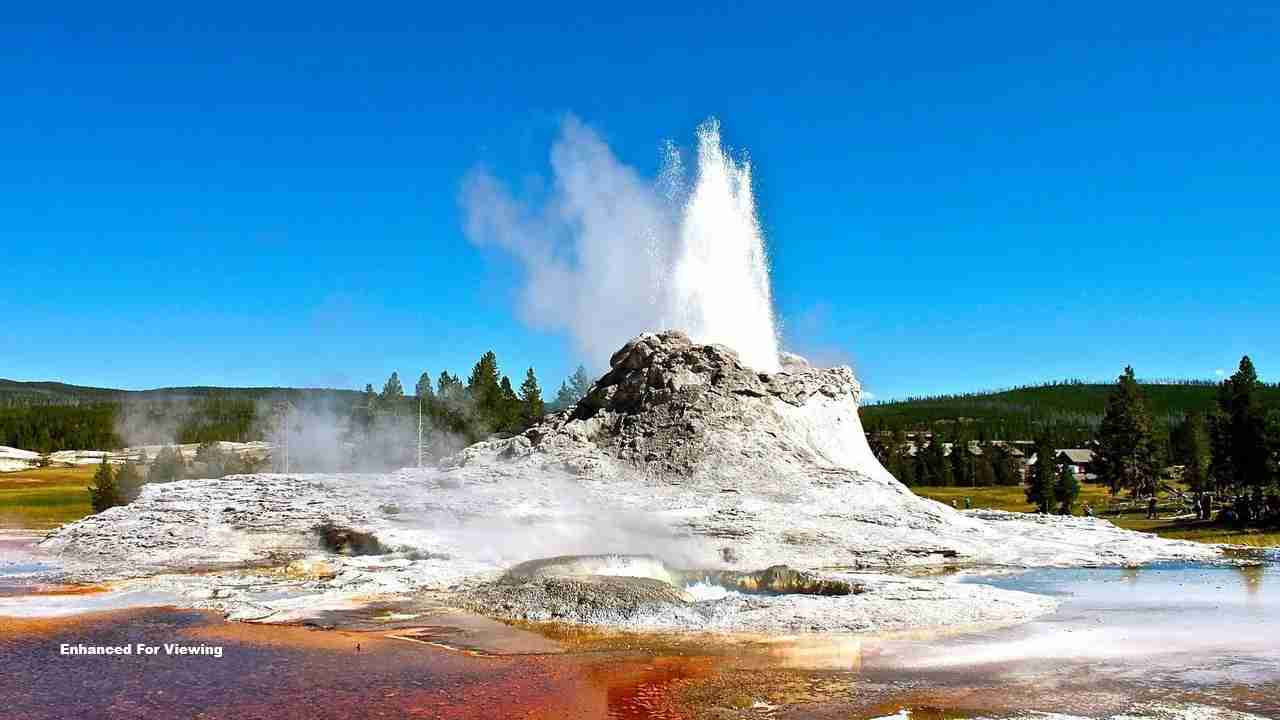
Yellowstone’s Steamboat Geyser Falls Silent: World’s Tallest Active Geyser Enters Prolonged Quiet Spell
Steamboat Geyser in Yellowstone’s Norris Geyser Basin entered a prolonged quiet in 2025 after an unprecedented 2018–2020 burst. Scientists report only two major eruptions this year and more than 230 days without a major blast.
Key takeaways
- Steamboat is the world’s tallest active geyser, with jets that can exceed 300 feet, per the National Park Service.
- After a dramatic surge during 2018–2020, activity has declined sharply; 2025 saw only two major eruptions and a quiet spell of over 230 days (mid-December).
- Scientists caution the active phase that began in 2018 has likely ended, but Steamboat remains capable of erupting at any time according to the Yellowstone Volcano Observatory / USGS.
- Impacts for nearby regions such as Utah are mainly economic and promotional—tourism patterns may shift slightly but Yellowstone’s many attractions help sustain visitation.
History of Steamboat’s unpredictable nature
Steamboat’s recorded behavior stretches back to 1878. Unlike predictable features such as Old Faithful, Steamboat has no set schedule and alternates between intense bursts and long quiet intervals. The National Park Service documents this irregular pattern.
Notable long quiet periods
- Circa 1911–1961: Roughly 50 years without a recorded major eruption. Some historic accounts link the geyser’s return in 1961 to effects from the 1959 Hebgen Lake earthquake, though scientists caution the connection is unproven (NPS; reporting links).
- 1991–2000: Summaries show little to no recorded major eruptions during the 1990s (reporting summary).
Active bursts and the 2018–2020 spike
After a long lull, Steamboat became highly active beginning March 15, 2018. That modern phase surprised scientists and the public.
- 2018: 32 major eruptions (NPS).
- 2019: 48 eruptions — a record-tying year (NPS).
- 2020: 48 eruptions again (NPS).
During that run, intervals sometimes shrank to as little as three days, but even then the geyser offered no reliable prediction pattern.
Decline after 2020 and the 2025 lull
Following the peak years, major eruptions fell each year:
- 2021: 20 eruptions (reporting summary).
- 2022: 11 eruptions (reporting summary).
- 2023: 9 eruptions (reporting summary).
- 2024: 6 eruptions (reporting summary).
In 2025 the drop became sharp: the geyser produced two major eruptions, the last on April 14 (about 300 feet), then entered a quiet spell of over 230 days as of mid-December. Minor spouting and steam events still occur, but many now fizzle out instead of building to a blast (GeyserTimes; reporting summaries).
Why scientists are not sure
Researchers say the exact cause of the decline is unknown. Plausible explanations include:
- Changes in hydrothermal plumbing: Mineral buildup can alter conduits and choke pressure paths.
- Migration of heat or fluids: Subsurface pathways that feed Steamboat may shift, reducing supply for major eruptions.
- Natural cycling: Many Yellowstone geysers cycle through active and quiet phases; Steamboat may be returning to a long-term pattern of uneven bursts and long lulls (NPS; USGS YVO).
“Small episodes of activity that previously presaged a major eruption are now dying away without producing a big event,” notes Mike Poland, scientist-in-charge at the Yellowstone Volcano Observatory — a change that undercuts patterns researchers had watched for during the 2018–2020 run.
What the record shows about future odds
Two enduring truths from the historical record:
- It could erupt tomorrow — long quiet periods have been followed by sudden, intense activity (NPS).
- It could remain quiet for years or decades — the early 20th-century ~50-year pause is part of Steamboat’s character.
Scientists emphasize ongoing monitoring and caution; there is no evidence Steamboat has permanently shut down (USGS YVO).
Implications for Utah
Although Steamboat sits in Wyoming, its activity has ripple effects across the Mountain West. Below are practical implications for Utah stakeholders and visitors.
Economic impact
- Tourism, lodging and outdoor businesses in Utah benefit when Yellowstone draws visitors. The 2018–2020 Steamboat run attracted travelers who combined Yellowstone with Utah destinations.
- If Steamboat remains quiet, the effect may slightly dampen the draw for some visitors, but Yellowstone’s many attractions should keep travel steady.
- Utah tour operators and hotels should emphasize diverse experiences—hiking, fishing and historic sites—to keep bookings resilient.
Political and management consequences
- State and local leaders can use this moment to support funding for natural resource promotion and infrastructure that sustain visitation regardless of a single geyser’s cycle.
- The quiet spell underscores the need for steady funding for monitoring and public safety at national parks; efficient, targeted investments benefit both visitors and local economies (USGS YVO).
Social effects and public safety
- Visitors and groups should keep flexible itineraries — Steamboat eruptions are sudden and unpredictable; park rules and boardwalk closures protect safety (NPS safety).
- The story is a teachable moment about respecting wild places: quiet or active, hydrothermal areas are dangerous off trail.
Cultural relevance
For many in Utah, Yellowstone’s features are part of regional identity. Steamboat’s cycles remind residents of nature’s long timescales and the need to steward natural heritage responsibly.
Practical applications for Utah residents and visitors
- Plan travel without expecting a showtime; check official park updates and GeyserTimes for activity logs.
- Support local businesses offering broader experiences so tourism remains resilient when one attraction calms down.
- Encourage public officials to back monitoring investments—reliable science keeps visitors safe and helps preserve iconic features like Steamboat (USGS YVO).
Sources and further reading
- National Park Service, Steamboat Geyser overview
- Yellowstone Volcano Observatory / USGS summaries
- GeyserTimes eruption log
- Reporting and summaries on 2025 slowdown — The River 97.9
- Cowboy State Daily reporting on 2025 slowdown
- Outside Online: reporting on Steamboat’s reduced eruptions
Reporting draws on National Park Service and USGS data and contemporary reporting on Steamboat’s 2025 activity.