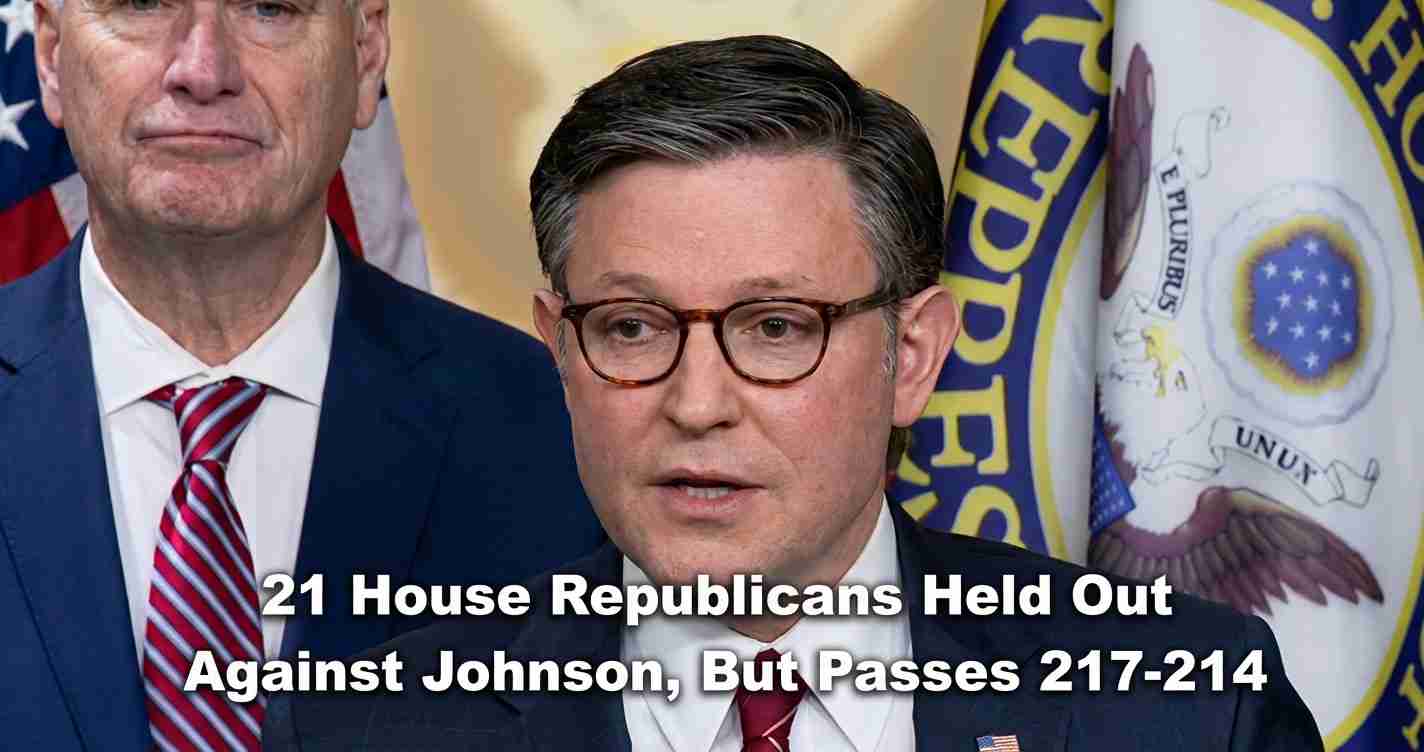
Twenty-one House Republicans Break With Trump, Speaker Johnson in Protest Vote on $1.2T Spending Bill
Twenty-one House Republicans cast protest votes against a $1.2 trillion omnibus spending bill, defying directives from former President Trump and Speaker Mike Johnson over election measures, DHS funding and Democrat-backed earmarks, highlighting GOP intra-party tensions.
- Omnibus passed narrowly: The House approved the $1.2 trillion measure 217-214 on a second consideration vote to avoid a shutdown; the measure awaits President Trump’s signature (see Fox News).
- Twenty-one dissenters: Members objected over the exclusion of the SAVE Act, lack of full-year DHS funding and retention of Democrat-requested earmarks (Fox News).
- Ongoing negotiations: Procedural actions moved several fiscal 2026 bills forward and included attempts to fund DHS through Sept. 30, per reporting that tracked earlier bargaining rounds (Politico).
Key information
The House passed the omnibus spending measure 217-214 on a second consideration vote to avert a government shutdown. The bill funds major departments — Defense, Education, Transportation and Housing, and Health and Human Services — while providing a separate short-term package for DHS. The measure now awaits President Trump’s signature. (Source: Fox News).
Who voted no
The 21 House Republicans who voted against the GOP spending bill were:
- Andy Biggs (R-Ariz.)
- Lauren Boebert (R-Colo.)
- Josh Brecheen (R-Okla.)
- Tim Burchett (R-Tenn.)
- Eric Burlison (R-Mo.)
- Kat Cammack (R-Fla.)
- Eli Crane (R-Ariz.)
- Byron Donalds (R-Fla.)
- Randy Fine (R-Fla.)
- Brandon Gill (R-Texas)
- Anna Paulina Luna (R-Fla.)
- Thomas Massie (R-Ky.)
- Cory Mills (R-Fla.)
- Andy Ogles (R-Tenn.)
- Scott Perry (R-Pa.)
- Chip Roy (R-Texas)
- David Schweikert (R-Ariz.)
- Keith Self (R-Texas)
- Victoria Spartz (R-Ind.)
- Greg Steube (R-Fla.)
- William Timmons (R-S.C.)
This slate included several high-profile conservative critics of leadership and shows a continued willingness among some Republicans to risk a brief shutdown rather than pass a bill they view as shortchanging core promises. (Source: Fox News).
Why they opposed the bill
Election integrity
A central complaint was the exclusion of the SAVE Act (Safeguard American Voter Eligibility), which would require photo ID for federal voter registration forms and seek to prevent noncitizen registration. Rep. Thomas Massie called the SAVE Act a top priority for conservatives
that was blocked from consideration — fueling deeper frustration among lawmakers pushing for stricter federal safeguards tied to voting. (Source: Fox News).
DHS and border security funding
Several objectors argued the bill failed to secure full-year DHS funding at levels they favor. Lawmakers including Reps. Eric Burlison, Lauren Boebert and Tim Burchett pressed for a full-year appropriation “at Trump levels,” rather than a short-term patch. They framed the issue as negotiating power and readiness to insist on stronger immigration enforcement and ICE protections amid ongoing border concerns. (Source: Fox News).
Earmarks, negotiation and leverage
Opponents also complained about the retention of Democratic earmarks in the package and a perceived failure by GOP leaders to “negotiate from power.” Rep. Tim Burchett explicitly argued for a harder bargaining posture — language that echoes former President Trump’s calls to leverage Republican gains to extract conservative policy wins. For critics, the bill was a missed chance to force policy wins in exchange for funding. (Source: Fox News).
Bill details, passage context and next steps
The omnibus funds a wide range of domestic and defense programs. Several appropriation bills were packaged to meet the Jan. deadline, but DHS funding was handled separately as a continuing resolution or short-term fix — the main point driving dissent. (Source: Fox News.)
After initial January delays tied to Senate negotiations over ICE policy and border funding, House leaders returned with revisions and held a second vote that allowed passage by a narrow margin, highlighting persistent GOP fault lines. Procedural votes also moved fiscal 2026 bills forward and included efforts to extend DHS funding through the fiscal year; earlier changes prompted some members to drop opposition after deals were struck. (Source: Politico.)
Related developments and historical context
This vote continues a pattern of intra-party unrest over omnibus-style spending. Earlier funding fights drew greater Republican opposition to large packages perceived as lacking transparency or conservative policy wins. Conservatives argue that supporting large GOP spending bills without firm policy gains undercuts commitments to fiscal restraint and border security. (Source: House office materials.)
Implications for Utah
Economic impact
The omnibus funds federal programs important to Utah’s economy — defense, transportation and infrastructure grants. Utah hosts major defense facilities, notably Hill Air Force Base near Ogden, which depends on stable Department of Defense funding for operations and jobs. Continued appropriations for Defense and Transportation support military readiness, base maintenance and federal grants for highway and transit projects statewide. Short-term fixes may create uncertainty that delays project planning and contracting. (Related bill details: Fox News.)
Political consequences in Utah
Utah’s Republican voters are conservative-leaning and prioritize border security, federal spending reform and election integrity. The Trump–Johnson opposition exposes national GOP fault lines mirrored at the state level. Utah lawmakers who back stricter election rules or firmer border enforcement may align with dissenters, while officials prioritizing avoidance of shutdowns and securing local federal funding may point to the narrow passage as proof negotiations can preserve appropriations while policy disputes continue. This may sharpen intra-party debates ahead of 2026 primaries and state GOP organizing. (Sources: Fox News; Politico.)
Social and cultural effects
Efforts to include the SAVE Act and similar measures resonate with Utah conservatives who prioritize secure registration systems and voter ID requirements. Federal debates could influence state advocacy and legislation. On immigration, although Utah is not a border state, federal enforcement policies affect refugee resettlement, employment markets and public services. Calls for full-year DHS funding aim to ensure consistent border and immigration enforcement — an issue important to many Utah conservative voters.
Practical applications for residents
- Transportation and infrastructure: Federal dollars in the package fund projects that may support highway work and public transit in Salt Lake City and regional improvements; delays could slow starts or reimbursements. (Source: Fox News.)
- Public safety and emergency response: DHS funding affects agencies like FEMA and TSA; stable appropriations help ensure disaster readiness and airport security. (Source: Fox News.)
- Local grants and earmarks: Earmarks direct federal funds for local priorities such as water projects, rural hospitals and education; negotiations over earmarks will influence funding flows to Utah communities. (Source: Politico.)
For Utah’s conservative voters and local leaders, the GOP spending bill vote presents a choice: press leadership for stronger policy wins on elections and border security, or accept negotiated bills that secure federal funding for state priorities. The narrow passage and visible Trump–Johnson opposition indicate these tensions will continue shaping federal appropriations and local politics in the months ahead. (Sources: Fox News; Politico; Perry House document.)