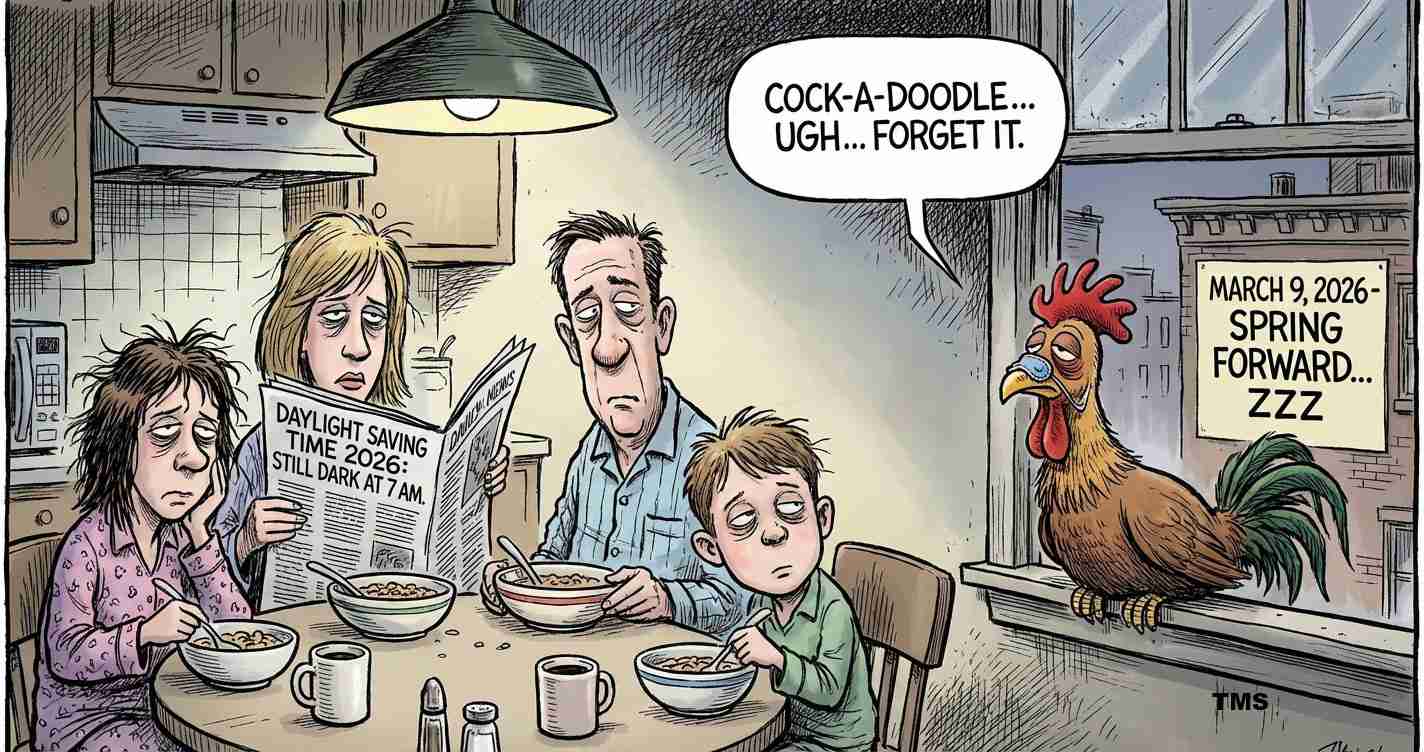
Spring forward: Daylight Saving Time 2026 begins March 8
Daylight Saving Time in the United States begins Sunday, March 8, 2026, when most states set clocks forward one hour at 2:00 a.m., extending evening daylight across most of the country until DST ends on November 1, 2026.
- When: Begins 2:00 a.m. local standard time on March 8, 2026; ends 2:00 a.m. local daylight time on November 1, 2026. (Timeanddate — U.S. DST dates and observance)
- Who sits out: Most of Arizona, all of Hawaii and U.S. territories do not observe DST; the Navajo Nation in northeastern Arizona is an exception. (Timeanddate — U.S. DST dates and observance)
- Why it matters: The switch shifts sunrise and sunset one hour later on the clock, yielding darker mornings and brighter evenings and prompting ongoing debate about energy, safety and policy. (NIST — Daylight Saving Time overview)
What happens next week: the mechanics of the US clock change
On Sunday, March 8, 2026, at 2:00 a.m. local standard time, clocks in most U.S. states will jump forward to 3:00 a.m. local daylight time. The immediate practical effect is that both sunrise and sunset times move one hour later on the clock, producing darker mornings and brighter evenings. The 2 a.m. timing is chosen to minimize disruption to travel and business and to avoid confusion across midnight. (Timeanddate — U.S. DST dates and observance)
Who observes DST — and who doesn’t
Most of the 50 states and the District of Columbia follow the March-to-November DST schedule. Notable exceptions include:
- Hawaii — stays on Hawaii‑Aleutian standard time year‑round. (Timeanddate — U.S. DST dates and observance)
- Most of Arizona — remains on Mountain Standard Time year‑round; the Navajo Nation in northeastern Arizona does observe DST. (Timeanddate — U.S. DST dates and observance)
- U.S. territories — Puerto Rico, Guam, American Samoa, the Northern Mariana Islands and the U.S. Virgin Islands do not observe DST. (Timeanddate — U.S. DST dates and observance)
Why we do it: purpose and effects
Daylight Saving Time is intended to shift daylight into hours when people are typically active outdoors. Federal and public explanations suggest DST can reduce evening lighting needs and thus save energy during warmer months; the National Institute of Standards and Technology notes the shift keeps daylight aligned with common activity patterns.
Real-world studies report mixed outcomes: some find modest evening lighting savings offset by increased heating or cooling; others emphasize social and economic effects such as benefits to retail, recreation and tourism versus drawbacks for morning commuters and school start times. The overall debate remains unsettled. (Wikipedia — Daylight saving time; Timeanddate — U.S. DST dates and observance)
History and the law: how the schedule was set
The current U.S. DST schedule stems from the Energy Policy Act of 2005, which extended DST in 2007 to run from the second Sunday in March to the first Sunday in November. The Uniform Time Act of 1966 establishes the federal framework: states may opt out by remaining on standard time, but they cannot adopt permanent DST without Congressional approval. That restriction explains why state-level proposals for year‑round DST require federal action to take effect. (Wikipedia — Daylight saving time)
Astronomical timing: spring and daylight length
Astronomically, the vernal equinox — the start of spring — occurs on March 20, 2026 at 10:46 a.m. EDT. Meteorological winter ends Feb. 28. Independent of clock changes, daylight lengthens each day as Earth approaches the equinox; Daylight Saving Time simply adjusts the clock to make evening daylight fall later in the day. (Timeanddate — Astronomy)
Ongoing debates and legislative moves
Many state legislatures have passed bills favoring permanent DST, but federal law currently prevents unilateral adoption. Proponents argue permanent DST improves safety, commerce and well‑being and eliminates twice‑yearly disruptions. Opponents caution about darker winter mornings affecting children and commuters and question net energy savings. Alternative ideas like “half‑DST” or staggered time zones have been proposed but present logistical and legal challenges. (Wikipedia — Daylight saving time; Timeanddate — U.S. DST dates and observance)
Practical tips for the clock change
- Set clocks: Many devices update automatically; set analog and manual clocks forward at bedtime on Saturday, March 7. (Timeanddate — U.S. DST dates and observance)
- Sleep plans: Gradually move bedtimes earlier in the days before the change and avoid heavy late‑day caffeine to reduce disruption.
- Safety checks: Use the change as a reminder to check smoke alarm batteries and outdoor lighting; businesses should verify scheduling and security systems account for the DST switch.
Implications for Utah
Economic impact: Utah businesses that rely on evening foot traffic and outdoor recreation may benefit from extra evening daylight. Retail, restaurants and tourist destinations — including ski resort towns transitioning to spring activities — can see longer operating hours. Energy impacts are mixed: reduced evening lighting demand may be offset by increased heating needs in cooler mornings. (Timeanddate — U.S. DST dates and observance; NIST — Daylight Saving Time overview)
Political consequences: Utah lawmakers have discussed time policy previously. Any move toward permanent DST would require federal action under the Uniform Time Act; local preferences must be balanced with safety concerns for schoolchildren and commuters. (Wikipedia — Daylight saving time)
Social effects: Darker mornings immediately after March 8 can affect early commuters, school start times and morning-shift workers; families and outdoor enthusiasts gain more usable evening daylight. Parents and school districts should monitor bus routes and crossing guard schedules after the change. (Timeanddate — U.S. DST dates and observance; NIST — Daylight Saving Time overview)
Cultural relevance: For Utah communities that emphasize outdoor life and evening gatherings, the extra hour of evening light aligns with cultural values of family activity and recreation, potentially boosting participation in evening programs and events.
Practical applications: Utah residents should set non‑automatic clocks forward before bed on March 7, adjust children’s sleep schedules gradually, check smoke detectors, and have employers and schools confirm scheduling systems account for DST. Travelers should verify transit and airline schedules around the change.
Sources and further reading
- Timeanddate — U.S. DST dates and observance
- National Institute of Standards and Technology — Daylight Saving Time overview
- Wikipedia — Daylight saving time (overview and history)
- Timeanddate — Astronomical events and equinox timing
“While Daylight Saving Time 2026 brings more evening light, broader questions about year‑round time policy, safety, energy savings and local control remain unresolved and will likely return to the state and national agenda.”