Emergency Repairs Completed After Historic Potomac Interceptor Sewage Spill; Questions Remain Over Federal Oversight and Long-Term River Damage
Emergency repairs to the Potomac Interceptor following a collapse that spilled an estimated 240–300 million gallons of untreated wastewater are complete; full flow has been restored and the C&O Canal drained, but watchdogs warn of lasting river and ecosystem damage.
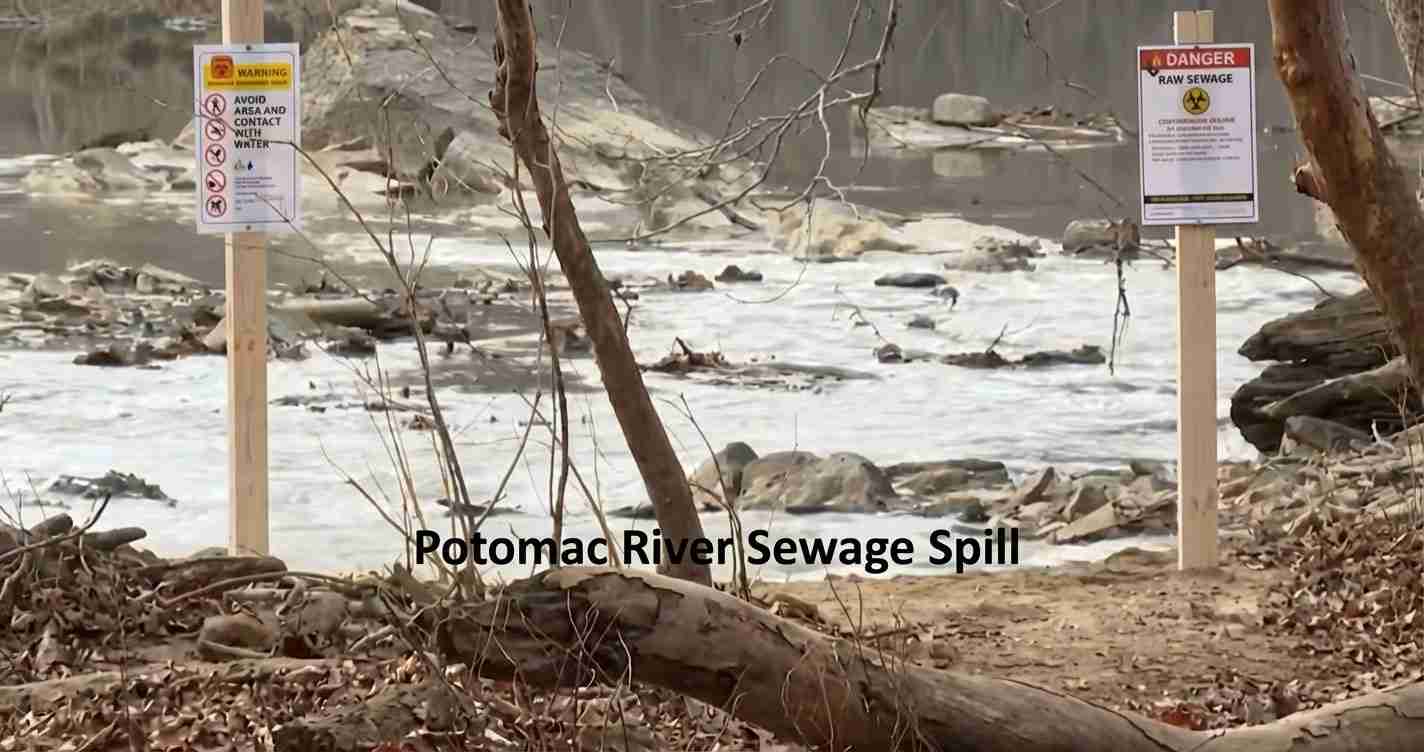
- Largest spill: A 72-inch section collapsed Jan. 19, 2026, releasing an estimated 240–300 million gallons — among the largest sewage spills in U.S. history (Wikipedia — 2026 Potomac River sewage spill).
- Repairs complete: DC Water reports emergency repairs finished, full flow restored, and the C&O Canal drained as part of site restoration (Wikipedia — 2026 Potomac River sewage spill).
- Contamination concerns: Independent testing found E. coli and other contaminants hundreds to thousands of times above EPA safety limits near the rupture (Washingtonian testing report; KOMO News coverage).
Main content
Emergency response and repairs
What happened: On Jan. 19 crews discovered a collapse in a 72-inch diameter section of the Potomac Interceptor near Clara Barton Parkway in Montgomery County, Maryland. The break is estimated to have released between 240 and 300 million gallons of untreated wastewater into the Potomac River, creating an immediate regional crisis (Wikipedia — 2026 Potomac River sewage spill).
Bypass and stabilization: DC Water and partner agencies built a bypass using a contained stretch of the C&O Canal to route flow around the damaged segment. The bypass ran roughly 2,700 feet into an undamaged portion of the interceptor downstream. Crews added three additional pumps and planned a steel bulkhead gate to isolate and stabilize the rupture site; emergency pipe repairs were estimated at about $10 million, with cleanup operations expected to cost an additional $5–10 million (Wikipedia — 2026 Potomac River sewage spill; KOMO News coverage).
Restoration: By late February DC Water reported emergency repairs complete, full flow restored and the C&O Canal fully drained as part of the bypass and site restoration. Officials cited the rapid repair as evidence of effective emergency coordination after federal assistance was authorized (Wikipedia — 2026 Potomac River sewage spill).
Environmental and public health impact
Independent monitoring found contaminant levels that alarmed scientists and the public. Water quality tests detected E. coli concentrations hundreds of times above EPA recreational safety limits near the rupture; one independent test measured contamination up to 12,000 times the safe limit in areas immediately downstream (Washingtonian testing report; Wikipedia — 2026 Potomac River sewage spill).
Public safety: Officials emphasized that major public drinking water intakes in Maryland and Washington, D.C., are upstream of the rupture and remained protected. Nonetheless, local health agencies closed at least one downstream shellfish harvesting area as a precaution. Environmental groups argue that immediate measures do not substitute for long-term monitoring of fish, wildlife and shoreline habitats (KOMO News coverage).
Political and legal fallout
Federal assistance and politics: President Donald Trump approved a disaster declaration that unlocked federal aid and allowed FEMA, the EPA and the Army Corps of Engineers to assist. The emergency declaration accelerated resources but also intensified political debate about responsibility for aging infrastructure on federal land (Wikipedia — 2026 Potomac River sewage spill).
“The interconnector is federal infrastructure,” Montgomery County and Maryland officials noted, underscoring disputes over who inspects and maintains sewer lines that cross federal lands.
Local response: D.C. Mayor Muriel Bowser declared a public emergency and requested federal help; the Army Corps provided logistical support beginning Feb. 21. Maryland Gov. Wes Moore pushed back against federal criticism, saying Maryland provided support while federal authorities took responsibility for federal infrastructure (Wikipedia — 2026 Potomac River sewage spill).
Legal claims: At least one civil suit has been filed by a recreational boater, Nicholas Lailas, seeking compensation for impaired use and enjoyment of the Potomac; the suit alleges public and private harms tied to the pollution (Wikipedia — 2026 Potomac River sewage spill).
Questions for accountability
Conservative readers and fiscal conservatives will want answers to several pressing questions:
- Who inspects and maintains sewer lines on federal land?
- Were known vulnerabilities in the Potomac Interceptor reported and addressed?
- What is the final tab for repairs, cleanup and claims — and who will pay?
- Will federal involvement set a precedent for federal expenses on non-federal infrastructure?
Environmental groups say long-term monitoring and habitat restoration are still needed; officials stress immediate drinking-water risks were mitigated but acknowledge that river recovery could take years (KOMO News coverage; Washingtonian testing report).
Potomac Interceptor sewage spill and Montgomery County sewage spill: where federal, state and local lines meet
Because the rupture occurred in Montgomery County while the Potomac Interceptor runs across federal land, jurisdictional overlap complicated response and messaging. Local briefings sometimes referred to this as a Montgomery County spill; federal and state officials contend oversight responsibilities vary when infrastructure crosses federal land (Wikipedia — 2026 Potomac River sewage spill).
Implications for Utah
Though this event occurred near Washington, D.C., it offers lessons for Utah leaders and residents about infrastructure, oversight and preparedness.
Economic impact
- Direct costs from emergency repairs and cleanup — estimated in the low tens of millions so far — show how aging systems can trigger large public expenses; Utah communities should view deferred maintenance as a fiscal risk (KOMO News coverage).
Political consequences
- Debate over federal oversight vs. local control may prompt Utah policymakers to demand clearer inspection regimes, reporting, and cost-sharing agreements where federal infrastructure intersects state lands (Wikipedia — 2026 Potomac River sewage spill).
Social effects
- Outdoor recreation is central to Utah’s economy and culture; water pollution events can shutter recreation, harm tourism and depress property values. Local managers should accelerate monitoring and public-notice protocols (Washingtonian testing report).
Cultural relevance
- Utah communities favor self-reliance and land stewardship; the federal-local friction here can be framed as a call for stronger local capacity and clear federal-state agreements when national lands cross state boundaries (Wikipedia — 2026 Potomac River sewage spill).
Practical applications for Utah residents and officials
- Audit and readiness: Counties should audit critical wastewater lines and interconnections, especially near waterways and federal lands.
- Emergency plans: Update response plans and communication strategies for sewage spills and contamination events.
- Funding and insurance: Evaluate reserve funds and insurance to cover large-scale infrastructure failures.
- Intergovernmental agreements: Seek memoranda of understanding on maintenance, inspection and cost responsibility where infrastructure crosses federal land.