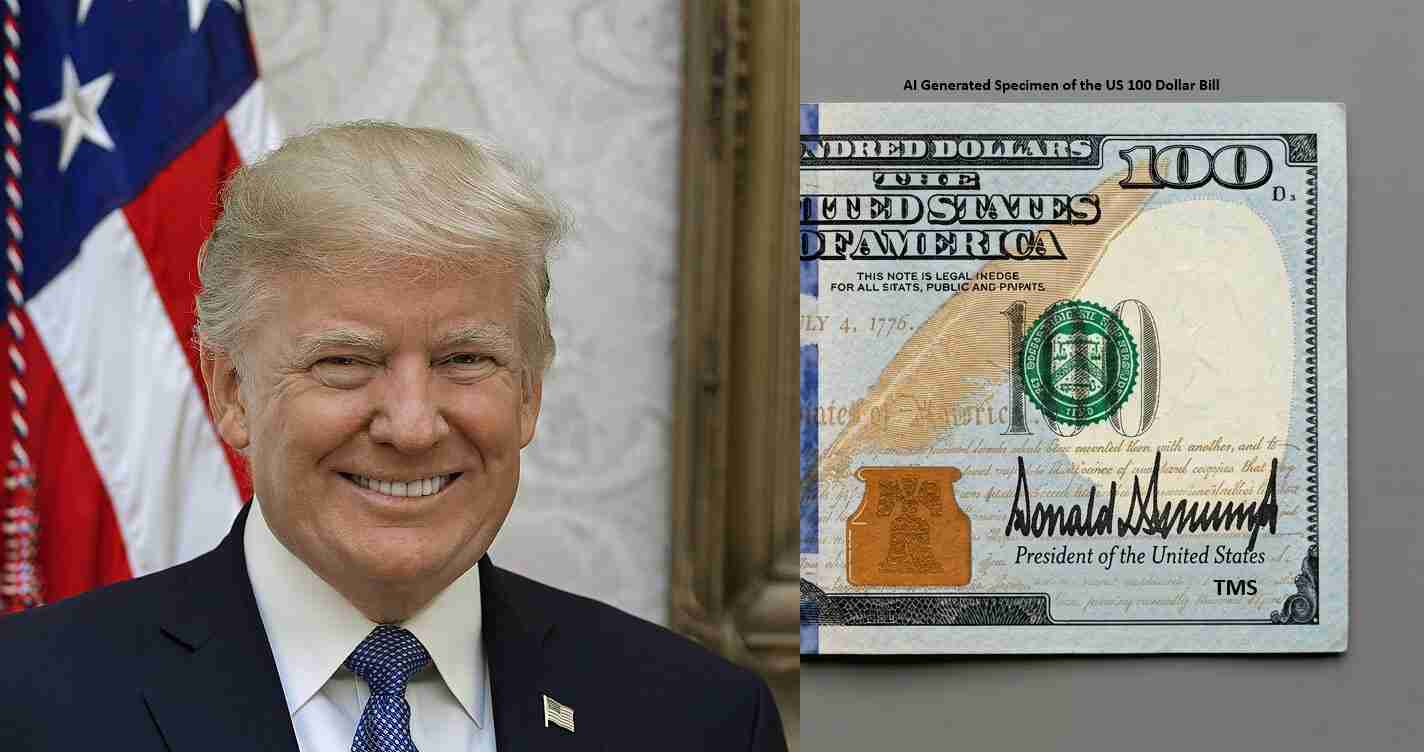
Trump’s Signature to Appear on U.S. Paper Currency for First Time in History, Treasury Says
In a historic first, President Donald J. Trump’s signature will be added to all future U.S. paper currency, replacing the Treasurer’s signature, with the first $100 bills bearing his signature set for production beginning June 2026.
- Historic change: A sitting president’s signature will appear on new paper currency for the first time in 165 years.
- Production timeline: First $100 bills with President Trump’s signature start production in June 2026; other denominations follow.
- Legal questions: Officials say the signature does not violate laws barring living presidents’ likenesses on currency; critics and scholars expect debate and possible legal challenges.
- Local impact: Utah businesses, collectors and officials should expect gradual circulation changes and possible increased collector demand.
Background and legal context
The Treasury’s move breaks long-standing practice. Historically, U.S. paper currency has carried the signatures of the Treasury Secretary and the Treasurer of the United States. Treasury officials say this marks the first time in 165 years that a president’s signature will replace the treasurer’s signature on paper money. Reporting cited by ABC News details the department announcement.
Federal law has long prohibited living presidents from appearing on U.S. currency in likeness form. The administration contends that the restriction applies to images and not to signatures, framing the move as legally distinct from placing a living president’s portrait on notes. That interpretation has prompted public and legal scrutiny and could prompt future challenges, according to reporting by ABC News.
Implementation and timeline
The Bureau of Engraving and Printing will begin producing $100 notes bearing the signatures of President Trump and Treasury Secretary Scott Bessent in June 2026. Other denominations — from $1s through $50s and larger if applicable — will be updated in the months that follow. During the transition, many bills in circulation will still carry the signatures of former Treasury Secretary Janet Yellen and Treasurer Lynn Malerba, per ABC News.
Treasury Secretary Scott Bessent framed the move as recognition of the administration’s achievements and a fitting commemoration of the Semiquincentennial. Bessent said, “There is no more powerful way to recognize the historic achievements of our great country and President Donald J. Trump than U.S. dollar bills bearing his name.”
The department tied the change to the 250th anniversary of American independence, with initial production timed to coincide with Semiquincentennial activities.
Reactions and political response
Supporters hailed the move as a symbolic affirmation of the administration’s economic record. U.S. Treasurer Brandon Beach called placing Trump’s signature on U.S. currency “well-deserved” and described the president as “the architect of America’s Golden Age economic revival.” These endorsements were reported by ABC News and CBS News.
Critics and legal scholars argue the change blurs the line between executive symbolism and institutions meant to remain apolitical. Some observers note the longstanding caution against placing living presidents on currency and say the administration’s interpretation—that signatures do not constitute a prohibited likeness—will likely be publicly debated and possibly legally challenged, as covered in reporting by ABC News.
Related coin initiatives
The signature announcement follows other efforts to place President Trump’s image on U.S. coinage. A federal arts panel approved a commemorative 24-karat gold coin featuring Trump’s image based on a White House photograph, and officials have proposed a $1 coin bearing Trump’s likeness to mark July 4, 2026. Supporters say such coins will be popular with collectors; opponents point to legal restrictions on living presidents and the risk of politicizing national emblems. Coverage of the coin proposals is available from ABC News and CBS News.
Why the change matters
For many conservative readers, the move is a symbolic affirmation of leadership and national pride, presented by Treasury officials as a way to celebrate the nation’s achievements and the administration’s economic claims. The decision places a visible marker of legacy into everyday circulation — literally into wallets and pockets nationwide — and ties that legacy to the Semiquincentennial.
Practically, questions remain about how long it will take for old notes to be replaced, whether collectors will drive demand for early issues, and whether the Treasury’s legal rationale will withstand scrutiny. The Bureau of Engraving and Printing’s production schedules, bank distribution patterns, and retail cash-handling practices will determine how quickly Americans begin seeing new $100s and other denominations in everyday transactions (reported by ABC News).
Implications for Utah
Economic impact: Utah banks, casinos, small businesses and merchants should expect a gradual transition in cash circulation. The first wave — $100 bills produced beginning in June 2026 — will likely move through large financial institutions and cash-handling businesses before reaching everyday transactions. Collectors and memorabilia markets in Utah may see increased demand for early-issue notes and the approved commemorative gold coin, benefiting local dealers and online sellers (ABC News).
Political consequences: As a predominantly conservative state, Utah may view the move as a welcome recognition of the administration’s economic claims, potentially energizing conservative messaging. At the same time, officials who emphasize nonpartisan governance may voice concerns about legal and procedural implications, as noted by CBS News.
Social and cultural effects: For many Utahns the initial reaction may be curiosity or pride. Veteran groups, civic organizations and historical societies may incorporate the new currency and commemorative coins into Semiquincentennial programming. Conversely, areas with diverse views could see renewed debate over the use of national symbols (coverage from ABC News).
Practical guidance: Utah banks and credit unions should prepare for customer inquiries and potential requests; cash-handling businesses may want to update verification procedures and staff training. Collectors should verify authenticity through reputable dealers, as early releases often carry premiums (ABC News).
Legal watch and local officials
Utah legal scholars and officials interested in constitutional and federal law may monitor whether legal challenges arise over the signature decision or related coin initiatives. Local lawmakers aligned with conservative principles may publicly support the Treasury announcement, framing it as a tribute to leadership they credit with economic gains (CBS News).
Reporting notes and sources
This report draws on the Treasury Department announcement and reporting by ABC News and CBS News.