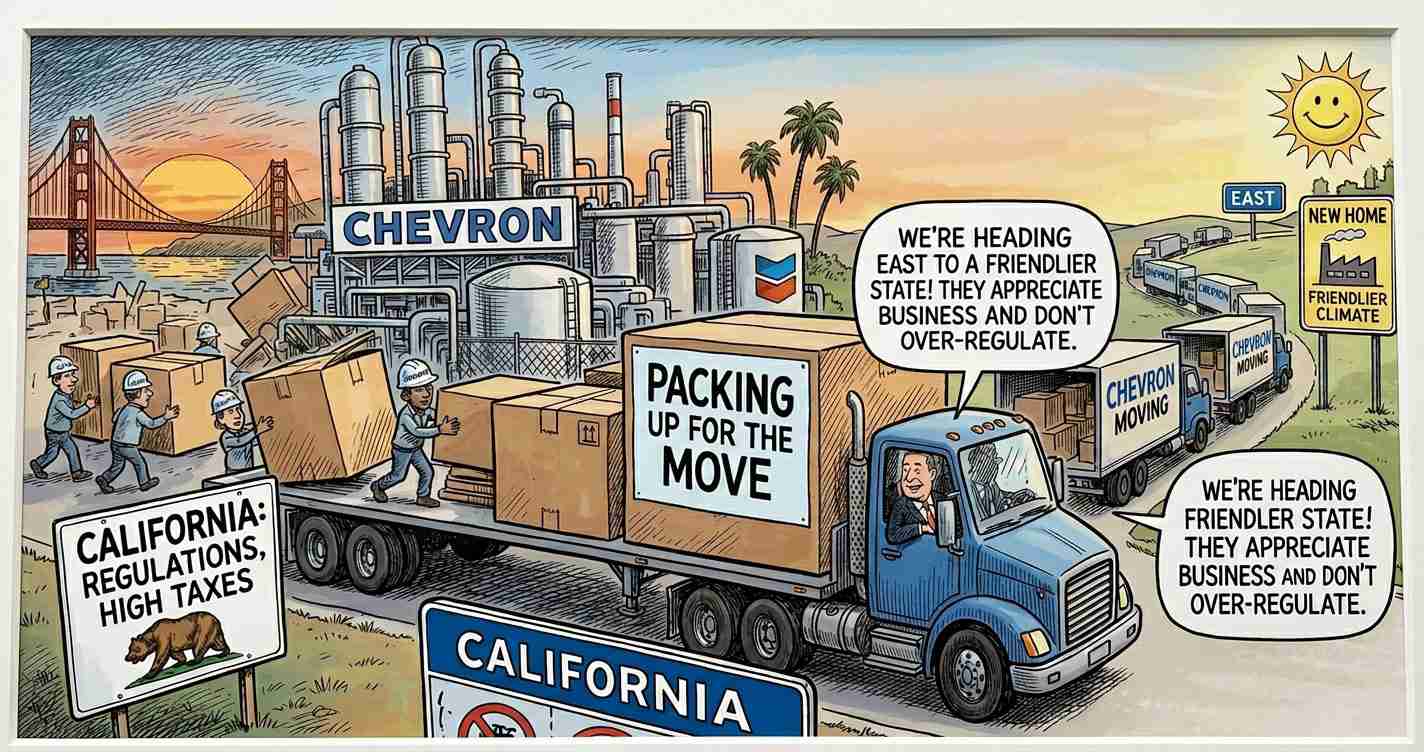
Chevron warns of looming California fuel crisis as regulations, refinery taxes and Iran war squeeze supplies
Chevron President Andy Walz warned California faces a looming fuel crisis, blaming strict environmental rules, high refinery taxes and import reliance; global supply shocks from the Iran war further threaten rising pump prices and thousands of industry jobs.
- Chevron warns rules and taxes could push it out of California within a decade — statement and analysis cited by Insurance Journal.
- About 20% of refined fuels to California come from Asia, exposing the state to Strait of Hormuz disruptions, per Insurance Journal.
- Tighter emissions rules and cap changes could add costs and raise prices, possibly more than $1 a gallon by 2030 and endangering roughly 536,770 industry jobs — reported by Fox Business.
The immediate supply crisis
Chevron officials say global outages tied to the Iran war have effectively constrained flows through the Strait of Hormuz, prompting Asian refiners to cut crude intake and reduce fuel production. That shrinks the pool of exported refined fuels that normally help balance regional shortages. California relies on roughly 20% of refined fuel imports from Asia, leaving the state vulnerable when those exports fall (Insurance Journal).
California’s geographic isolation — often described as an “energy island” — means more than 90% of gasoline used in the state is refined locally. A shutdown of two of Chevron’s largest refineries would cut statewide refining capacity by roughly 34%, according to state data cited by industry sources (Insurance Journal).
Regulatory and tax pressures on refiners
Chevron points to California’s stringent fuel standards and a tightening Cap-and-Invest program as major cost drivers. Company officials estimate proposed emissions rules could add about $500 million in costs to Chevron operations within five years, increasing capital and compliance pressures (Insurance Journal).
Chevron criticized proposed Cap-and-Invest amendments that would retire roughly 118.3 million allowances between 2027 and 2030 and cited a possible long-term carbon target of 90% by 2045 as a factor that could shrink allowance markets and raise fuel costs for Californians (Fox Business).
Jobs and price risk
Walz warned that the combined pressure of supply shocks and regulatory change could raise pump prices by more than $1 per gallon by 2030 and jeopardize approximately 536,770 jobs tied to refining, distribution and related services, including many union positions. Chevron emphasized lower-income households would be disproportionately affected (Fox Business).
Chevron’s stance and state response
“If it stays that way — Chevron will be gone in 10 years for sure. We won’t be able to make it,” Andy Walz wrote, urging Gov. Newsom to declare an energy emergency, change tax and climate rules, and support in‑state production (Insurance Journal).
The Newsom administration pushed back, accusing oil companies of attempting to profit from global turmoil and describing the warnings as a coordinated industry campaign to undermine California’s climate agenda. The California Air Resources Board (CARB) said it will meet with regulated entities and hold a public hearing on proposed amendments at the end of May (Insurance Journal; Fox Business).
National security and broader risks
Walz framed the issue as a national security concern: California hosts more than 30 military bases and is the nation’s second-largest gasoline consumer and largest jet fuel market. Disruptions in jet fuel or refinery output could affect military readiness and commercial aviation where practical low-carbon substitutes are not yet available (Insurance Journal).
The federal government has taken steps to boost domestic production; the Trump administration authorized Sable Offshore Corp. to restart production off the California coast to bolster local crude availability. Industry leaders say however that predictable rules and long-term investment are needed to keep large refiners operating (Insurance Journal).
Data on capacity and imports
Industry groups and watchdogs note California’s dependence on foreign crude and refined imports. The nonprofit Californians for Energy Independence has raised concerns about foreign crude shares, and state data show Chevron’s refineries represent a substantial portion of statewide capacity — a shutdown could reduce capacity by about one-third (Insurance Journal; organization statements).
Implications for Utah
Economic impact: Higher gasoline prices in California can ripple across the West; Utah drivers, businesses and farms may face increased fuel costs as regional wholesale markets respond to shortages.
Political consequences: Utah policymakers who prioritize energy independence and lower taxes may use California’s warnings to argue for more supportive rules for oil production and refining, shaping regional policy debates.
Social effects: Rising pump prices hit low- and middle-income households hardest; Utah families who commute long distances could see tighter budgets if fuel costs climb.
Practical steps: Utah leaders might boost strategic fuel reserves, encourage storage and pipeline investments, or pursue regional coordination. Businesses and consumers can prepare by planning for higher fuel costs and exploring efficiency measures.
Sources and further reading
- Insurance Journal: “Chevron warns Newsom’s energy agenda could cripple California economy”
- Fox Business: “Chevron warns Newsom’s ‘adversarial’ energy agenda could send gas prices soaring”
Additional reporting will follow as CARB holds public hearings and state and federal officials respond to Chevron’s letter and the evolving supply picture.