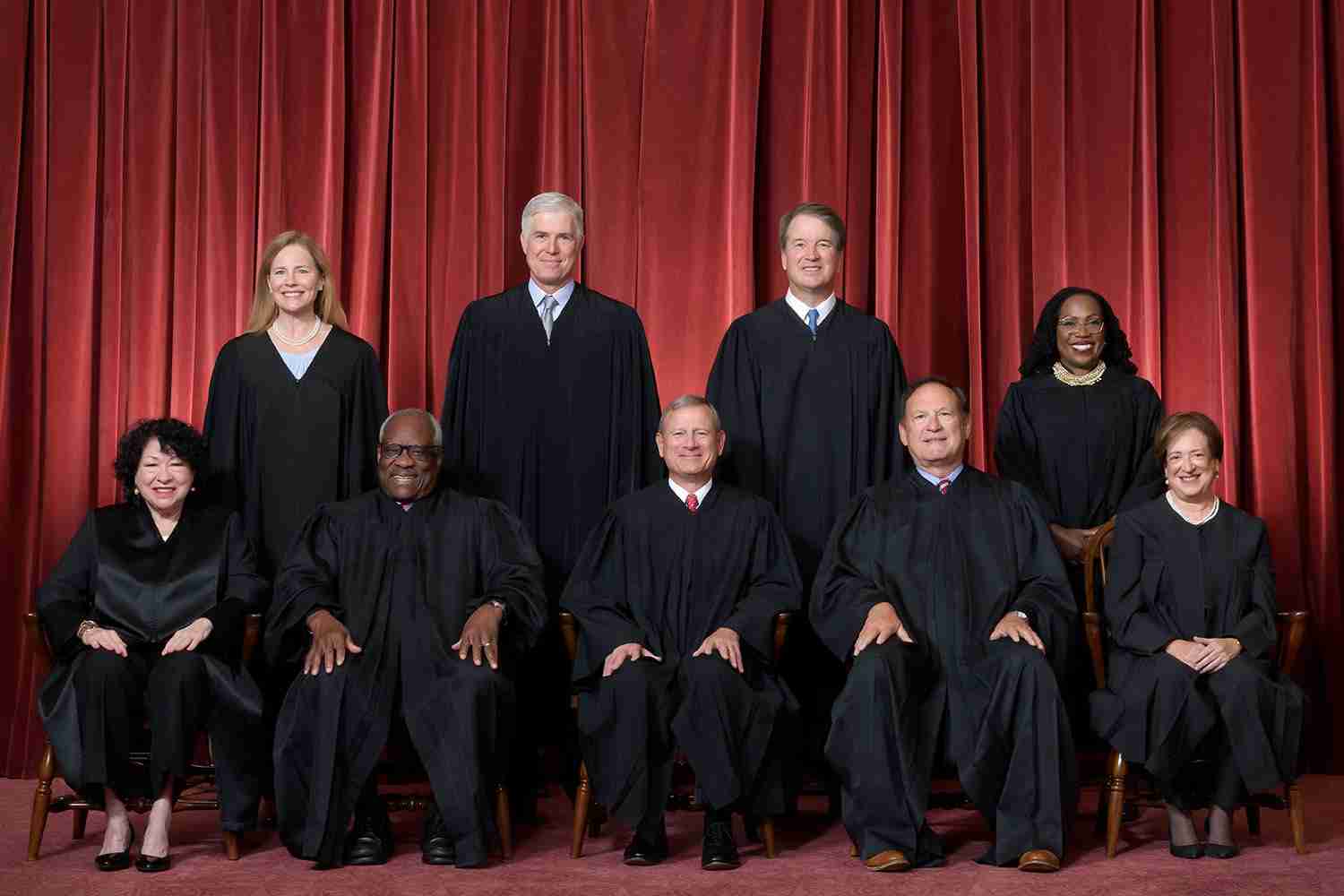
Alito invokes Scalia’s microwave analogy as Supreme Court reconsiders birthright citizenship in Trump executive order fight
During Supreme Court oral arguments, Justice Samuel Alito invoked Justice Antonin Scalia’s microwave analogy to argue the 14th Amendment’s general citizenship rule could apply to modern issues like illegal immigration as the Court weighs a Trump executive order.
Key takeaways
- Alito drew on Scalia’s hypothetical to argue that a broad constitutional rule can govern new facts; (Source: Fox News)
- The Solicitor General echoed Alito’s textualist framing while defending President Trump’s executive order; (Source: YouTube oral argument video)
- Most justices were skeptical, with Justices Alito and Thomas appearing most receptive to the administration’s position; (Source: Fox News)
- Scholars note a textual problem: the 14th Amendment and the 1952 statute do not use words like “mother” or “father,” a gap highlighted by SCOTUSblog.
Main content
Alito invokes Scalia’s microwave analogy
Justice Samuel Alito told the Court he was borrowing an idea from the late Justice Antonin Scalia to explain textualism’s approach to applying an old rule to new facts. Scalia’s example imagines an old theft law written long before the invention of the microwave oven: if someone is later charged with stealing a microwave and argues the law cannot apply because microwaves did not exist in the lawmaker’s day, Scalia rejected that claim.
“There’s a general rule there, and you apply it to future applications,” Alito said, using the analogy to ask whether the 14th Amendment’s general citizenship rule should govern circumstances—such as illegal immigration—not foreseen in 1868. (Source: Fox News)
Textualism and the 14th Amendment
Textualism asks courts to read statutes and the Constitution by their plain text and original meaning. Alito framed questions around that approach, suggesting a neutral, text-based rule in the 14th Amendment should be applied to later circumstances unless a clear historical exception exists. That framing aligns with conservative legal themes emphasizing applying the written words as written.
Historical exceptions and the central question
Alito acknowledged existing exceptions to birthright citizenship—most prominently children of foreign diplomats and certain Native American tribes—then asked how courts should treat new situations. Is illegal immigration an analogue to a historical exception, or does the amendment’s broad rule cover children born in the United States regardless of parental status? He asked whether the rule was meant “to apply to later applications that might come up.” (Source: Fox News)
Solicitor General Sauer’s arguments for the Trump order
Solicitor General John Sauer defended President Trump’s executive order seeking to end automatic citizenship for children born in the U.S. to mothers who are illegal immigrants or certain temporary visitors. Sauer endorsed Alito’s textualist frame, describing the amendment as embodying a general doctrine of allegiance and domicile-based allegiance that could encompass later developments like illegal immigration.
“I strongly agree with the way that you framed it, that there is a general principle,” Sauer said in response to Alito’s microwave analogy. (Source: YouTube oral argument video)
Judicial skepticism and Justice Kagan’s challenge
Most justices expressed skepticism, probing both the administration’s historical claims and how a new rule would operate in practice. Justice Elena Kagan pressed Sauer on a tension: much of the administration’s brief emphasized temporary visitors, not unlawful entrants. Kagan said that focus undercuts Alito’s stated theory and raised questions about which category the administration’s rule would actually reach. (Source: Fox News)
Textual critique: the “parent” problem
Legal analysts flagged a textual issue: the 14th Amendment’s citizenship clause and the 1952 statute do not use “mother,” “father,” or “parent,” yet the administration’s order relies on parental status to define eligibility. SCOTUSblog observed that only the diplomatic exception is explicitly parent-based; other exceptions are birthplace-based, raising concerns that the proposed rule grafts a parent-centered limit onto text that lacks one. (Source: SCOTUSblog)
Where the justices may be headed
Observers noted Justices Alito and Thomas seemed most receptive to the administration’s textualist approach, while others were unconvinced. The Court’s decision will balance historical practice, plain text, and practical consequences. A ruling narrowing birthright citizenship could reshape how courts apply broad constitutional rules to unforeseen facts.
Implications for Utah
Economic and social impact
A ruling that narrows birthright citizenship would affect families and state services across Utah. State agencies handling identity documents, public benefits, and school enrollment may need new guidance. Industries dependent on immigrant labor—construction, hospitality, agriculture—could face labor shifts, with downstream effects on wages and local businesses.
Political consequences
For Utah’s conservative voters and leaders, the case raises core questions about immigration control and executive authority. A ruling for the administration would be read by many as endorsing strict immigration enforcement and textualist interpretation; a ruling against could spur legislative and administrative responses at both federal and state levels.
Social and community effects
Communities with immigrant families will closely monitor the case. A change in birthright rules could create uncertainty for children born in Utah and complicate access to services, possibly increasing fear of interacting with government agencies. Local schools and health providers will require clear federal-to-local guidance if rules change.
Cultural and practical relevance
Utah voters who prioritize the rule of law and textual fidelity will watch how the Court balances textualism with historical practice. The Alito–Scalia framing appeals to those favoring decisions grounded in written text. State officials must also plan practical steps—administrative directives or state programs—to address potential gaps left by federal changes.
How Utah officials can prepare
- Monitor guidance: Track clarifications from the Department of Justice and the Department of Homeland Security.
- Update forms and training: County clerks, health departments and school districts may need revised intake forms and staff training.
- Engage lawmakers: Consider contingency legislation to address public-safety and education impacts.
- Communicate with communities: Local leaders and faith groups can help families understand changes and reduce confusion.