DOJ hunts suspect in videotaped threats at Delaney Hall as Gov. Mikie Sherrill orders protest zones outside Newark ICE facility
Governor Mikie Sherrill condemned death threats against a federal ICE agent and family outside Delaney Hall, ordered New Jersey State Police to create protest zones, and the Justice Department is seeking the person seen making threats on video.
Key takeaways
- A videotaped threat: A man recorded outside Delaney Hall allegedly shouted explicit death threats at an ICE agent and that officer’s family; federal authorities are treating it as a federal crime and are searching for the suspect.
- State response: Gov. Mikie Sherrill praised mostly peaceful protests but condemned violent threats and ordered New Jersey State Police to establish designated protest zones to de‑escalate tensions.
- Report corrections: Some coverage misattributed comments to “Todd Blanche” as U.S. attorney general; public records do not support that attribution.
What happened at Delaney Hall
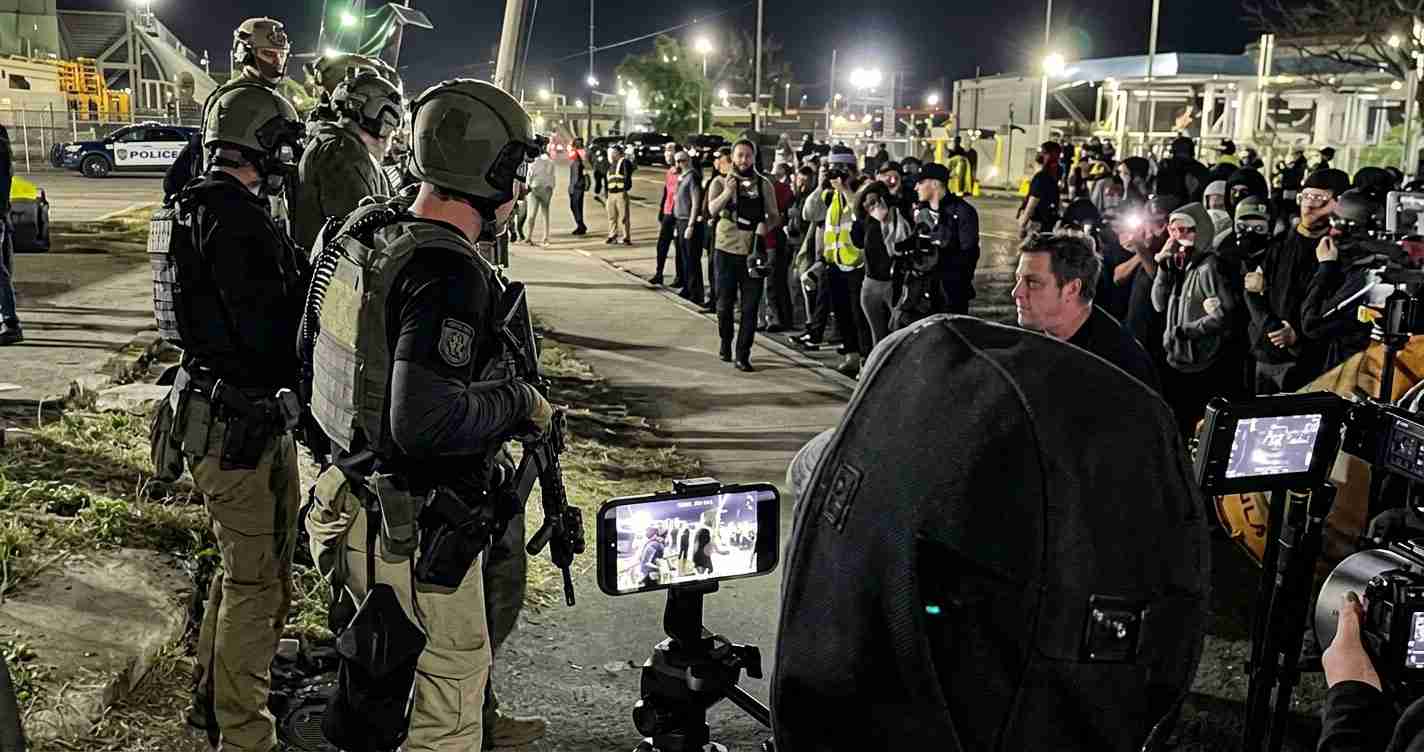
Delaney Hall is an immigration detention center in Newark used by ICE through local contracts and has been the focus of sustained demonstrations about conditions. Officials say the protests have been mostly peaceful, but confrontations with federal personnel have risen in recent days.
On Wednesday night, video circulated showing a man shouting violently at federal officers. Accounts say his remarks included explicit threats against an ICE agent and the officer’s wife and children. Federal authorities have characterized the incident as a federal criminal matter and are using video evidence and public tips to identify and apprehend the person shown.
Local reporting tracing the escalation and state response pointed to managed protest areas as the state’s remedy; see: WSLS: NJ governor sends state police to set up protest zone outside contested immigration detention center and WHYY: Delaney Hall New Jersey protest zones.
Governor Sherrill’s response
Gov. Mikie Sherrill has emphasized support for constitutional protest rights while urging restraint. She noted there has been “a lot of peaceful protesting” at Delaney Hall and stressed the state’s desire to protect safety and free expression.
“Keep people safe, de‑escalate the situation, and lower the temperature,” Sherrill told reporters, invoking her background as a military veteran and her oath to protect the Constitution.
Sherrill also criticized what she described as ICE’s provocative posture at times and said reducing immediate federal presence at the site could help avoid confrontations. State police were ordered to set up designated protest zones to keep demonstrators and federal personnel separated and reduce the chance of escalation. Reporting on her comments is available from local outlets: WSLS: NJ governor sends state police to set up protest zone outside contested immigration detention center and WHYY: Delaney Hall New Jersey protest zones.
Justice Department and federal law-enforcement reaction
The Justice Department treats threats against federal officers and their families as serious federal crimes. Officials said they will pursue the person in the footage using investigative tools, including video analysis and public tips.
Multiple media accounts referenced on‑air comments emphasizing enforcement, but editors have flagged misattributions. Specifically, reporting that named “U.S. Attorney General Todd Blanche” is inconsistent with public records; Todd Blanche is publicly known as a private defense attorney, not a U.S. attorney general. Readers are urged to rely on statements from named, confirmed DOJ spokespeople for authoritative updates.
Why protest zones were ordered
State officials framed the protest zones as a practical safety and crowd‑management measure: to preserve First Amendment rights while reducing close contact between protesters and federal personnel that could spark confrontations.
The move followed days of friction at Delaney Hall, including the videotaped threats that intensified federal attention. Local reporting emphasized balancing civil liberties with public safety; see background reporting from WSLS: NJ governor sends state police to set up protest zone outside contested immigration detention center and WHYY: Delaney Hall New Jersey protest zones.
Credibility and misattributed reporting
Coverage has mixed verified local reporting with social‑media and cable commentary. Editors have flagged inaccurate attributions—most notably the “Todd Blanche” U.S. attorney general claim—which are not supported by public records. The core facts—sustained protests, a recorded threat, Sherrill’s support for peaceful protest, and a DOJ investigation—are corroborated by local outlets.
Readers tip: Rely on established local reporting and official statements from the Governor’s office, New Jersey State Police, and the Justice Department for confirmed information.
Implications for Utah
Though the events occur in New Jersey, the episode has potential ripple effects for state and local governments nationwide, including Utah:
- Economic: Limited immediate impact for Utah, but renewed scrutiny of contracts with immigration agencies or detention operators could follow.
- Political: The incident may be invoked by local politicians to emphasize support for law enforcement and call for resources to secure facilities.
- Social: The videotaped threats underscore risks when demonstrations turn hostile and may prompt emphasis on crowd‑management training.
- Cultural: The targeting of an officer’s family resonates in conservative communities where protection of families and respect for law enforcement are central concerns.
Practical applications
Local officials in Utah should consider reviewing or updating policies related to public demonstrations. Practical steps include:
- Designate clear protest zones and communication plans in advance.
- Improve coordination with federal partners when federal facilities may draw demonstrations.
- Establish rapid-response protocols for credible threats to officers or families and public messaging that condemns violence while protecting lawful protest.
Sources and further reading
Primary local reporting and further background can be found at:
- WSLS: NJ governor sends state police to set up protest zone outside contested immigration detention center
- WHYY: Delaney Hall New Jersey protest zones
Ongoing investigation
Authorities continue to investigate the threats shown in the video. The Justice Department and local law enforcement have urged anyone with tips or information to contact federal investigators. If you have information, provide it to official DOJ channels rather than amplifying unverified social‑media claims.