Federal Judge Blocks Portland National Guard Deployment, Saying Troop Use Exceeded Presidential Authority
A federal judge in Portland has temporarily blocked the federalization of 200 Oregon National Guard members amid anti-ICE protests, ruling the deployment exceeded presidential authority and protecting state sovereignty while the court reviews further relief.
Key takeaways
- A temporary restraining order bars the federal government from deploying 200 Oregon National Guard troops to Portland amid anti-ICE protests — Oregon Public Broadcasting report.
- The order was issued Saturday in response to a legal challenge by the City of Portland and the State of Oregon — OPB coverage.
- Judge Karin Immergut wrote, “This is a nation of Constitutional law, not martial law.” and found the federalization would injure Oregon’s sovereignty — full ruling.
- The restraining order remains in place at least through October 17; the Justice Department had not immediately said whether it would appeal — report.
Main coverage
What the judge said and why
U.S. District Court Judge Karin Immergut granted a temporary restraining order after the City of Portland and the State of Oregon argued that federalizing the Oregon National Guard would unlawfully strip the state of control over its militia and blur the line between civilian law enforcement and the military.
“This is a nation of Constitutional law, not martial law.” — Judge Karin Immergut
Immergut emphasized constitutional limits on using the military in civil affairs, warning that accepting the government’s position would risk “blurring the line between civil and military federal power—to the detriment of this nation.” The court found that federalization would cause an injury to Oregon’s sovereignty and halted the federalization while the court considers further relief — see the OPB report.
Why this case matters
The litigation tests the scope of presidential authority to deploy the National Guard domestically without state consent. It raises constitutional questions about federal power and state sovereignty and resonates with readers concerned about limiting federal reach into state affairs and protecting civil liberties from unchecked executive action.
Legal tradition: The ruling reinforces a long-standing caution against using military troops for domestic law enforcement, echoing Posse Comitatus concerns and respect for state control of militias.
Background: Guard deployments and local resistance
The federal government ordered National Guard forces into several cities in recent months following demonstrations tied to immigration enforcement and other national issues. Deployments have included places such as Los Angeles and Washington, D.C., with discussions about Memphis; many local leaders resisted or raised legal challenges. Portland’s suit and the court’s response fit into this broader pattern of tension between federal deployment proposals and state or city officials defending local authority — reporting by OPB.
The Justice Department response and potential appeal
The Department of Justice had no immediate public comment on whether it would seek an appeal. The federal government has argued elsewhere that the president possesses broad authority to federalize the National Guard under certain circumstances; this ruling challenges that view at least temporarily. If the DOJ appeals, higher courts will be asked to clarify the scope of presidential authority over state militias and the use of federal troops in civil protest contexts.
Legal frame: Sovereignty, federalism and martial law concerns
Judge Immergut framed the dispute in constitutional terms, warning that accepting the federal government’s arguments could “blur the line between civil and military federal power.” Those lines matter for preserving state sovereignty and preventing centralization of force under the executive branch that might bypass state oversight of militia forces.
Protests, public safety and political context
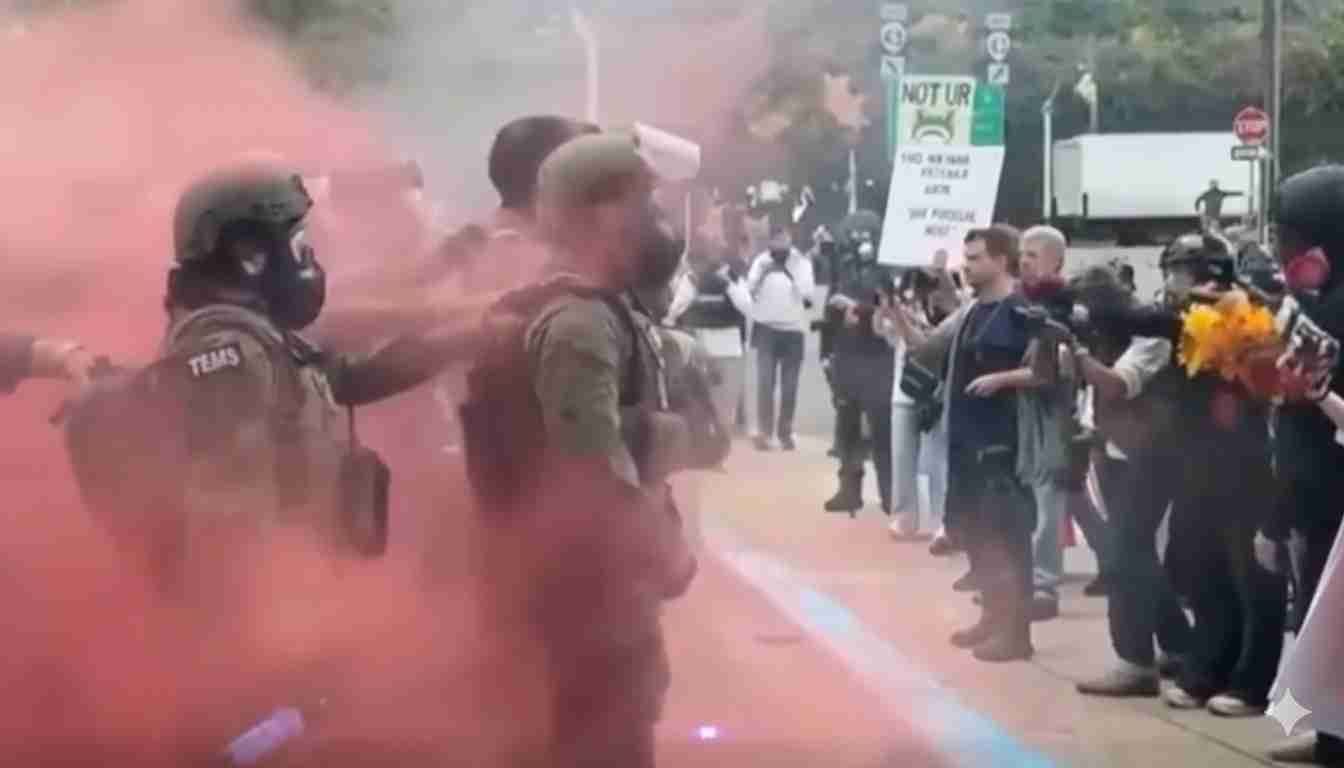
The protests prompting the order were tied to anti-ICE demonstrations. Officials cited public safety concerns in proposing Guard deployment, while opponents warned that federal troops could escalate tensions and undermine local police-community relations. President Trump has threatened additional deployments in other cities, including Chicago, prompting legal scrutiny where federal directives conflict with state authority — see coverage.
Court process and timeline
The restraining order is temporary and remains in force through at least October 17. Portland and Oregon will press their case in federal court, seeking longer-term relief to prevent federalization. The federal government may ask a higher court to lift the restraint or to fast-track an appeal. The coming weeks will determine whether the temporary order becomes a longer injunction or is overturned, potentially setting a significant precedent for federal-state disputes over domestic troop deployments.
Implications for Utah
Economic and operational impact
Utah’s National Guard operates under state authority unless federalized. A ruling limiting federal power to federalize state Guard units without clear statutory basis or state consent would preserve Utah’s control over its troops, affecting how Utah might respond to future federal requests and keeping Guard resources available for local emergencies and state-directed missions.
Political consequences
The ruling reinforces principles many Utah conservatives favor about limiting federal power. Elected officials in Utah who resist federal overreach will likely cite this decision to support state sovereignty. If the federal government successfully appeals, the balance of power could shift and compel Utah leaders to prepare for greater federal involvement in domestic security operations.
Social effects and public safety considerations
Citizens in Utah who value law and order may welcome clear rules that prevent confusion over Guard command. Officials must balance that with maintaining public safety during large-scale unrest. The case underscores the need for clear cooperation agreements between state and federal authorities so Utah’s first responders can act without legal confusion.
Cultural and constitutional relevance
The decision highlights themes important to Utah’s conservative electorate: limited federal power, respect for state authority, and protection of constitutional norms. Judge Immergut’s comment that the nation is governed by law, not martial law, is likely to resonate in a state that prizes civic order and constitutional protections.
Practical applications for Utah leaders and residents
- State leaders should review protocols for federal requests to federalize the Guard and update memoranda of understanding or legal safeguards.
- Local law enforcement and emergency managers should train for scenarios where federal assets are offered but not accepted to avoid response delays.
- Utah citizens and community leaders should press for transparency about how state leaders would respond to future federal attempts to federalize the Guard, including public briefings and legal reviews.
Sources and further reading
This reporting is based on the court’s temporary restraining order and statements reported by Oregon Public Broadcasting. Video coverage of related proceedings and reporting is available: Video report and court coverage.
(End of article — substantive coverage continues in court filings and follow-up reporting)