Trump, Japan’s First Female PM Sanae Takaichi Forge “Golden Age” at Tokyo Summit, Sign Critical Minerals Deal
Former US President Donald Trump and Japan’s first female Prime Minister Sanae Takaichi met in Tokyo, declaring a “golden age” for US–Japan ties and signing a critical-minerals framework to diversify high‑tech supply chains and strengthen security cooperation.
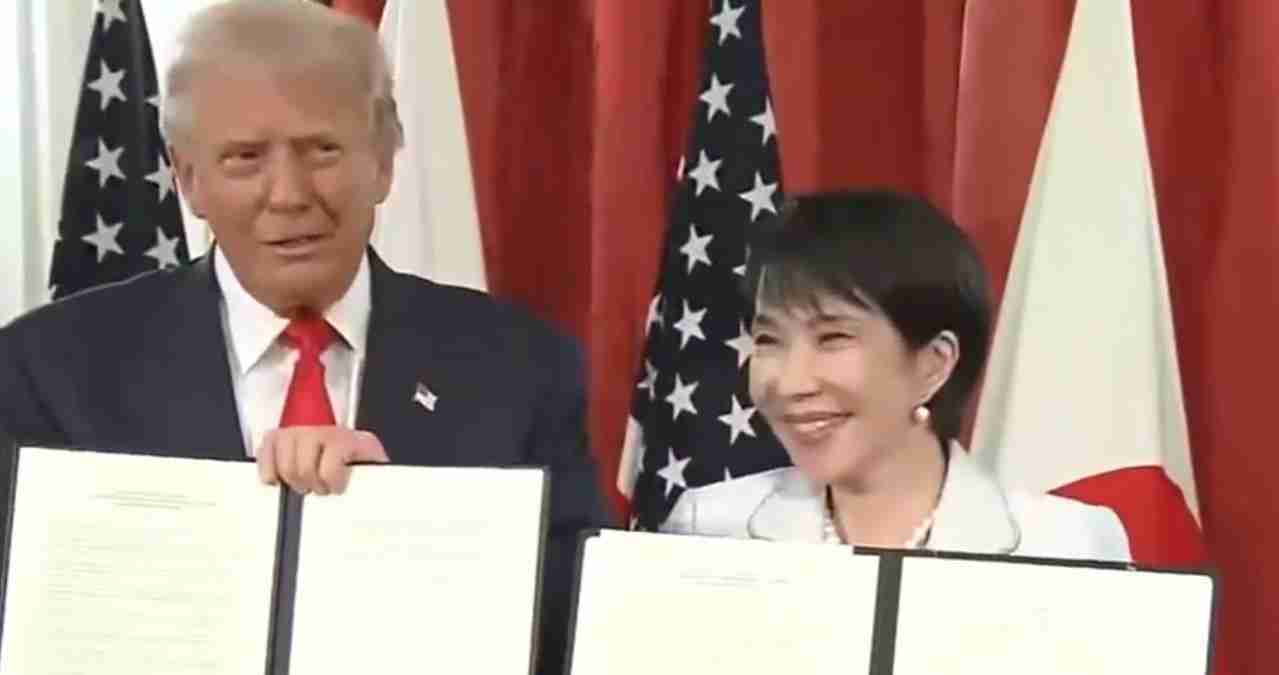
- Historic summit: Red‑carpet Akasaka Palace welcome and symbolic “golden age” alliance signing.
- Critical‑minerals pact: Framework to reduce China’s dominance in rare‑earths and tie investment to tariff incentives.
- Security boost: Expanded defense, intelligence and operational cooperation emphasized, including carrier visits.
- Soft power: Japan pledged 250 cherry trees and fireworks for the U.S. 250th anniversary in 2026.
Ceremonial welcome and symbolism
The summit opened with full state‑level protocol at Akasaka Palace. Trump walked the red carpet and was greeted by Prime Minister Sanae Takaichi amid honor guards and military bands. Cameras captured warm exchanges and handshakes — view the White House video and separate ceremonial footage.
Trump publicly noted the milestone of Takaichi becoming Japan’s first female prime minister and praised her rise as a “big deal” for Japan (coverage: Arab News; Economic Times).
Strategic partnership and security cooperation
Both leaders framed the visit as an alliance renewal. Takaichi described her agenda as restoring “dynamic Japan’s diplomacy to protect Japan’s own national interest,” pledging closer coordination with the U.S. to support a free and open Indo‑Pacific. Trump pledged U.S. support and highlighted Tokyo’s expanding defense capabilities (signing and remarks video).
What was signed: “Golden age” pact and the critical minerals framework
The leaders signed two documents: a short, symbolic agreement launching a “golden age” in bilateral ties and a separate, concrete framework on rare earths and other critical minerals. Officials described the latter as a strategic move to diversify supply chains away from Chinese dominance and to support semiconductors, EV batteries, defense systems and other high‑tech sectors (Arab News; critical‑minerals discussion).
Reports indicate the framework links industrial cooperation with tariff and investment negotiations and has been discussed alongside figures as large as $550 billion in potential Japanese investment tied to tariff relief — a figure that requires further verification (report).
The rare‑earth agreement was presented as a framework rather than a line‑item contract; specifics — volumes, participating firms, and facility locations — were not disclosed at signing (video).
Cultural diplomacy and soft‑power gestures
Takaichi announced symbolic gifts aimed at public diplomacy: 250 cherry trees for Washington, D.C.’s 250th anniversary (2026) and Japanese fireworks for U.S. Independence Day observances. These gestures are intended to deepen people‑to‑people ties beyond policy (video).
Economic and military initiatives on the agenda
Both leaders emphasized increased Japanese investment in U.S. manufacturing and technology, and Trump highlighted a push to boost American exports and defense‑related manufacturing partnerships. Trump was also scheduled to tour the USS George Washington carrier during the visit, underscoring the operational military dimension of the partnership (report).
Leaders’ statements and political framing
Takaichi stressed diplomacy, defense, technology and intelligence ties to make both nations “stronger and more prosperous.” Trump invoked the late Shinzo Abe as a mentor figure and pledged, “Anything I can do to help Japan, we will be there” (report; Economic Times).
“Anything I can do to help Japan, we will be there.” — Donald Trump
Investigative considerations: what to watch next
- Transparency of the “golden age” pact: The full text has not been released; lawmakers and reporters will seek the document to assess legal and fiscal implications (report).
- Critical‑minerals details: Which companies, mining projects, supply routes and processing sites will be prioritized? How will permitting and investment coordination work? (video).
- Verification of the $550B figure: The scale, timing and legal basis for any large‑scale Japanese investment tied to tariff changes require confirmation from official trade documents (report).
- Military cooperation: Carrier visits and joint exercises will be monitored for signs of expanded operational ties (report).
Implications for Utah
Economic impact
Utah could benefit from deeper US–Japan cooperation on critical minerals and manufacturing. The state’s tech and manufacturing base, plus local mining activity, may align with supply‑chain projects. Japanese investment in battery plants, semiconductor supply chains or auto component factories could create jobs and supplier opportunities.
Political consequences
Utah’s conservative leadership emphasizes defense, domestic manufacturing and secure supply chains; a tighter US–Japan alliance focused on reducing dependence on China aligns with those priorities. Local politicians may use summit outcomes to promote state incentives for Japanese investment.
Social effects
New investments and factory projects could bring workers and families to Utah, affecting housing, schools and services. Communities near potential mining or processing sites will need careful planning to balance jobs with environmental and health safeguards.
Cultural relevance and state values
The summit’s emphasis on alliances, industrial self‑reliance and democratic values will resonate with Utah’s electorate. Cultural exchanges — including the gift of cherry trees — can deepen educational and civic ties.
Practical applications for Utah residents
Consumers may see long‑term effects in product availability and cost. Job seekers in manufacturing, mining, logistics and engineering may find new openings if Japanese firms invest. State leaders and chambers of commerce should be ready to pitch Utah for projects tied to the US–Japan critical‑minerals framework.