Auto Loan Delinquencies Surge: More Americans Face Car Payment Problems as High Interest Rates Bite
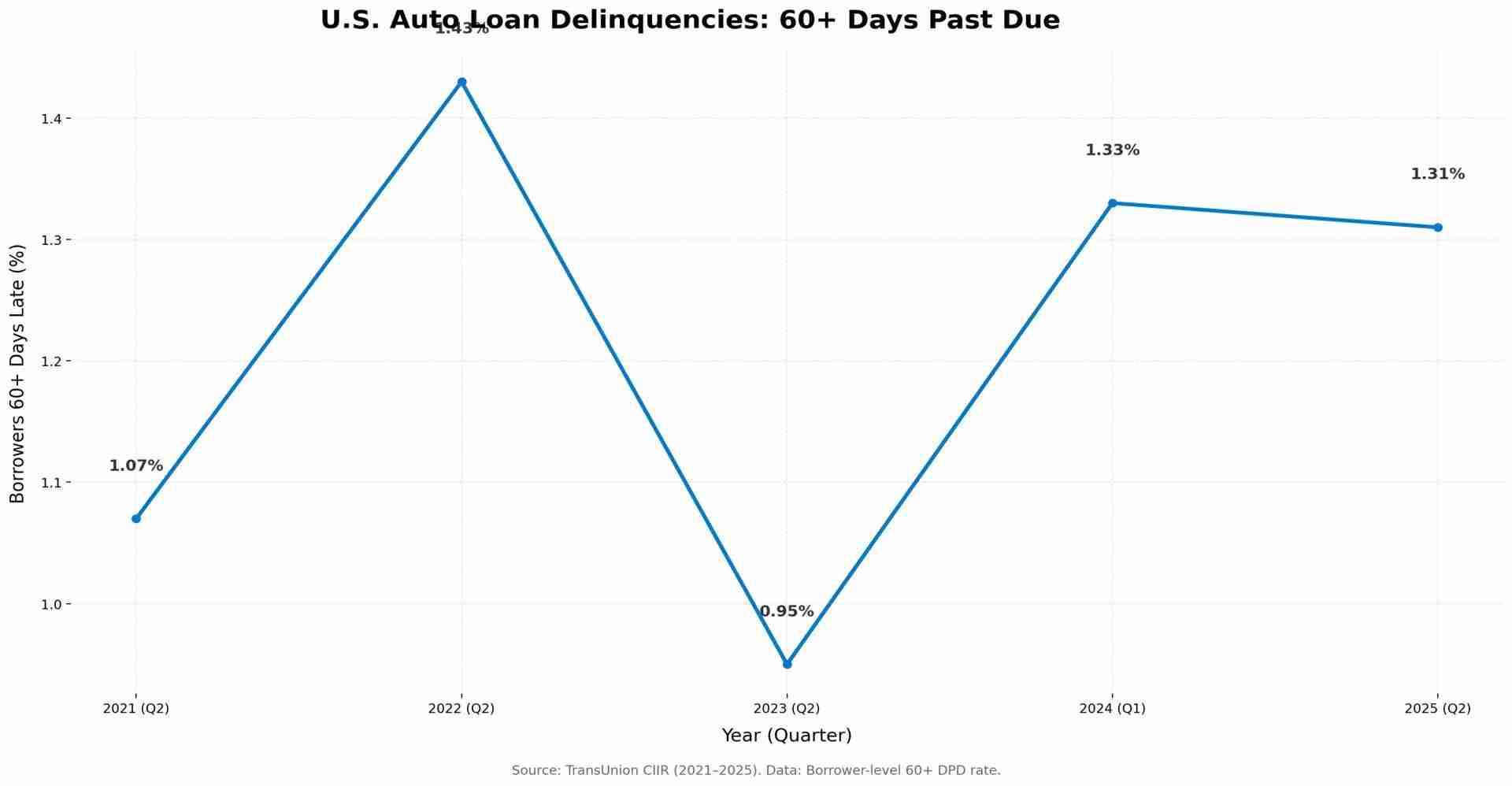
Americans are increasingly struggling to afford vehicle payments as auto loan delinquencies surged to 5.0% in Q2 2025 nationwide, nearing post‑recession highs amid high interest rates, elevated car prices, and renewed household debt pressures on many borrowers.
Key takeaways
- Serious delinquencies rose: Loans 90+ days past due reached 5.0% in Q2 2025 — a one‑year increase of 12.6% (source: LendingTree, AOL).
- Early delinquencies climbed: Loans 30 days past due rose to 8.0% in Q2 2025 (source: VantageScore, NBC Palm Springs).
- Market size: Total outstanding auto loan balances reached $1.66 trillion in Q2 2025 (source: New York Fed).
- Distress is broadening: Problems extend beyond subprime borrowers to many prime customers, creating wider consumer strain (source: LendingTree, VantageScore).
Main story
Key information
Important data points driving this story:
- Auto loans 90 days or more past due rose to 5.0% in Q2 2025, a 12.6% year‑over‑year increase (see LendingTree and AOL).
- Loans 30 days past due climbed to 8.0% in Q2 2025 (reported by VantageScore and NBC Palm Springs).
- Total outstanding auto loan balances reached $1.66 trillion in Q2 2025 (data: New York Fed).
What the numbers show
Delinquency rates rose steadily through 2025. The share of loans 90 days or more past due — widely used to measure serious payment trouble — reached 5.0% in Q2, close to the 5.3% peak seen in late 2010 after the previous recession (LendingTree, AOL).
At the same time, loans 30 days past due reached 8.0%, a sign that more borrowers are falling behind earlier in their payment cycles (VantageScore).
Why borrowers are struggling
Several forces are converging to push more vehicle owners into delinquency:
- High interest rates: Rising policy and market rates have increased loan costs, making monthly payments larger and refinancing harder when payments become unaffordable (NBC Palm Springs).
- Elevated vehicle prices: New and used prices remain high versus pre‑pandemic levels, pushing buyers to larger loans and longer terms (LendingTree).
- Larger loan sizes and longer terms: Average loan balances rose by more than $400 year‑over‑year, and terms now average about 69 months for new cars and 67 months for used cars — longer terms reduce monthly payments but raise total interest and upside‑down risk (LendingTree, VantageScore).
- Renewed debt pressures: The restart of federal student loan repayments and upticks in other debts are squeezing household budgets; analysts note rising late payments across student and auto loans (VantageScore).
Who is affected
Delinquencies remain highest among subprime borrowers with lower credit scores, but stress is spreading. Prime and super‑prime customers (scores above 661) still represent nearly 70% of retail vehicle financing, meaning payment trouble is not limited to traditionally high‑risk groups (LendingTree).
Wider strain is visible in a small drop in average VantageScore to 701 in early 2025, linked in part to more late payments across auto and student loans (VantageScore).
Risk of repossessions and predatory lending
“As delinquencies rise, repossessions are increasing. Collections and recoveries could pick up if conditions do not improve, putting more vehicles and families at risk,” warn industry observers (NBC Palm Springs).
Buy‑here, pay‑here dealerships that serve used‑car buyers can be particularly predatory, often charging much higher interest and fees that trap borrowers in cycles of unaffordable loans (LendingTree).
Size and structure of the market
The auto finance market is large and varied. Outstanding balances reached $1.66 trillion in Q2 2025, with a creditor mix that shapes who bears losses: banks hold nearly 30% of financing, credit unions about 24%, and manufacturer‑related lenders roughly 19% (New York Fed, LendingTree).
What experts recommend
- Shop around: Compare rates and avoid dealer financing when possible; credit unions often offer lower costs (LendingTree).
- Review terms: Watch long terms and large balances that reduce monthly payments but increase total interest and upside‑down risk.
- Talk to lenders early: If falling behind, contact your lender to explore hardship programs or modified payment plans before repossession becomes likely (LendingTree).
- Avoid high‑cost buy‑here, pay‑here deals: These often carry steep fees and rates that worsen default risk (LendingTree).
Implications for Utah
Economic impact: Utah drivers face the same national pressures. With many residents depending on cars for long commutes, higher payments or repossessions could reduce consumer spending and strain household budgets in both urban and rural counties.
Political consequences: For a politically conservative audience, pocketbook issues may sharpen voter attention on state policies affecting jobs, taxes, and cost of living. Officials could face pressure to encourage competitive lending while guarding against predatory practices.
Social effects: Transportation loss or higher monthly payments can disrupt work, schooling, and access to healthcare — especially in rural and mountain communities with limited transit options.
Cultural relevance: Utah communities that value self‑reliance and mutual aid may see increased charity and church support, but persistent stress could test those informal safety nets.
Practical applications for Utah residents
- Shop locally and compare loans: Credit unions are prevalent in Utah and can offer lower rates than dealer financing (LendingTree).
- Review loan terms carefully: Longer terms reduce monthly payments but raise total cost and upside‑down risk.
- Contact lenders early: Explore hardship or modification options to avoid repossession.
- Avoid buy‑here, pay‑here when possible: High costs and fees can trap borrowers in cycles of debt (LendingTree).
- Monitor credit: Even modest score drops affect future loan costs; tools like VantageScore can help track changes.
Sources and data
- LendingTree: Auto debt statistics and delinquency trends
- VantageScore: CreditGauge report on auto loan delinquencies
- New York Fed: Credit cards and auto loans data
- NBC Palm Springs: Reporting on rising delinquencies and repossession risk
- AOL: Coverage of delinquency rates approaching post‑recession levels
Reporting note
This story draws on federal data and industry research from LendingTree, VantageScore, the New York Fed, and reporting from national outlets including NBC Palm Springs and AOL. Source links and methodology are provided for readers seeking detailed tables and technical notes.
Parent Publication: Times Media Service