Sen. Tim Sheehy Intervenes as Senate Hearing Turns Chaotic; North Carolina Green Party Candidate Injured in Removal
Green Party Senate candidate Brian McGinnis disrupted a March 4, 2026, Senate Armed Services Subcommittee hearing to protest U.S. military policy; during removal he broke his arm, faces multiple charges, and video shows Sen. Tim Sheehy assisting officers.
- Disruption and injury: Brian McGinnis protested military policy during a March 4 hearing and was removed forcefully; video and reports confirm he suffered a broken arm and three officers sustained minor injuries. IBTimes report
- Senator intervention: Sen. Tim Sheehy, a member of the Armed Services panel and former Navy SEAL, is shown on video aiding officers at the doorway as McGinnis resisted. Video footage
- Legal consequences: McGinnis faces multiple counts including assault on officers and resisting arrest, and his campaign said he will pause public events while recovering. Local reporting
What happened at the hearing
Video and eyewitness accounts show Brian McGinnis, a 44-year-old Marine Corps veteran and Raleigh firefighter running as the North Carolina Green Party candidate, stand and loudly protest U.S. policy toward Israel and Iran during a Senate Armed Services Subcommittee hearing on the current readiness of the joint force on March 4, 2026. The hearing context is detailed in contemporary coverage. Military.com coverage
Witnesses report McGinnis shouted phrases such as “America does not want to send its sons and daughters to war for Israel” while appearing in Marine Corps apparel. Capitol Police moved to remove him after he refused to stop, and a physical struggle followed at the exit where he wedged his arm in the door frame.
Sen. Tim Sheehy’s intervention and the removal
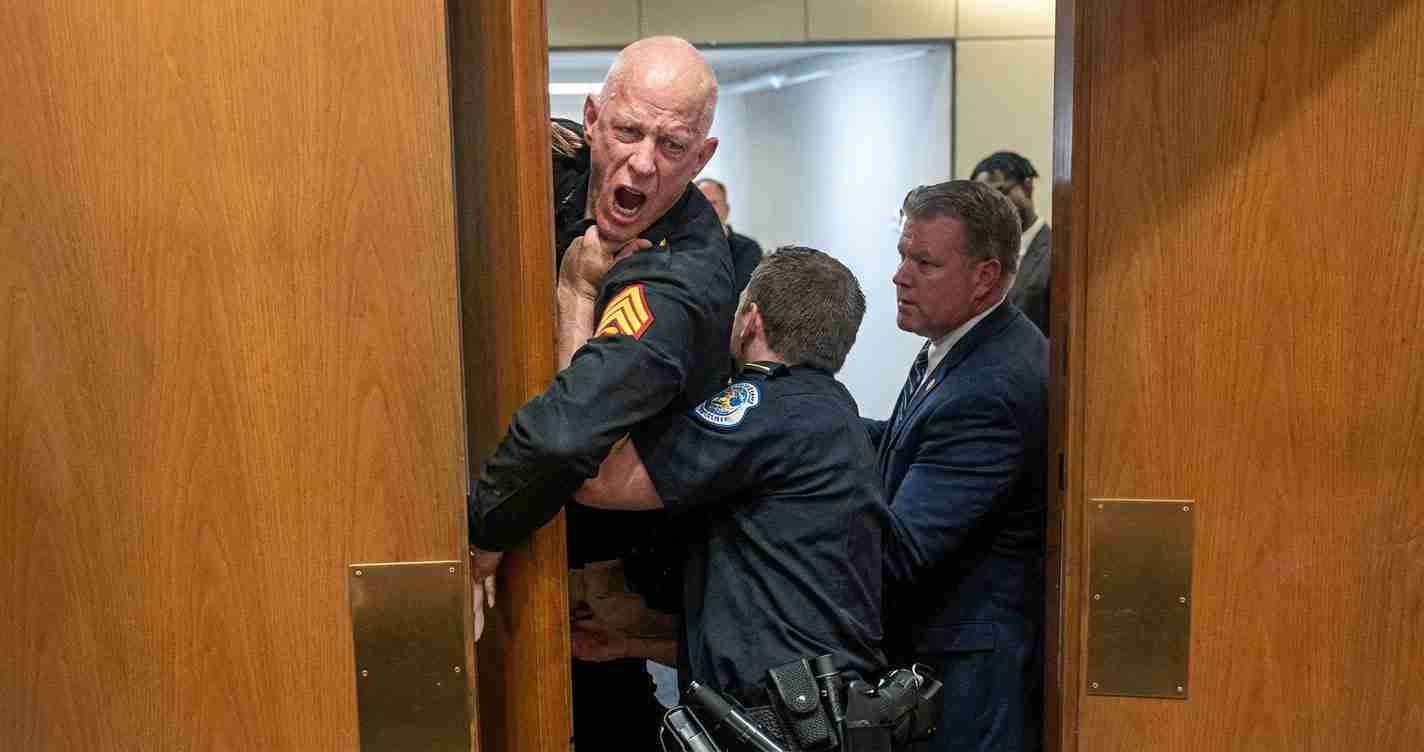
According to video and security statements, two officers initially attempted to escort McGinnis out. At the doorway he resisted and reportedly forced his arm between the door and frame in an effort to return to the hearing room. At that moment Sen. Tim Sheehy stepped forward to assist officers; footage shows him pushing to free McGinnis’ arm and a sharp cracking sound is audible. Video of the struggle and reporting confirm McGinnis suffered a broken arm. IBTimes
Statements from officials and participants
Sen. Sheehy released a statement calling the man an “unhinged protester,” saying the individual “was fighting back” and that he intervened to “help out and deescalate the situation.” Sheehy added, “This gentleman came to the Capitol looking for a confrontation, and he got one. I hope he gets the help he needs without causing further violence.” Statement source
U.S. Capitol Police said the man “started to illegally protest during a hearing,” that he “put people in danger by fighting officers,” and that he “got his own arm stuck in a door to resist our officers and force his way back into the hearing room.” The department emphasized that protests are permitted on Capitol grounds but not inside congressional buildings. Police statement
Criminal charges and campaign effects
Authorities filed multiple counts against McGinnis: three counts of assault on a police officer, three counts of resisting arrest, and one count of crowding, obstructing or incommoding Congress related to the unlawful demonstration inside the hearing room. Local reporting and court filings document the charges. WRAL reporting and News & Observer
McGinnis’ campaign posted a health update confirming the broken arm and said he would need time away from public events as he recovers. Campaign materials describe him as a Raleigh firefighter, father, and Marine Corps veteran who opposes U.S. military escalation. Campaign site and the Green Party profile profile his background and platform.
Video evidence and public reaction
Multiple cellphone and broadcast videos circulated showing McGinnis’ outburst, the removal, and the audible crack at the door. Those clips catalyzed debate over protest limits inside federal buildings and the appropriateness of elected officials physically engaging in security incidents. Primary video and contemporaneous accounts provide the sequence of events. Military.com analysis
Supporters expressed concern about McGinnis’ injury and framed the episode around protest rights; lawmakers and law-and-order advocates stressed that demonstrations should not interrupt official proceedings and emphasized safety for staff, witnesses and members.
Background on Brian McGinnis and campaign context
Brian McGinnis, 44, is a Raleigh firefighter and Marine Corps veteran running as the North Carolina Green Party candidate for U.S. Senate. His campaign emphasizes working-class priorities and opposition to overseas military interventions; his social media and campaign materials highlight his military service and critique of economic systems. Green Party profile and local coverage document his platform. Local coverage
Why Senator Sheehy’s intervention matters
Sen. Sheehy’s physical involvement drew attention because he is a sitting senator and member of the Armed Services panel with a background as a Navy SEAL. Reactions split: some praised his decisive action to secure the hearing; others questioned whether members should enter physical confrontations during security incidents. Video shows Sheehy pushing at the doorway as officers worked to free McGinnis’ arm. Footage
Implications for Utah
Economic and security impact
Disruptions in Washington can create uncertainty for defense policy debates that affect Utah jobs tied to military contracts and defense suppliers. Utah’s defense sector — including facilities and suppliers around Hill Air Force Base — watches congressional readiness hearings for signals on budgets and procurement; a disrupted hearing could complicate debate over funding and readiness measures. Related reporting
Political consequences
Utah’s conservative voters typically favor strong national defense and respect for rule of law; the incident may reinforce demands for stricter decorum and clear protest boundaries in federal spaces. Sen. Sheehy’s intervention may be viewed favorably by conservatives who value military service and decisive action to protect hearings, while others may worry about safety when officials enter physical confrontations.
Social and community effects
The event contributes to national debates on protest tactics and free speech. Utah communities that host veterans and active-duty families may see this as a reminder of tensions between patriotic service and political protest; public framing by local leaders could shape perceptions of veterans in politics.
Cultural and practical implications for daily life
For Utahns who travel to Washington for advocacy or demonstrations, the Capitol Police statement is a practical warning: protests must stay on the grounds and cannot interrupt official business. Visitors and groups should be aware of rules to avoid legal trouble and ensure safety during visits to federal buildings. Source guidance
Legal and electoral outlook
The charges against McGinnis illustrate how disruption can lead to swift legal consequences that affect a campaign. Utah campaigns and local party officials may use the episode to emphasize candidate discipline and respect for institutions; for Utah voters evaluating federal candidates, the incident underscores the importance of crisis behavior and legal accountability. Court reporting
Reporting and sources
This report is based on video footage and contemporaneous reporting from multiple outlets, including International Business Times, Military.com, WRAL, ABC11, and publicly available video. Video clips are viewable online. Primary video source
Further developments
Charges filed and legal records were reported by state and local outlets covering the case and the candidate’s campaign. Further developments, including any formal statements from the Department of Justice or additional Capitol Police reports, may alter legal outcomes and public reaction. Readers can follow the primary sources cited above for updates.