Inside the Dispatch: Chicago Police Refused Aid as Federal Agents Rammed, Sources Say
Chicago, Illinois (Times Media Service) — Chicago police sources say command allegedly ordered officers not to assist federal agents who were encircled and rammed by an aggressive crowd after a reported shooting, fueling internal outrage, investigations, and renewed scrutiny of interagency cooperation.
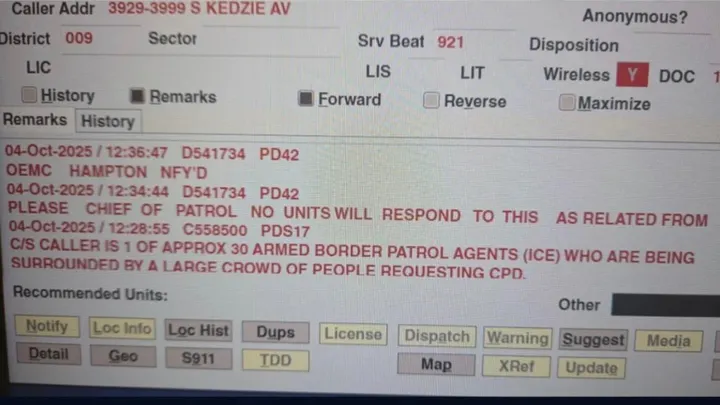
- Internal dispatch logs reportedly show a patrol chief refused repeated requests to send help to federal agents surrounded by an aggressive crowd.
- Video and on-scene accounts indicate federal agents were rammed and encircled by protesters, some reportedly armed, during a protest tied to a reported shooting.
- The alleged order not to assist prompted sharp CPD internal criticism and raised questions about officer safety and interagency trust.
- City and federal officials are reviewing the incident while investigations continue into the shooting and CPD’s handling of aid requests.
Incident overview
According to multiple police sources and recorded dispatch audio reviewed by reporters, the confrontation began after a shooting in which federal agents were reportedly involved. Federal investigators mobilized rapidly on a Chicago street and, shortly after, a large, angry crowd gathered demanding answers.
Reporters reviewed on-scene video and dispatch audio that depicts chaotic scenes as people pushed against law enforcement lines and attempted to block federal vehicles.
Crowd dynamics
Witnesses and officers told reporters parts of the crowd were armed and that some participants deliberately targeted federal personnel. Footage shows agents navigating dense groups while people shouted and physically crowded around them.
Sources said federal vehicles were rammed during attempts to move through the area. Officers on the ground reported fear for both federal agents and nearby civilians as tensions surged.
Law enforcement response and alleged refusal to assist
The central allegation driving the controversy is that CPD patrol leadership refused direct requests for aid. Sources inside the department say internal dispatch logs captured a patrol chief instructing officers not to intervene with federal agents that night, despite repeated calls from units on the street.
“We are trained to back up other officers and agents in danger,” an officer said. “To be told not to help when people were surrounding and ramming federal vehicles — that goes against everything we do.”
Command sources described the decision as a tactical call, citing concerns that sending officers into the crowd might escalate violence or create jurisdictional complications. Critics inside the department argue that the calculus left federal agents exposed and damaged mutual trust.
Backlash, CPD criticism and public reaction
Rank-and-file officers expressed anger and disbelief, saying they felt abandoned by command. The phrase “Chicago Police Refused Aid” circulated internally and among community members, fueling calls for accountability and clearer policies on mutual aid.
Public protests followed, with large crowds demanding answers about the shooting and why local police did not assist federal agents. Community leaders urged transparency and warned that withholding information or heavy-handed responses could inflame tensions.
Investigation and official reviews
City and federal authorities are reviewing the events. Officials told reporters both the CPD and federal agencies are examining dispatch logs, body-camera footage, and other evidence to determine what orders were given and why.
At the time of reporting, formal written statements from top CPD officials or federal agency spokespeople regarding dispatch contents were not available. Law enforcement watchdogs and some elected officials have called for prompt and transparent disclosure of records.
Implications for Utah
Although the incident occurred in Chicago, sources say it may have national ripple effects. Utah officials, law enforcement leaders, and businesses may reassess mutual-aid protocols and interagency training in light of the episode.
- Economic impact: Perceptions of strained interagency cooperation could influence travel, tourism, and event planning that rely on federal-local coordination.
- Political consequences: Utah lawmakers and leaders may use the episode to argue for clearer mutual-aid agreements and oversight of command decisions.
- Social and cultural effects: The story may deepen local discussions about officer loyalty, leadership, and expectations for mutual backup during high-risk incidents.
- Practical applications: Utah agencies may review training and protocols to avoid similar breakdowns and to reinforce interagency cooperation.
Source notes and next steps
This report is based on police sources, internal dispatch logs and on-scene video reviewed by reporters. The primary publicly available source for the dispatch audio and footage is a video posted online that includes on-scene reporting and recorded dispatch logs: on-scene reporting and dispatch audio.
Authorities are conducting reviews and may release further information as investigations proceed. Reporters continue to seek formal dispatch logs, body-camera footage, and detailed statements from Chicago Police Department and federal agencies.