U.S. Confirms Clade I Mpox Cases; Officials Monitor Travel Links While Europe Hantavirus Reports Remain Unverified
The first U.S. Clade I mpox case was confirmed in California in Nov. 2024 after travel to Central Africa; officials say overall public risk remains low despite Clade I’s historically higher fatality rates, while hantavirus reports in Europe remain unverified.
Key takeaways
- Clade I is historically more severe: a genetically distinct mpox branch tied to more severe illness in Central Africa — CDC.
- First U.S. Clade I case: confirmed in California on Nov. 15, 2024, linked to travel to Central Africa — CDC HAN.
- Limited spread so far: as of early 2026, detections remain small (11 cases through February 2026) with no evidence of sustained community transmission — CDC situation summary.
- Hantavirus claims unverified: reported alerts in Spain and France were not confirmed in WHO or CDC public updates — WHO hantavirus facts; CDC hantavirus.
Key information
Below are the most relevant facts and sources for public-health officials, clinicians, and the public.
- Clade I mpox refers to one of two main genetic forms of the monkeypox virus and has been linked historically to more severe illness in Central Africa — CDC.
- The first confirmed U.S. Clade I mpox case was reported in California on Nov. 15, 2024, in a traveler from Central Africa; public health officials said the risk to the general public is low — CDC HAN.
- As of early 2026, the CDC reports multiple Clade I cases in the U.S., but numbers remain small and no sustained U.S. spread has been documented — CDC situation summary.
- Reports that a Connecticut case came from Western Europe were not validated in CDC or state reporting available at the time of review — see CDC case definitions.
- Separate alerts about hantavirus in Spain and France could not be confirmed through WHO or CDC reporting — see WHO hantavirus facts and CDC hantavirus.
What is Clade I Mpox?
Clade I and Clade II are two genetically distinct branches of the monkeypox virus. Clade I has been found mainly in Central Africa and has historically been associated with more severe disease and higher mortality than Clade II. Clade II — particularly sublineage Clade IIb — drove the 2022 global outbreak and tends to cause milder illness in most patients. See the CDC clinical overview and the Johns Hopkins public health summary.
Modern medical care, early testing, and available treatments have reduced death rates compared with historical outbreaks. Recent case data show many infected people have mild illness and recover with supportive care, though Clade I’s features prompt extra vigilance when it appears outside endemic zones — see the CDC situation summary.
Symptoms, spread and prevention
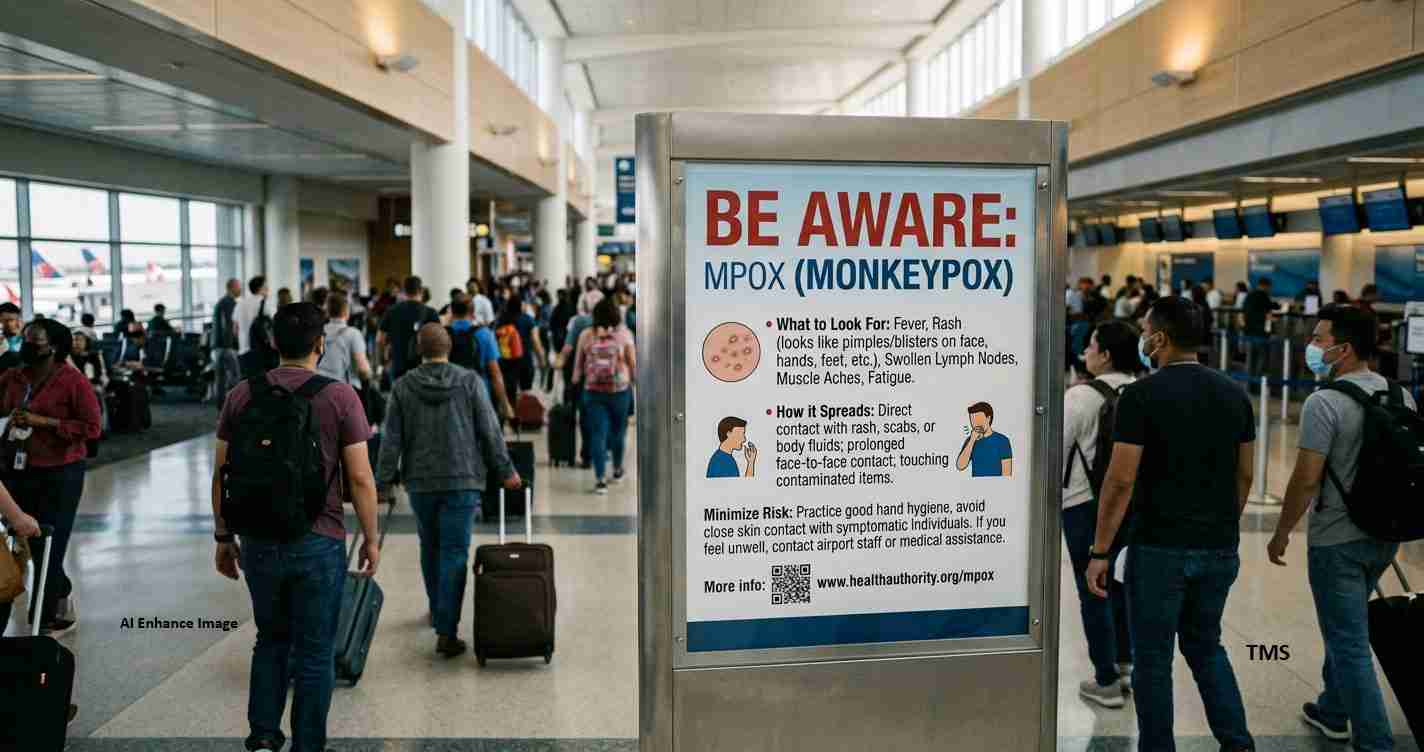
Mpox symptoms can include fever, swollen lymph nodes, headache, muscle aches and a characteristic rash that often progresses through stages. The virus spreads through close contact with lesions, body fluids, prolonged face-to-face contact, respiratory droplets, contaminated bedding or clothing, and contact with infected animals. For clinical details see the CDC clinical overview.
Prevention and treatment: Prevention tools and treatments apply to both clades. The JYNNEOS vaccine is recommended for people at higher risk, including certain travelers and those with known exposures. Officials emphasize completing the two-dose JYNNEOS series for best protection — more at the CDC mpox page.
U.S. cases, testing and public risk
The CDC confirmed the first U.S. Clade I case in California on Nov. 15, 2024. That patient had recent travel to Central Africa, experienced a mild illness, and recovered in isolation — see CDC HAN.
From late 2024 through early 2026, the CDC reported additional Clade I detections in the U.S. Total numbers remain small (11 cases through February 2026) and officials have not found evidence of sustained community spread. Public-health laboratories use a two-step testing approach: orthopox PCR first, then sequencing or targeted testing to distinguish clades. Labs and clinicians are urged to report orthopox-positive and Clade II–negative results promptly and to consider travel history — see the CDC situation summary and CDC case definitions.
Investigative note: Connecticut reporting and Western Europe travel
Early local reports suggested a Connecticut case tied to travel in Western Europe. A review of CDC and state reporting available to Times Media Service did not confirm a Connecticut Clade I case linked to Western Europe; the first verified U.S. Clade I case documented by CDC was tied to travel to Central Africa and reported in California. State health departments and the CDC remain the authoritative sources for case confirmation — see CDC HAN and CDC case definitions.
Global context and why clade distinction matters
Distinguishing Clade I from Clade II helps public-health officials assess risk. Historically, Clade I showed higher case-fatality rates in some Central African outbreaks — pre-2022 reports cited rates as high as ~10% — while Clade II has generally had lower fatality rates. Recent data emphasize that modern care reduces severe outcomes, and small-sample findings in non-endemic countries may not fully reflect risks in other settings. See the Johns Hopkins summary and the CDC clinical overview.
Hantavirus reports in Europe: what we found
Claims that WHO recently reported new hantavirus cases in Spain and France drew concern. Hantavirus is typically transmitted via contact with infected rodent urine, droppings or saliva and can cause hantavirus pulmonary syndrome or hemorrhagic fever with renal syndrome — both rare but potentially severe. However, in the sources reviewed (CDC and WHO updates), there were no confirmed WHO alerts naming new hantavirus clusters in Spain or France. For background see WHO hantavirus facts and CDC hantavirus.
“Hantavirus activity in Europe remains rare as of the latest public reports; consult local health agencies for up-to-date regional information.”
Guidance for clinicians and the public
Public-health agencies ask clinicians to collect travel and exposure histories for patients with compatible symptoms, test suspect cases promptly, and report confirmed orthopox infections. At the public level, officials stress vaccination for eligible people, timely care-seeking for symptoms (fever, swollen lymph nodes, unexplained rash), and common-sense measures like avoiding contact with sick animals, using gloves when cleaning rodent droppings, and good hygiene — see the CDC clinical overview.
Implications for Utah
Economic impact: Utah’s tourism, events and festivals attract travelers. Organizers should encourage vaccination among eligible attendees and coordinate with local public health to limit disruption — see CDC mpox information.
Political consequences: Utah leaders may favor targeted prevention (vaccination, travel guidance, testing) over broad mandates. Transparent local communication from the Utah Department of Health will help maintain public trust — see CDC situation summary.
Social and cultural effects: Families, faith communities and businesses hosting close-contact events should be aware of symptoms and isolation guidance. Practical advice (stay home when sick, seek testing for rashes, complete vaccines) aligns with community values.
Practical steps: Travelers from Utah should check CDC guidance before travel and consider vaccination if eligible. Health-care providers should ask about recent travel or close contacts for patients with rashes and follow state reporting. For hantavirus, Utahns should maintain rodent-control steps and follow CDC cleaning guidance — see CDC hantavirus.
Sources and further reading
- CDC HAN: First U.S. case of Clade I mpox, Nov. 2024
- CDC clinical overview of mpox
- CDC about mpox
- CDC mpox situation summary
- CDC mpox case definitions
- Johns Hopkins University public health summary on mpox (Jan. 2025)
- HIV.gov report on first Clade I U.S. case
- WHO hantavirus fact sheet
- CDC hantavirus information