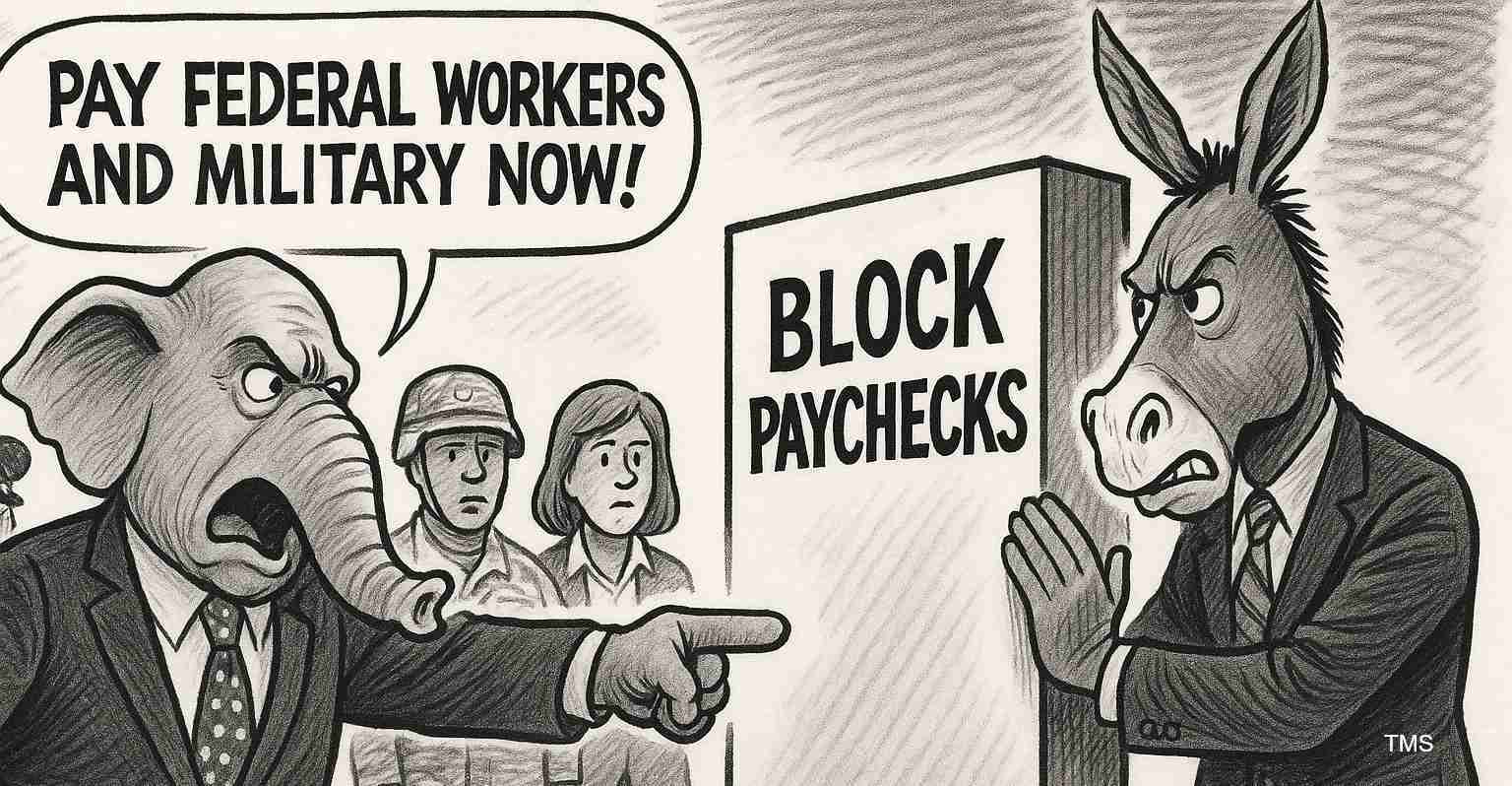
Senate Democrats Block GOP Pay Measure; Thousands of Federal Workers Remain Unpaid
Senate Democrats, led by Sen. Gary Peters, blocked a Republican bill on Nov. 7, 2025, that would have paid federal employees during the shutdown, leaving thousands unpaid as partisan fights over funding and oversight intensified.
Key takeaways
- Vote outcome: The motion failed 53-43 on Nov. 7, 2025, falling short of the 60 votes needed to advance.
- What the bill did: Sen. Ron Johnson’s modified proposal aimed to pay furloughed federal workers and military personnel during the shutdown.
- Democratic objection: Leaders, including Sen. Gary Peters, said the bill lacked normal funding safeguards and risked executive reprogramming.
- Local impact: Utah and other states face economic and social strain as federal paychecks remain delayed.
Main content
Vote, timing and sources
Senate vote: The measure failed 53-43 on Nov. 7, 2025, not reaching the 60 votes needed to overcome a filibuster. Three Senate Democrats broke with their party, but the tally still fell short. (Sources: The Washington Times: Senate Democrats block bill to pay federal workers; GOP rejects proposal by Ron Johnson; The Detroit News: GOP senators blast Michigan Sen. Gary Peters for blocking bill.)
What Ron Johnson’s pay bill would have done
Sen. Ron Johnson unveiled a plan intended to deliver immediate paychecks to federal workers and the military while funding talks continued. The proposal would have covered pay for employees performing essential duties and for those furloughed. Republicans said the language was focused and limited to direct pay and that the bill had been modified to respond to earlier criticism.
Why Democrats blocked the measure
Oversight concerns: Senate Democrats, led by Sen. Gary Peters, argued the motion omitted the “normal funding safeguards to ensure money goes where Congress intends” and warned it could enable executive reallocation of funds. Democrats said they would not advance a path that risks creating a slush fund for the administration or removes routine congressional oversight of appropriations.
“The bill omitted normal funding safeguards to ensure money goes where Congress intends,” Sen. Gary Peters said, warning it could become a vehicle for executive reallocation of funds.
Republican response and accusations
GOP reaction: Republicans, including Sen. Ron Johnson and Majority Leader John Thune, called the bill a straightforward fix and accused Democrats of holding worker pay hostage to unrelated demands. They urged Democrats to offer amendments if they wanted stronger oversight rather than block the motion and delay payments for thousands of federal employees.
Partisan split and failed compromise attempts
The vote largely split on party lines, with only three Senate Democrats supporting the measure. Earlier the same day, Democrats proposed a broader package to reopen government, extend enhanced health care premium subsidies for one year, and create a bipartisan committee to address health-care changes. Republicans rejected that package as unrelated to immediate pay relief.
Impact on federal workers and the military
By the time of the vote, many federal employees had gone without pay for more than a month. The pause affected air traffic controllers, federal law enforcement, park staff and agency employees who were furloughed. Military personnel continued essential duties amid paycheck uncertainty. Households and communities faced increased financial stress and questions about how long critical services could be sustained without normal funding.
Why oversight language mattered to Democrats
Democrats framed the debate as preserving Congress’ power of the purse. They argued emergency appropriations should include clear restrictions to prevent diversion of funds to unrelated programs or to circumvent budget rules. Democratic leaders said they were willing to discuss targeted language but that the Republican motion lacked the customary safeguards that accompany appropriations.
Why Republicans argued urgency trumped procedural wrangling
Republicans countered that the urgent need to get paychecks to workers should override procedural concerns. They maintained the Johnson proposal was narrowly tailored and that delaying action would harm families and critical services. GOP senators said Democrats could have offered amendments on the floor to tighten language but instead chose to block the motion.
How this episode fits into past shutdowns
Observers noted the standoff reflects a recurring pattern: efforts to protect worker pay often become entangled with broader fights over budget priorities and policy riders. Negotiations intended for short-term funding frequently turn into vehicles for larger policy battles, reducing the likelihood of quick compromise when amendment paths are limited.
Implications for Utah
Economic impact: Thousands of federal workers live in or serve Utah via national parks, VA hospitals, air traffic control and other federal posts. Delayed paychecks lower local spending, affecting small businesses and tourism-dependent towns.
Political consequences: Utah’s conservative electorate values timely services and military support; the impasse is likely to feature in local debates, with GOP leaders pressing Democrats for immediate action and accountability.
Social effects: Families of furloughed workers face delayed bills and financial strain, especially in rural counties where federal jobs are major employers. Local charities and agencies may see higher demand.
Practical applications: Local leaders and nonprofits can coordinate outreach and prepare relief programs; businesses that serve federal employees should plan for short-term drops in consumer spending and consider flexible payment options.
Sources and further reading
- Washington Times: Senate Democrats block bill to pay federal workers; GOP rejects proposal by Ron Johnson
- The Detroit News: GOP senators blast Michigan Sen. Gary Peters for blocking bill to pay federal workers during shutdown
The Senate remained in session through the weekend seeking a path forward, but the vote underscored how a seemingly simple bill to keep paychecks flowing became another test of partisan will over funding, oversight and executive authority.