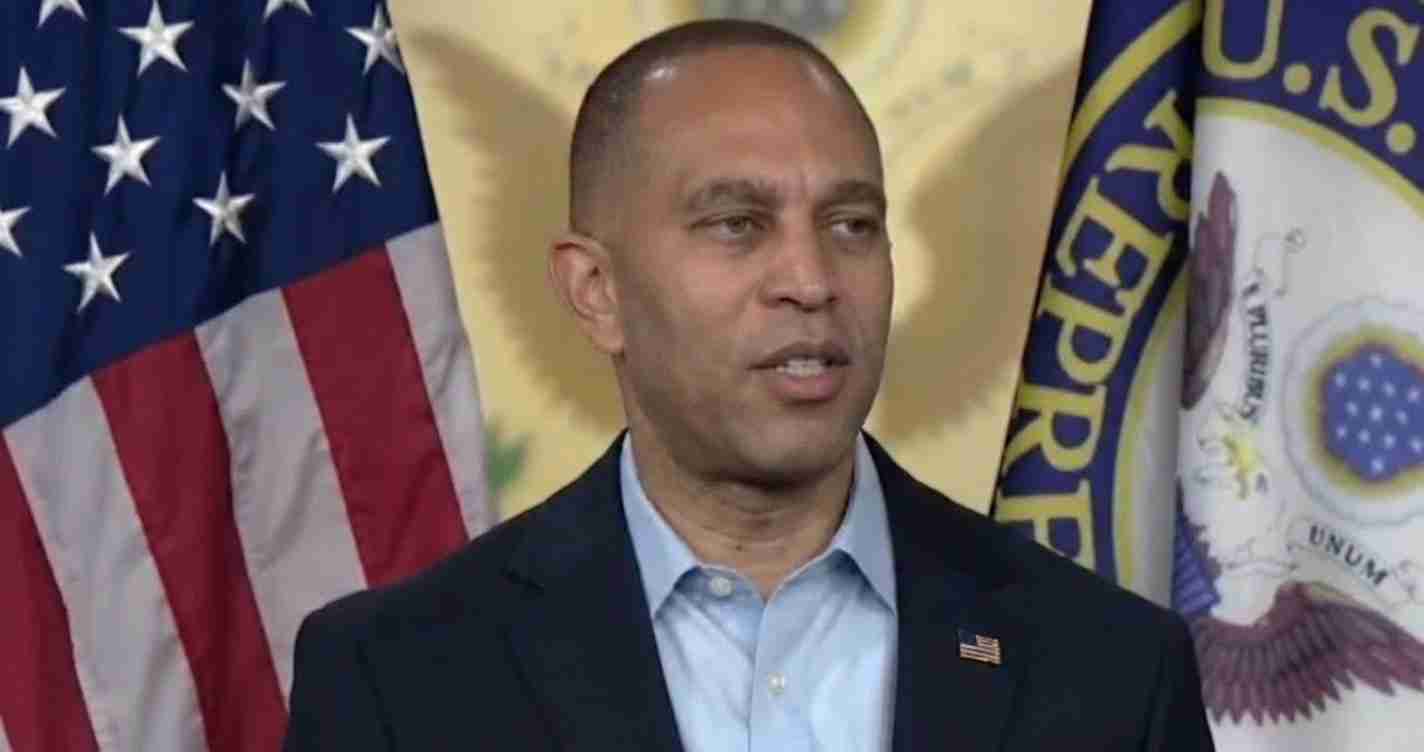
Seven House Democrats Break Ranks to Pass DHS Spending Bill, Raising Questions About ICE Funding and Next Steps to Avert Shutdown
The House passed the DHS spending bill 220-207 Thursday, with seven Democrats joining Republicans — advancing roughly $64.4 billion for DHS and about $10 billion for ICE amid debate over oversight and the Jan. 30 shutdown deadline.
Key takeaways
- House vote: The DHS bill passed 220-207, with seven Democrats joining Republicans; only Rep. Thomas Massie (R-Ky.) voted no.
- Spending scope: Lawmakers advanced a three-bill package and a standalone DHS bill — combined measures total about $1.2 trillion (Politico live updates).
- ICE funding: The DHS bill provides roughly $64.4 billion for DHS overall and about $10 billion for ICE, largely matching current levels.
- Next steps: The package moves to the Senate, where at least seven Democrats would be needed to reach 60 votes to overcome a filibuster, making passage uncertain (CT Mirror analysis).
Vote breakdown and bipartisan dynamics
The DHS spending bill’s approval was notable for its cross-party support driven by a small group of Democrats who broke with leadership. House Minority Leader Hakeem Jeffries and other top Democrats urged members to oppose the bill because it lacked stronger limits on ICE actions — a point detailed by Fox News.
Nearly all House Republicans backed the bill; Rep. Thomas Massie (R-Ky.) remained the lone GOP no vote, citing long-standing fiscal objections.
Supporters of the bill argued it preserves essential homeland security operations and maintains ICE funding at current levels — a point emphasized in coverage by Time.
The larger spending framework
House leaders split appropriations work into smaller groupings to avoid a single omnibus or multiple short-term continuing resolutions. One vote combined three spending bills covering Defense, Education, Labor, Transportation, Health and Human Services, and Housing and Urban Development — a strategy covered by Politico and Fox News.
Combined, the measures represent roughly $1.2 trillion in federal spending and aim to fund most appropriations ahead of the Jan. 30 deadline without an omnibus or repeated stopgaps.
Democratic opposition and ICE concerns
Many House Democrats opposed the DHS bill because they said it lacks meaningful guardrails on ICE, warning funding could enable enforcement actions without sufficient oversight (Fox News).
- Insufficient limits: Critics cite weak constraints on ICE operations after high-profile enforcement incidents.
- Detention and hiring worries: Some reports link GOP proposals to expanded detention capacity and multi-year hiring, citing figures tied to broader plans — for example, a $75 billion figure in related coverage (CT Mirror).
- Skepticism about guardrails: Some Democrats said written limits might not prevent aggressive enforcement if officials chose to disregard oversight (Fox News).
Supporters, including Democrats who voted yes, countered that the bill keeps ICE funding at current levels and ensures essential homeland security functions are financed as the fiscal year begins (Time).
Path to averting a shutdown
Passing these measures in the House is a key step toward preventing a partial government shutdown on Jan. 30, according to coverage from Fox News. If the Senate takes up and passes the same bills or a negotiated package, the government would remain open without short-term continuing resolutions.
Legislative leaders argue this approach marks a return to targeted appropriations work rather than a single omnibus or repeated stopgaps — described as the first time in about 30 years that Congress has tried this path.
Senate outlook and remaining challenges
The package now moves to the Senate, where its fate is uncertain. Sen. Chris Murphy (D-Conn.), the top Democrat on the Senate Homeland Security Appropriations panel, said he will not support the package in its current form despite participating in negotiations.
Republicans need at least seven Senate Democrats to reach 60 votes and overcome a filibuster, an arithmetic hurdle that makes Senate passage difficult without further concessions (CT Mirror).
If the Senate does not act before Jan. 30, agencies funded under these bills — including TSA, FEMA, the U.S. Coast Guard and ICE operations — could face a partial shutdown (CT Mirror).
Legal and policy stakes around ICE funding
The legislation allocates about $64.4 billion for DHS overall and roughly $10 billion for ICE, amounts that largely maintain current enforcement capacity rather than expand it, per reporting by Time.
Democrats warn that continued funding without stronger oversight could allow enforcement practices they deem harmful, while Republicans argue that stable funding is necessary to protect borders and maintain homeland security readiness — a debate expected to continue in Senate negotiations and public discussion (Fox News).
Implications for Utah
Economic effects: Utah could avoid disruptions to federal workers, contractors and projects if a shutdown is averted; agencies like TSA and FEMA support local jobs and travel hubs, and avoiding a shutdown helps prevent delays in paychecks and projects (Politico).
Border and law enforcement policy: While Utah is not a border state, ICE policies shape national immigration patterns and coordinate with local law enforcement; leaders favoring strong border control may view the bill’s ICE funding as maintaining enforcement capacity (Time).
Political consequences: Utah’s conservative voters and officials typically favor strong immigration enforcement and fiscal caution. Some local Republicans may welcome the House votes that kept DHS and ICE funding at current levels, while other conservatives may echo fiscal objections such as those raised by Rep. Thomas Massie.
Community and emergency services: FEMA funding and Coast Guard operations matter to Utahns who rely on federal disaster response and infrastructure grants; avoiding a shutdown reduces the risk of delays during winter storms or other emergencies.
What to watch next for Utah readers
- Senate action: Whether the Senate can secure the 60 votes needed to pass the bills or a revised package (CT Mirror).
- Guardrail negotiations: Any movements in the Senate or in negotiations that add oversight measures for ICE operations (Fox News).
- Local impacts: Announcements on FEMA, TSA, or Defense grants that could affect Utah communities if funding is delayed or restored (Politico).