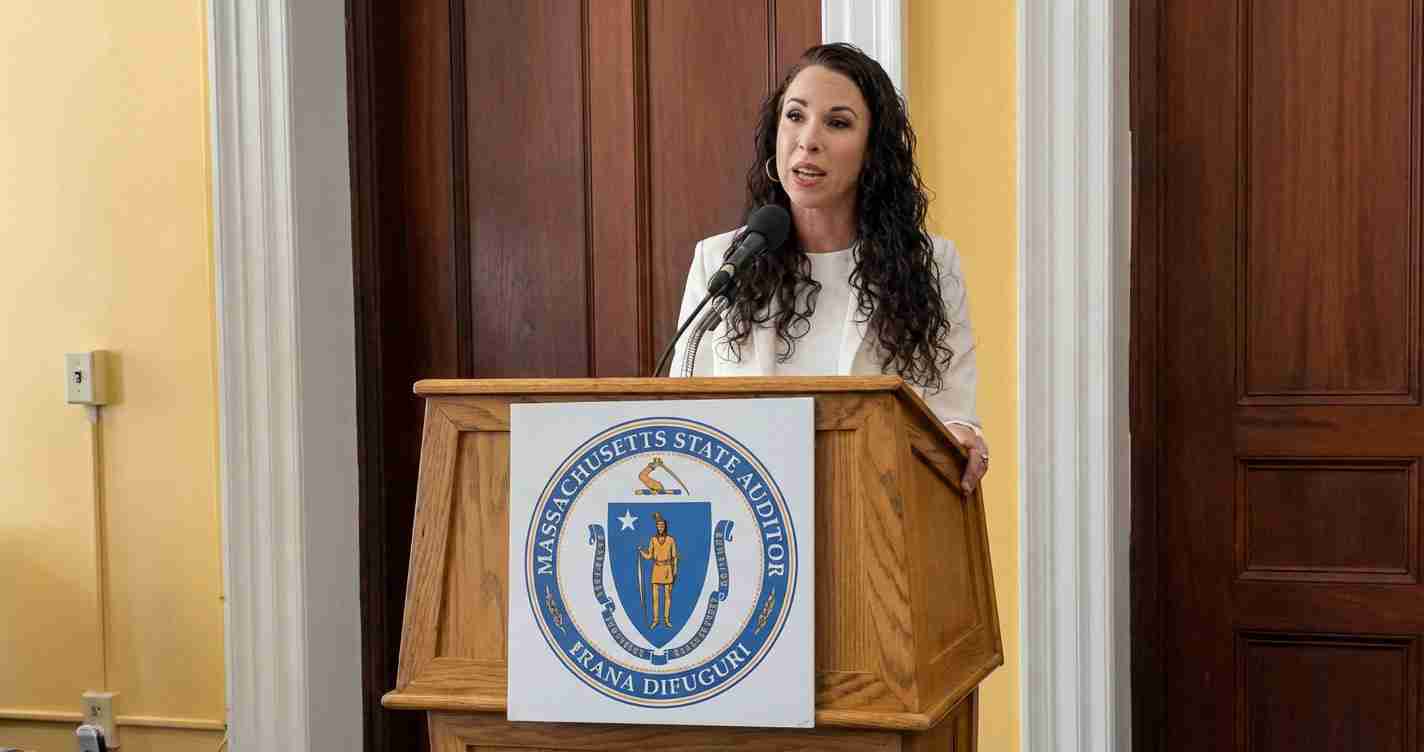
DiZoglio Sues Massachusetts Lawmakers, Escalating Fight Over $12 Million in Alleged Fraud and a Voter-Approved Legislative Audit
Boston, Massachusetts (Times Media Service) — Massachusetts State Auditor Diana DiZoglio filed suit in the Supreme Judicial Court against House Speaker Ronald Mariano, Senate President Karen Spilka and legislative clerks to enforce the 2024 voter-approved audit authority after alleged $12 million in fiscal 2025 fraud and withheld records.
Key takeaways
- Auditor vs. Legislature: DiZoglio seeks court orders compelling compliance with Question 1, the 2024 ballot change that allows audits of the legislature.
- Alleged improper payments: DiZoglio’s office reports nearly $12 million in alleged fraud in fiscal 2025 across public assistance programs.
- Separation-of-powers clash: Legislative leaders cite constitutional concerns and existing private audits while refusing to hand over underlying records.
- Court to decide scope: The Supreme Judicial Court will weigh the voter mandate against constitutional limits and legislative privilege.
Background
DiZoglio, a Democrat elected as Massachusetts State Auditor, filed the complaint on Feb. 10–11, 2026, naming House Speaker Ronald Mariano, Senate President Karen Spilka, House Clerk Timothy Carroll and Senate Clerk Michael Hurley as defendants and asking the state’s highest court to compel compliance with the 2024 ballot amendment that expanded auditor authority to examine the general court itself (recorder.com, WBUR).
The complaint and allegations
DiZoglio’s office says it uncovered nearly $12 million in alleged improper payments during fiscal 2025 across several public assistance programs — a finding that helped drive the push for stronger oversight (Fox News).
Her filing asks the Supreme Judicial Court to:
- Order the legislature to produce books, documents, vouchers and records required by the 2024 ballot change (Question 1) (recorder.com).
- Permit the auditor to appoint special assistant attorneys general or outside counsel to help enforce the audit, including named attorneys whose work DiZoglio says could be funded by a GOP gubernatorial candidate — a point criticized by the legislature’s lawyers (Mass Lawyers Weekly).
Why the lawsuit matters
Question 1 passed with broad public support — roughly a 72% margin in 2024 — explicitly allowing the auditor to audit the legislature and to require production of records. The amendment sought to close an unusual exemption that had shielded the legislative, executive and judicial branches from the same scrutiny applied elsewhere in Massachusetts (recorder.com).
“What are they hiding? If there’s nothing to hide, open up the doors, let the sun shine in. Let’s do this audit.” — Diana DiZoglio (quoted in Fox News)
Legislative response and legal posture
Legislative leaders have refused to produce the requested underlying records, citing separation-of-powers concerns and pointing to existing private audits and oversight mechanisms. In some cases, staff provided links to public websites rather than the underlying documents DiZoglio’s team requested (WGBH, recorder.com).
The Attorney General’s office — led by Andrea Campbell — declined repeated requests from DiZoglio to sue to enforce the new law, a refusal the auditor’s complaint characterizes as obstruction. The AG’s office says it lacked grounds to force compliance and warns the auditor’s approach may bypass required processes (recorder.com, Fox News).
Political and legal reactions
The battle has drawn attention across partisan lines. DiZoglio says some progressive Democrats joined conservative Republicans in supporting the audit’s goals, reflecting broad voter support for oversight. Outside actors have also filed related suits — for example, Republican U.S. Senate candidate John Deaton filed a separate lawsuit on Feb. 9, 2026, alleging unlawful spending intended to resist the audit and seeking to withhold certain federal grants until compliance (recorder.com, WGBH).
Opponents warn that allowing the auditor into legislative files could erode constitutional checks and balances and lead to politicized oversight. They emphasize existing private audits and internal controls as alternatives (WBUR, Axios).
The fraud findings and the push for access
The nearly $12 million cited by the auditor involves alleged improper payments across multiple assistance programs in fiscal 2025. DiZoglio’s office argues those findings underscore the need to examine Beacon Hill’s contracting, procurement procedures, nondisclosure agreements funded by taxpayers and a “balance forward” line item flagged for review (recorder.com).
Her complaint specifically seeks an order allowing the auditor to appoint outside counsel or special assistant attorneys general to support enforcement — a proposal met with skepticism by legislative counsel who object to outside political actors aiding the audit (Mass Lawyers Weekly).
What’s at stake for taxpayers and other states
At stake is both the nearly $12 million alleged in improper payments and the broader principle of whether voters can empower an independent auditor to review the legislature itself. The case could shape how states balance transparency, fiscal stewardship and constitutional separation of powers.
For states like Utah, observers say the dispute is a reminder to review auditing statutes, tighten program controls to prevent improper payments and consider clearer public access to legislative spending records (recorder.com, Fox News).
Process now and likely timeline
The Supreme Judicial Court will examine the ballot change’s scope, constitutional limits and the balance between legislative privilege and public accountability. DiZoglio seeks immediate relief compelling production of documents and permission to use outside counsel; there is no scheduled hearing date or decision timeline yet (WGBH, recorder.com).
Meanwhile, related litigation and political pressure — such as the Deaton filing — may influence timing and public debate around enforcement and federal funding implications (recorder.com).
Implications for Utah
- Economic impact: Utah taxpayers are not directly involved, but the dispute highlights national questions about audit scope, federal-state funding rules and possible shifts in auditing standards and compliance costs (recorder.com).
- Political consequences: The case demonstrates bipartisan appetite for transparency; Utah conservatives could press for clearer auditing rules and public access to legislative spending records (WGBH).
- Social and cultural effects: High-profile fights over oversight can heighten public demand for openness and increase scrutiny of nonprofits and agencies that administer public funds (Fox News).
- Practical action: Utah lawmakers and auditors should review statutes for exemptions, tighten internal controls on assistance programs and prepare rapid responses to audit findings to protect public trust (Mass Lawyers Weekly).