Indiana Senate Rejects Trump-Backed Redistricting Map, Handing GOP a Stark Internal Rebuke
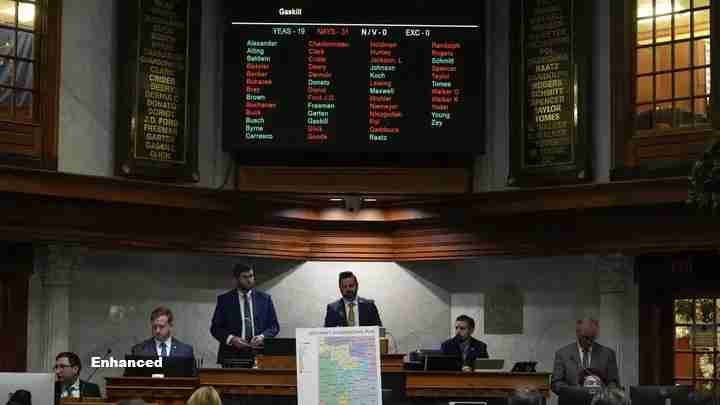
The Indiana State Senate rejected a Trump-backed congressional redistricting map on December 11, 2025, voting 31–19 after a three-hour debate, with 21 Republicans joining Democrats to block a plan that would have split two Democratic districts.
Key takeaways
- Vote result: The Senate rejected House Bill 1032, 31–19, with 21 Republicans joining 10 Democrats in opposition — a clear GOP defection. Axios
- Map impact: The proposal would have split two Democratic districts and could have made all nine Indiana U.S. House seats favorable to Republicans. Axios
- Pressure test: The vote was a test of former President Donald Trump’s sway over state GOP lawmakers; he publicly urged passage and named skeptical senators. Axios
What happened
On Dec. 11, 2025, the Indiana State Senate voted to reject House Bill 1032 — a congressional redistricting map championed by outside groups and publicly backed by former President Donald Trump. The final tally was 31–19, with 21 Republicans breaking with party leadership to oppose the measure. The map would have redrawn two Democratic districts in a way designed to favor Republicans in all nine U.S. House seats in Indiana. Axios
Debate and legislative process
The bill had passed the Republican-controlled Indiana House with relative ease before stalling in the state Senate after roughly three hours of debate. Senate leaders initially resisted bringing the bill to the floor; Senate President Pro Tem Rodric Bray (R–Martinsville) said there was insufficient caucus support, relented under pressure, then voted against the map. Bray characterized the vote as a resolution within the party — many Republicans want to hold or regain U.S. House seats, but they disagree on methods and timing. Axios
Pressure from Trump and internal GOP reaction
Former President Trump had publicly urged Indiana Republicans to pass the maps, used social media to name lawmakers he viewed as obstructive, and signaled that outside groups would invest in primary challenges for dissenters. Despite that pressure, the Senate vote demonstrated limits to top-down influence in state legislative affairs — analysts noted the margin of opposition was larger than many expected, suggesting senators prioritized local concerns over national directives. Axios
Voices of dissent: integrity, local ties, constituent backlash
Several Republican senators publicly explained their votes against the map, often citing election integrity or the erosion of local representation:
- Sen. Spencer Deery (R–West Lafayette) warned the proposal would hurt public faith in the fairness of elections and risk undermining confidence in the process. Axios
- Sen. Greg Goode (R–Terre Haute) said constituent opposition to being merged with Indianapolis suburbs drove his decision, emphasizing the need for coherent community representation rather than splits for partisan gain. Axios
Governor, outside groups and aftermath
Gov. Mike Braun reacted with disappointment, accusing the senators who voted no of siding with Democrats over “Hoosier interests” and warning of political consequences, including potential primary challenges for rebels. Outside groups that backed the map and had promised heavy investments in statehouse races likely saw the vote as a setback; such organizations have increasingly used state legislative primaries to enforce ideological alignment and strategic redistricting objectives. Axios
Legal and procedural realities
Senate leaders emphasized procedural constraints and the legislative calendar: under current rules the issue could not be immediately revisited in the present session window. That means proponents must decide whether to press the issue in the next regular session or pursue alternative routes — a reality that complicates any quick comeback and gives GOP defectors time to weigh constituent pushback and donor pressure. Axios
Context in national redistricting fights
Indiana joins other states where redistricting battles have tested intra-party strength. Republicans control most state legislatures nationwide, and redistricting is a central mechanism for shaping federal representation. Strategists argue favorable maps can blunt midterm headwinds when a party controls the presidency; yet the Indiana vote shows lawmakers may resist heavy-handed directives when maps sacrifice local ties or raise questions about fairness. Axios
Implications for Utah
The Indiana outcome offers several lessons for Utah officials, activists, and voters:
- Political message: State lawmakers can resist national pressure when local interests or party reputation are at stake — federal endorsements and outside money do not guarantee compliance. Axios
- Primary threat limits: The result highlights the limits of primary threat dynamics; Utah legislators may feel emboldened to prioritize constituents over outside-funded threats. Axios
- Local trust and representation: Concerns about voter trust and community coherence could lead Utah lawmakers to favor redistricting approaches that protect local ties rather than maps designed purely for partisan gain. Axios
Next steps and what to watch
Supporters of the Trump-backed plan say they may continue to pursue changes; Gov. Braun’s statement that “it isn’t over” signals possible future fights. But the significant GOP defections and calendar limitations mean any comeback will require a new strategy that addresses senators’ concerns about community representation and election trust — or will incur political costs for those who force the issue. Observers in Utah and elsewhere should watch for escalated primary threats and whether state lawmakers respond by tightening ties to voters rather than national actors. Axios
Sources and coverage
This article draws on reporting from the following outlets:
- Axios: Indiana Senate rejects Trump-backed maps (Dec. 11, 2025).
- ABC News: Indiana lawmakers slated to vote on congressional redistricting tied to Trump (Dec. 11, 2025).
“While most Republicans want to regain or hold U.S. House seats, they disagreed on the methods,” said Senate President Pro Tem Rodric Bray, underscoring the intra-party debate over strategy and reputation. Axios
For full original reporting and further context: See the Axios and ABC News stories linked above for detailed coverage, quotes, and reporting from the Indiana Statehouse. Axios · ABC News