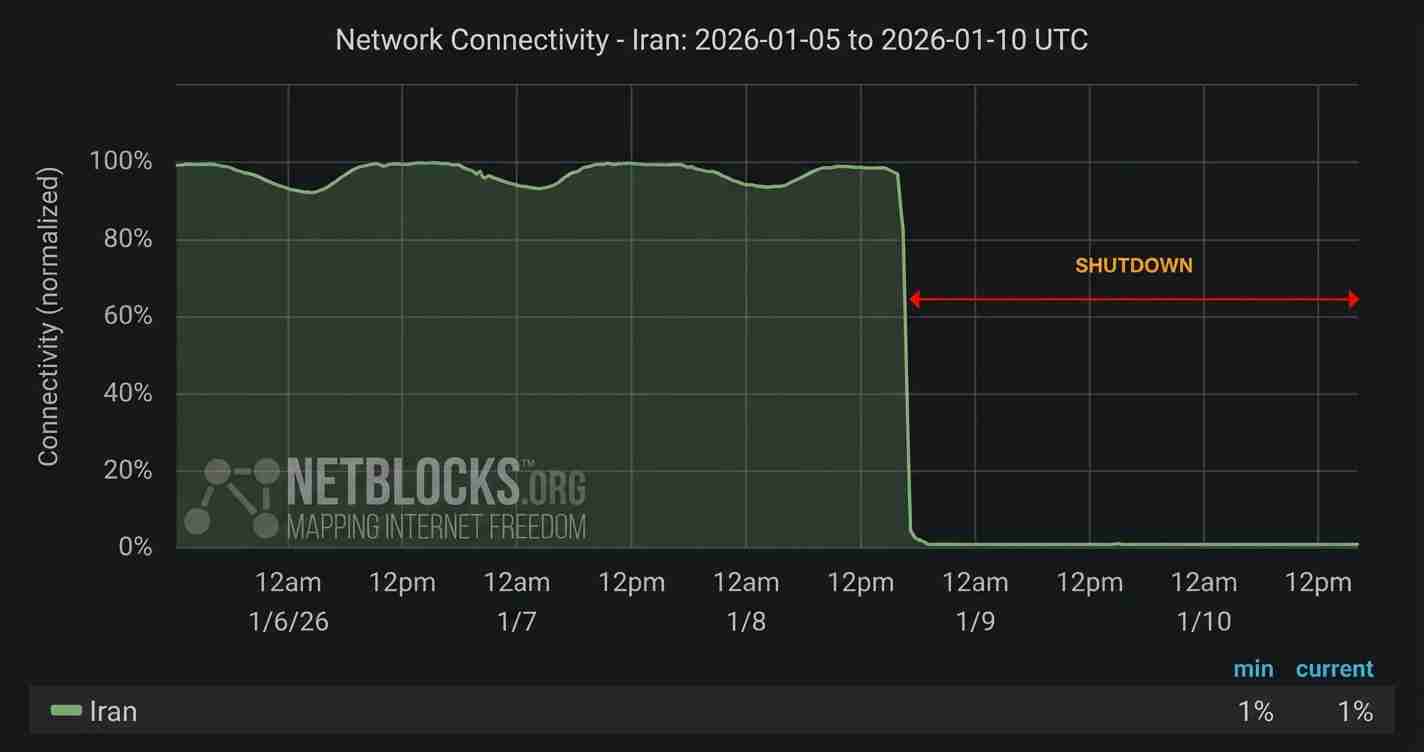
Iran internet shutdown 2026: Experts say regime pulled a “kill switch” to hide deadly crackdown on nationwide protests
Iranian authorities initiated a near-total internet and telecommunications blackout on January 8, 2026, amid nationwide protests that began December 28, 2025. Experts call it a deliberate “kill switch” used to conceal violent crackdowns, killings and mass arrests.
Key takeaways
- Nationwide blackout: Authorities cut most internet and phone access on January 8, 2026, during protests that started December 28, 2025.
- Experts’ assessment: Human-rights and cybersecurity analysts describe the outage as a state-directed “kill switch” intended to block reporting and hide abuses.
- Documented abuses: Amnesty International has documented dozens of deaths and many arrests; the true toll may be higher because reporting is limited.
- Local implications: The blackout affects diaspora communities, regional stability concerns and calls for diplomatic pressure and humanitarian preparedness in places like Utah.
What happened and how experts describe it
On January 8, 2026, Iranian authorities severed access to much of the country’s internet and mobile telephony. Rights groups and cybersecurity researchers characterize the outage as a central “kill switch” — a rapid, state-directed cutoff that prevents news, photos and videos from leaving the country and blocks families, lawyers and journalists from documenting abuses.
Amnesty International’s Security Lab calls the blackout a deliberate action to hide “grave human rights violations and crimes under international law” by security forces. Read the Amnesty report: Amnesty International: “Internet shutdown in Iran hides violations in escalating protests”.
The Institute for the Study of War also reported a continued nationwide internet shutdown as protests spread across multiple cities, noting the movement’s resilience despite communications disruptions. See the ISW update: Institute for the Study of War — Iran update, January 10, 2026.
Why analysts call it a “kill switch”
Iran’s highly centralized internet infrastructure gives state authorities the technical ability to throttle or sever connectivity quickly. Cybersecurity analysts use the term “kill switch” to describe this capability because it can cut off nearly all digital communications at once.
Rights monitors point to a pattern: similar heavy shutdowns accompanied crackdowns in 2019 and during the 2022 “Woman, Life, Freedom” uprising, with dozens or hundreds of confirmed deaths after those earlier cuts. Human-rights groups say the repetition suggests an intentional tactic of repression rather than a technical fault.
Alleged abuses during the 2025–26 protests
Protests that began in late December 2025, driven by economic shock and public anger over a sharp currency collapse and rising inflation, spread from Tehran to many provinces. Authorities tightened security; rights groups report deadly force, mass arrests and other unlawful methods used by security forces.
“Broad internet cuts are themselves a serious violation because they block freedom of expression and access to information during a crisis,” Amnesty’s Security Lab said, warning the blackout helps hide abuses.
Amnesty has documented at least dozens of deaths and many arrests, noting 28 deaths recorded between December 31, 2025 and January 3, 2026 across multiple cities and provinces; the group warns the true toll is likely higher because the outage limits reporting. See Amnesty’s documentation: Amnesty International report.
International response and risk of escalation
Several governments and international organizations publicly condemned the violence and called for independent investigations. Analysts warn that a government willing to impose a kill switch at home could be more coercive both domestically and regionally.
Amnesty urged urgent diplomatic action to deter further killings and to press Iran to restore communications so monitors and relatives can document events. For examples of broadcast commentary and interviews, see: Broadcast coverage and analyst commentary (example).
Limits of the reporting and numbers
Many social-media and early reports cite higher totals — for example, claims of at least 65 dead and 2,300 arrested across 180 cities — but those figures are not yet independently verified. Amnesty and ISW caution that the blackout makes accurate accounting difficult and that documented deaths so far should be treated as a minimum.
For context, see the Institute for the Study of War update: ISW — Iran update, January 10, 2026, and Amnesty’s coverage: Amnesty International report.
Legal and human-rights framing
Human-rights experts emphasize that internet access is essential to free expression and documenting abuses. Amnesty argues that broad shutdowns cannot be justified as proportionate in emergencies, and that such measures facilitate impunity by reducing public scrutiny.
Comparisons to Iran’s 2019 and 2022 shutdowns raise concern that the repeated tactic is part of a systemic effort to conceal unlawful force and avoid accountability. Amnesty frames the acts under investigation as potential crimes under international law. See: Amnesty International.
Implications for Utah, United States
Families and communities: Utah’s Iranian‑American community faces urgent information gaps; relatives and local groups may need to assist with federal resources, counseling and advocacy.
Religious freedom and human-rights concerns: Reports of unlawful killings, mass arrests and an information blackout raise moral and policy questions for faith leaders, lawmakers and civic groups in Utah.
National security and regional stability: Observers warn that a regime using a kill switch domestically could adopt more aggressive foreign-policy stances, prompting attention from Utah’s defense and aerospace sectors and federal partners.
Cybersecurity awareness and preparedness: The outage is a reminder for state and local agencies, universities and businesses to review contingency communications, emergency alerts and continuity plans.
Refugee and humanitarian support: Renewed unrest could increase refugee flows. Utah’s resettlement organizations and faith-based charities may be asked to assist; coordination with federal authorities would be essential.
Political and diplomatic pressure: Utah’s leaders and congressional delegation can press the U.S. government to demand restored communications, independent investigations and measures to protect civilians, aligning with concerns about free speech and religious freedom.
Sources and further reading
- Amnesty International: “Internet shutdown in Iran hides violations in escalating protests”
- Institute for the Study of War: “Iran update — January 10, 2026”
- Broadcast coverage and analyst commentary (example)
Reporting for Times Media Service.