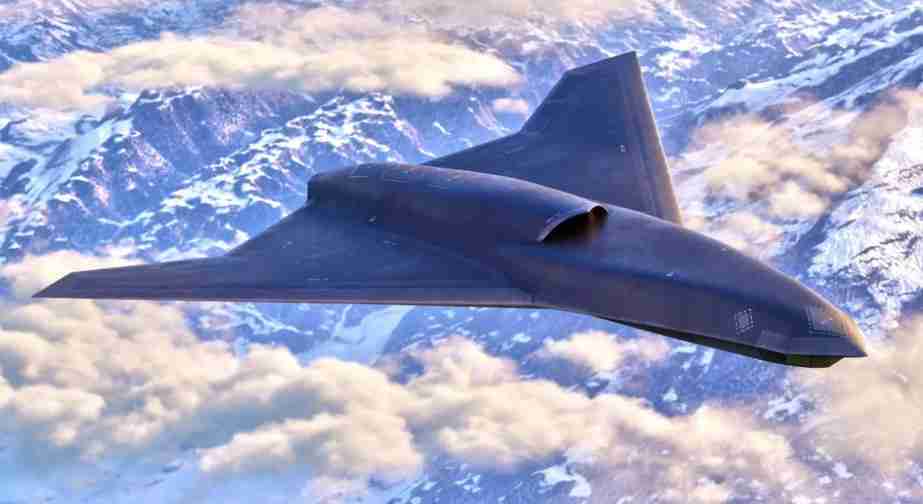
Lockheed’s Skunk Works unveils “Vectis” — a stealth, AI military drone built to team with F-22 and F-35
Palmdale, California (Times Media Service) — Lockheed Martin’s Skunk Works unveiled Vectis, a stealthy, AI-driven Group 5 combat drone designed to team with F-22 and F-35 for precision strikes, ISR, electronic warfare and decoy missions; first prototype flight targeted for 2027.
Key takeaways
- Platform: Vectis — a Group 5 stealth UAS from Lockheed Martin news release.
- Missions: Precision strike, ISR targeting, electronic warfare, offensive/defensive counter-air and decoy roles—designed to team with F-22/F-35 and future platforms.
- Design & performance: Tailless lambda wing, top-mounted intake, low-observable shaping; larger than a cruise missile but smaller than an F‑16, flies above 18,000 ft and weighs over 1,320 lbs.
- Autonomy: Onboard AI for sensor fusion, autonomous strikes, EW and dogfighting; built on an open architecture called the Agile Drone Framework.
- Timeline: Renderings and briefings released Sept. 19, 2025; Skunk Works aims for first flight by 2027.
Design and capabilities
Lockheed’s Skunk Works is positioning Vectis as a stealth-first system. Company renderings and briefings show a tailless lambda wing, a top-mounted air inlet and blended antenna shapes intended to reduce radar cross-section and allow operations close to contested airspace defenses. The design draws on established Lockheed shaping and materials choices described in public briefings and the company video briefing (Skunk Works briefing video).
Vectis is sized to fill a tactical niche between long-range cruise missiles and crewed fighters: longer-legged than a missile but smaller and cheaper than an F‑16. It’s described as capable of operating at altitude with a combat loadout while maintaining a low observable profile. Skunk Works notes the design is not meant for sustained supersonic flight but can keep pace with fifth-generation fighters through signature management and advanced communications.
AI, autonomy and teaming
Skunk Works presents Vectis as an AI military drone with layered autonomy tied to secure links with manned fighters. Onboard AI enables:
- real-time sensor fusion and targeting
- autonomous strike execution and EW missions
- autonomous dogfighting, decoy and escort roles
- data sharing and synchronization with crewed platforms (the “wingman” model)
Lockheed emphasizes collaborative autonomy—Vectis will share data and coordinate with aircraft such as the F-22 and F-35, and future systems like NGAD, effectively extending the sensor and weapon footprint of a strike package without adding pilots.
Modularity, survivability and mission sets
The platform uses an open, modular architecture—Skunk Works calls it the Agile Drone Framework—so operators can swap mission modules for rapid role changes: air‑to‑air escort, ISR, EW or strike. Lockheed claims the combination of low observables, modular payloads and AI-guided tactics will make Vectis “best in class” for survivability in contested airspace while remaining more affordable than crewed fighters (Lockheed Martin news release).
“Vectis is intended to be a force multiplier—taking on hazardous tasks so crewed jets face less risk,” Skunk Works briefings state.
Development timeline and program posture
Renderings and briefings were released on Sept. 19, 2025; Skunk Works aims to fly a prototype by 2027. While Vectis aligns with the U.S. Air Force’s Collaborative Combat Aircraft (CCA) concept, it was not formally submitted as an Increment 2 entry. The design’s open architecture and modularity make it adaptable for joint, allied or commercial integrations (Air & Space Forces, Fox Business).
Strategic context and oversight questions
Lockheed frames Vectis as a way to preserve U.S. airpower advantage—protecting pilots and maintaining deterrence while controlling costs. Yet the fielding of AI-driven weapons raises oversight and policy questions:
- rules of engagement and legal frameworks for autonomous strikes;
- export controls and which allies receive advanced autonomy capabilities;
- Congressional scrutiny and defense oversight as policy catches up with technology (National Security Journal).
Implications for Utah
Economic and industrial impact: Utah’s established aerospace supply base and skilled workforce could benefit if Vectis enters production and sustainment. Suppliers in avionics, software, systems integration and sustainment could win subcontracting work, creating jobs and business for local manufacturers.
Testing, basing and logistics: Hill Air Force Base and regional test ranges could see increased activity for trials, software testing and logistics support. While prototypes will likely fly from Western test ranges, depot-level sustainment could draw on regional facilities.
Workforce and training: Demand will grow for engineers, cyber specialists and avionics technicians; Utah universities and technical schools may expand partnerships for training in unmanned systems and cybersecurity.
Security, export policy and oversight: State leaders and Utah’s congressional delegation can press for procurement transparency, domestic-sourcing clauses and safeguards on exported autonomy—balancing strong defense and fiscal accountability.
Sources and reporting notes
This article draws on Lockheed Martin’s Vectis materials and public briefings, coverage from Air & Space Forces and Fox Business, the Skunk Works briefing video, and defense analysis in National Security Journal. Key sources: