Kim Jong Un Parades Hwasong-20 ICBM as China and Russia Dignitaries Watch in Pyongyang
At a massive Pyongyang parade marking the Workers’ Party anniversary, Kim Jong Un unveiled the Hwasong-20 ICBM — shown on mobile launchers before Chinese and Russian officials — signaling advanced missile capability and closer ties with Beijing and Moscow.
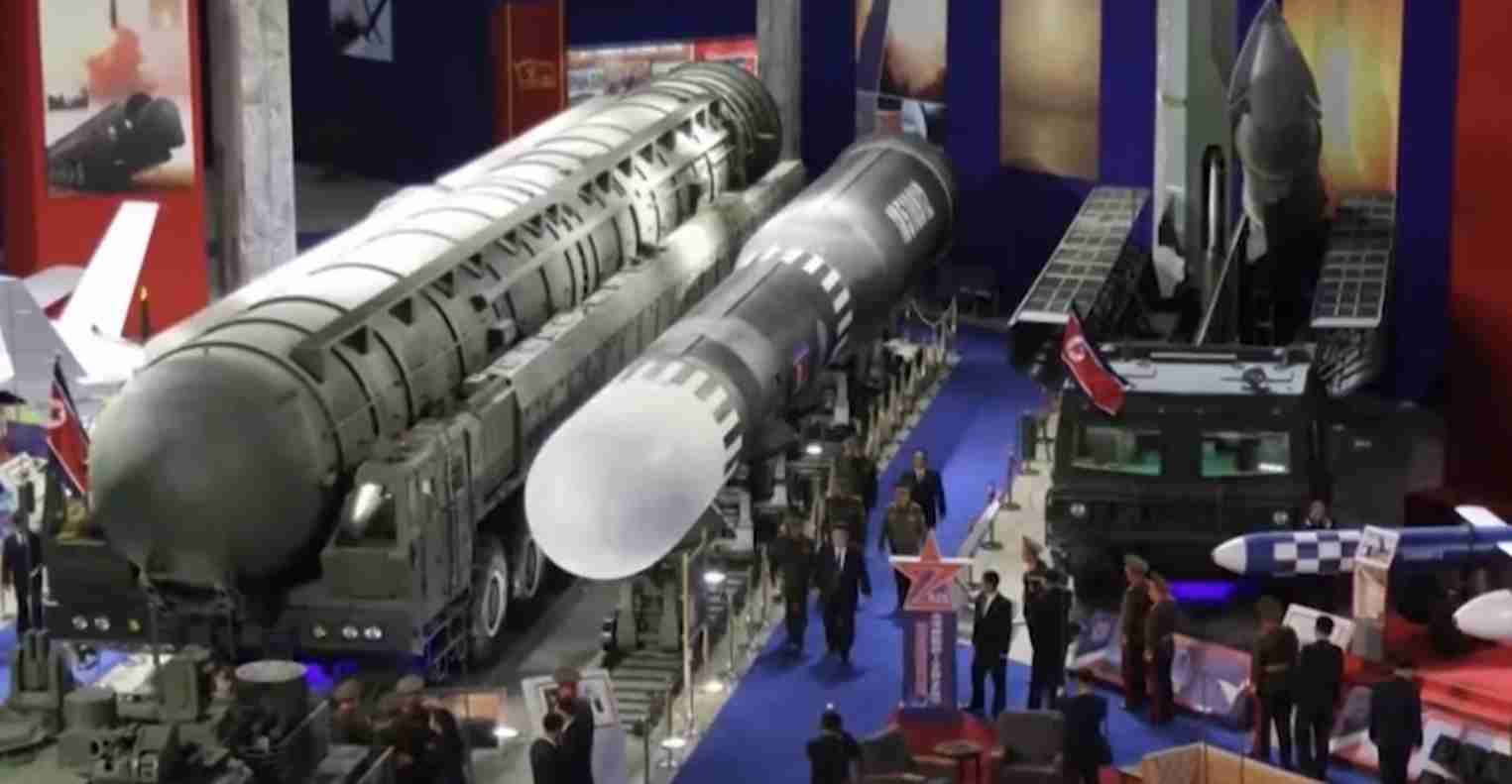
- Hwasong-20 displayed: At least three ICBMs on 11‑axle transporter erector launchers, touted as the country’s most powerful strategic weapon.
- Technical claims: North Korea asserts new solid‑fuel engines, carbon‑fiber parts and possible multiple warhead capability.
- Diplomatic signal: Chinese Premier Li Qiang and Russian official Dmitry Medvedev attended, underscoring stronger ties with Beijing and Moscow.
- Regional implications: A proven mobile, solid‑fuel ICBM with MIRV capability would complicate U.S. and allied defenses and affect policy and spending choices.
What was shown and why it matters
Headline display: North Korean state media described the Hwasong-20 as the country’s “most powerful nuclear strategic weapon system.” Visuals showed the missiles driven through Pyongyang on large mobile launchers — a demonstration intended to convey operational readiness, not merely production.
Reporting and visual coverage of the parade are available through CBS News and state footage. The parade footage shows at least three Hwasong-20 ICBMs on 11‑axle transporter erector launchers and a wide array of shorter‑range ballistic missiles, cruise and hypersonic missiles, new tanks, artillery and drones.
Two technical claims matter:
- Solid‑fuel engine: If genuine, solid propellant enables storage, mobility and quicker launches, reducing warning time and preemption options.
- New materials & MIRV potential: Carbon‑fiber construction and claims of multiple warheads would increase challenges for missile defenses if validated.
Video of the parade and displays is available via state footage and broadcast — see the official parade video and footage for visual confirmation of scale and choreography.
Diplomatic signaling: North Korea, Russia, China
High‑level attendance: Chinese Premier Li Qiang and Russian Security Council Deputy Chairman Dmitry Medvedev were among senior foreign officials present, a clear diplomatic message that Pyongyang is deepening ties with Beijing and Moscow (CBS News).
Symbolic gestures: Troops who reportedly served with Russian forces in Ukraine marched with both North Korean and Russian flags, signaling military and political coordination beyond routine diplomacy.
Meetings and messaging
North Korean state media reported meetings between Kim Jong Un and visiting delegations, with emphasis on expanding strategic ties. In his parade address Kim called for the armed forces to “continue to grow into an invincible entity that destroys all threats” — a rallying statement combining pride in new arms with a call for unity and deterrence.
What analysts are watching
Independent verification is needed for several key claims:
- Propulsion: Is the Hwasong-20 truly solid‑fuel?
- Range & accuracy: What operational envelope does it have in practice?
- MIRV capability: Can it actually carry multiple warheads?
- Operational readiness: Were the parade missiles functional systems or staged models?
Visual parade evidence shows new designs and large mobile launchers, but field tests, satellite imagery and intelligence analysis will determine real capability and threat level (CBS News).
Implications for Utah
Although the parade presents no direct threat to Utah, the display could influence national spending, policy and local economic patterns relevant to the state’s defense sector and communities tied to military work.
Economic impact
Defense spending: A perceived increase in missile threats can lead to higher U.S. investment in missile defense and deterrence, potentially resulting in federal contracts and procurement dollars flowing to Utah aerospace and defense firms supporting Hill Air Force Base, Dugway Proving Ground and other installations.
Political consequences
For Utah’s conservative audience, displays like this reinforce calls for strong national defense. State lawmakers may press for increased missile‑defense spending, intelligence resources, and ongoing cooperation with federal agencies to protect military installations and workforce readiness.
Social effects
Communities connected to defense work may experience heightened concern about global instability. Increased defense activity can bring economic opportunity but also social pressures such as competition for skilled labor and housing market impacts.
Cultural relevance
The spectacle of a strategic ICBM showcased alongside visits from China and Russia resonates with voters who prioritize strong alliances and deterrence, reinforcing narratives of great‑power competition and national security.
Practical applications for residents
- Officials will monitor any change in threat posture affecting military families and installations.
- Defense contractors and training programs in Utah may see contract opportunities; residents with relevant skills should watch for hiring announcements.
- Expect speeches and possible legislative requests from Utah’s congressional delegation related to missile defense.
- Local emergency management agencies will maintain standard preparedness; no direct threat to Utah was reported from the parade.
Reporting and verification
Coverage of the event and state footage form the basis of reporting. CBS News reported on the Hwasong-20 display and foreign attendance. Independent intelligence, field testing and satellite analysis will be required to confirm technical claims and operational capability.
Sources
- CBS News: North Korea held a military parade, showing new missile and welcoming foreign leaders.
- Official parade video and footage.
Note: The article preserves reported facts and source links; further independent verification is expected as analysts examine test data and imagery.