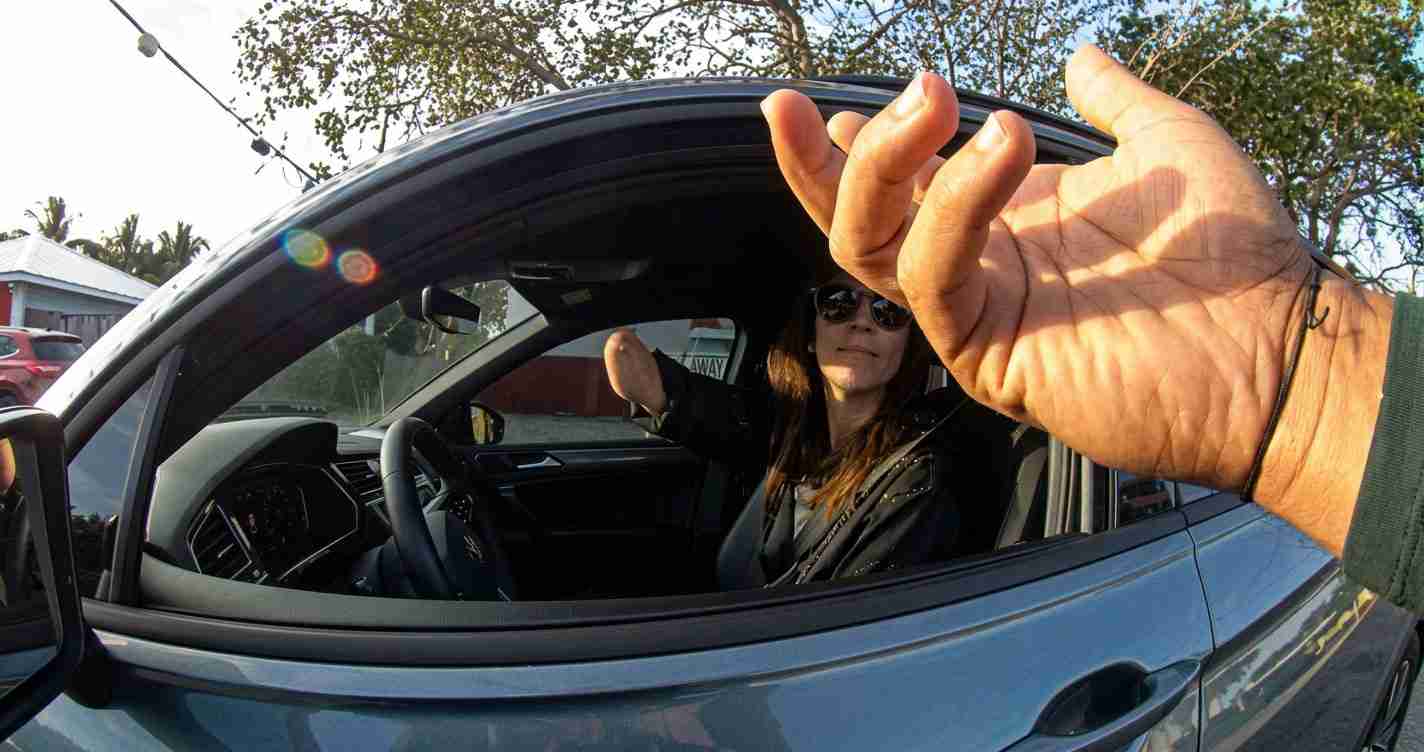
Body‑cam video shows Palm Beach deputy ticket woman born without right hand; citation dropped after viral outcry
Body‑camera footage shows a Palm Beach County deputy ticketed Kathleen “Katie” Thomas, 36, who was born without a right hand, for allegedly holding a phone while driving; the distracted‑driving citation was later dismissed.
- Viral footage: Body‑cam video of the Feb. 11, 2026 stop drew millions of views and widespread criticism. Video
- Citation issued then dropped: The deputy issued a citation for using a handheld wireless device; PBSO later dismissed the charge after internal review. Video
- Broader debate: The stop sparked discussion on police discretion, confirmation bias, citation software wording and training. Video
What the body‑cam shows
Body‑camera footage released online captures the full exchange that triggered the backlash. The deputy tells Kathleen Thomas officers were conducting a distracted‑driving operation and that she “drove past holding the phone with your right hand, manipulating that phone.” Video
Thomas did not argue. She calmly lifted her right arm to show it ends at the forearm — she has no right hand — and laughed. The deputy appears surprised but presses on, shifting from saying he saw her holding it with the right hand to saying he saw “a hand up manipulating” the phone. Video
“Hand to God, you did not have your phone in your hand?” the officer asks; Thomas replies, “Hand to God,” and lifts her left arm when asked for her “other hand to God.”
Despite the obvious physical fact, the deputy completed the stop and issued a citation for “wireless communication device handheld while driving.” He later told Thomas he did not write that she held the phone in her right hand on the written citation, though he used that phrase when initiating the stop. Video
Agency response and case dismissal
PBSO spokeswoman Teri Barbera said the deputy initiated the stop “based upon his visual observation at the time of the incident.” She told reporters deputies must make real‑time decisions and that motorists can contest citations in court where “all facts and evidence can be fully evaluated.” Video
Barbera added the citation was later dismissed after an internal review that examined Florida law and the stop’s circumstances. She cited “the difference in wording between Florida State Statute 316.305 and 316.306” and said ambiguity in the department’s citation software played a role. The deputy requested dismissal for lack of evidence prior to a scheduled hearing; the court canceled the hearing. Video Video
Statutes cited
PBSO referenced two Florida statutes in explaining the dismissal:
- Florida Statute 316.305 — covers wireless communications while driving, including rules against manually entering multiple letters or accessing certain device functions while operating a vehicle.
- Florida Statute 316.306 — addresses rules in school and work zones and contains specific handheld device restrictions.
Agency officials said differences in statute wording and how violations are listed in citation software created ambiguity about which statute matched the deputy’s observation, contributing to the choice not to pursue the case. Video
Public reaction and broader debate
Thomas requested and posted the body‑cam footage to her social channels after the stop. Clips posted to TikTok and Instagram drew millions of views and intense criticism; commenters asked why the officer did not stop the citation once he saw she had no right hand. Video
The episode has become a touchpoint in discussions about police discretion, confirmation bias, and enforcement of distracted‑driving laws. Critics say the deputy doubled down instead of reassessing, suggesting a rush to judgment; supporters say officers must act on what they see and rely on courts to resolve disputes. PBSO has not announced public discipline tied specifically to this encounter. Video
Why the video matters
The incident illustrates how body‑camera transparency can turn a routine traffic stop into a national story. It raises questions about how much deference the public should give officers making split‑second calls and how agencies balance that deference with accountability and training.
Operational lessons: The case highlights the need for clear citation categories, accurate in‑field recording, and training to reduce mistaken observations. PBSO’s note about citation‑software wording shows how technology and procedure can shape post‑stop outcomes. Video
Context: similar disputes and policing practices
Traffic stops for handheld phone use are common enforcement tools. When video surfaces of contested stops, public focus often shifts from the law to officer behavior. This case joins other viral traffic‑stop controversies that have led to calls for clearer rules, better training, and consistent citation procedures. Video
Implications for Utah
Though the stop occurred in Florida, Utah agencies and communities may take practical and policy cues from the episode.
Economic impact
- Training and technology costs: Utah sheriffs and police departments could face pressure to review distracted‑driving enforcement programs, possibly requiring refresher training and software updates for citation accuracy.
- Litigation and liability: Viral cases that are dismissed can still prompt legal claims or public‑records demands; responding consumes staff time and resources.
Political consequences
- Law enforcement credibility: Utah voters who prioritize public safety may scrutinize how local agencies handle similar incidents; missteps can erode trust without clear responses.
- Legislative interest: Lawmakers might consider clarifying distracted‑driving statutes or citation language to avoid future ambiguity.
Social effects
- Disabled drivers and access: The stop highlights how police interactions can differ for people with disabilities; sensitivity training may be recommended.
- Community relations: Viral traffic‑stop videos can inflame debate; agencies should pair enforcement with outreach and clear dispute processes.
Cultural relevance
Conservative Utah readers often support law enforcement while also expecting professionalism and accountability. This incident underscores balancing support for responsible policing with steps to correct avoidable errors.
Practical applications for Utah drivers and agencies
- Know your rights: Drivers who disagree with citations should understand the right to contest them and to request body‑cam footage, as Thomas did.
- Agency procedures: Review citation‑entry workflows and clarify fields that describe observed behavior to reduce mismatch between roadside statements and written citations.
- Training focus: Emphasize observation checks, de‑escalation, and how to handle situations that contradict initial beliefs, including offering warnings when evidence is unclear.
Reporting note
Body‑camera video and clips posted by Kathleen Thomas provided the primary visual record of the stop. Videos used for this report: Video, Video, Video
Keywords
Palm Beach deputy ticket handless driver; Kathleen Thomas distracted driving; Lake Worth Beach traffic stop